

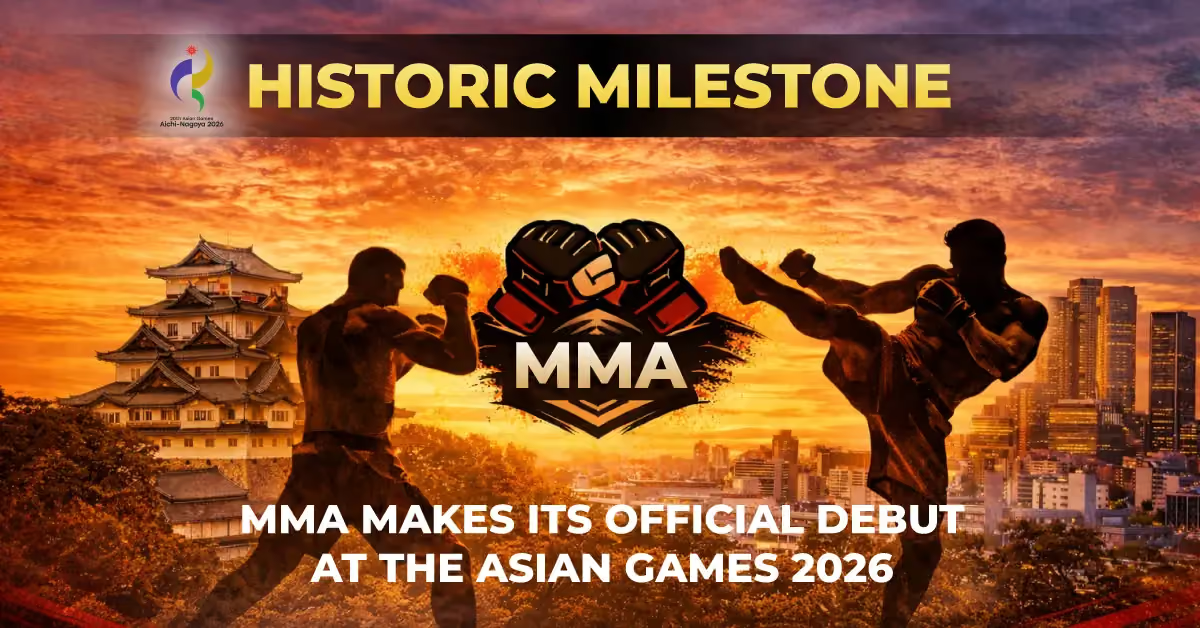
The Asian Games, Asia's premier multi-sport event, is poised to witness a historic transformation in 2026 when Mixed Martial Arts (MMA) makes its long-awaited debut. This monumental inclusion represents not merely the addition of another sport, but the culmination of millennia-old martial traditions meeting modern combat evolution. The Olympic Council of Asia (OCA) officially confirmed MMA's inclusion in March 2025, marking a pivotal moment that bridges the gap between traditional Asian martial arts heritage and contemporary combat sports innovation.
The Foundation: Traditional Martial Arts in Asian Games History
The Asian Games have served as a crucible for Asian martial arts since their inception in 1951. The first Asian Games in New Delhi featured 489 athletes from 11 nations competing in 57 events across eight sports, establishing a foundation that would gradually expand to include numerous martial arts disciplines. The original Games showcased six core sports: athletics, aquatics—comprising diving, swimming, and water polo—basketball, cycling—both road and track events—football, and weightlifting. Although many member nations of the Asian Games Federation advocated for boxing to be included as a medal sport, it was ultimately excluded from the final program for various reasons.
Traditional martial arts found their way into the Asian Games through a carefully orchestrated timeline of inclusion. Judo became the first major martial art to join the Asian Games in 1986 in Seoul, South Korea, though it was initially limited to men's competitions only. The sport expanded to include women's events in 1990 during the Beijing Games.
Taekwondo followed in 1986 at the Seoul Games, with South Korea dominating by winning seven out of eight possible gold medals. The Korean martial art's inclusion was particularly significant, as it represented the home nation's cultural contribution to the Olympic movement and demonstrated Asia's role in promoting indigenous combat sports globally.
The 1990s marked a crucial period for martial arts inclusion. Wushu made its Asian Games debut at the 1990 Beijing Games, featuring three events: Changquan, Nanquan, and Tai Chi for both genders. China's overwhelming dominance in wushu, capturing all six gold medals, illustrated the nation's commitment to promoting its traditional martial arts on the continental stage.
Karate joined the Asian Games program in 1994 at the Hiroshima Games. This inclusion was particularly poignant given Japan's post-war commitment to peace and reconciliation, with karate serving as a cultural ambassador alongside baseball and modern pentathlon as debut sports.
The Cultural Significance: Martial Arts as Asian Identity
The inclusion of martial arts in the Asian Games represents more than sporting competition; it embodies the preservation and celebration of Asian cultural heritage. Traditional martial arts have been integral to Asian societies for over 4,000 years, with Chinese boxing traceable to the Zhou dynasty (1122-255 BC).
Buddhism, Taoism, and Shintoism profoundly influenced martial arts development across Asia. Buddhist monks, particularly those from the Shaolin Temple, played pivotal roles in spreading martial arts throughout the continent, creating a network of combat traditions that transcended national boundaries while maintaining distinct cultural identities.
Each martial art carries specific cultural significance: Chinese wushu embodies philosophical concepts of yin and yang, while Japanese martial arts incorporate bushido (the way of the warrior) principles. Korean taekwondo emphasizes speed and precision, reflecting the nation's dynamic spirit, while Thai martial arts like Muay Thai developed from ancient military combat systems.
The Modern Evolution: From Traditional to Mixed
The evolution from traditional martial arts to modern MMA represents a fundamental shift from philosophical and cultural preservation to practical combat effectiveness. Traditional martial arts emphasized personal growth, discipline, and cultural heritage, while modern systems focus on combat efficiency and practical techniques.
MMA's roots trace back to ancient Greece's pankration, a brutal combination of boxing and wrestling that was part of the Olympic Games around 648 BCE. However, modern MMA emerged in the 20th century, particularly with the creation of the Ultimate Fighting Championship (UFC) in 1993.
The sport evolved rapidly from unregulated "no-holds-barred" contests to highly sophisticated competitions governed by comprehensive rules. The Unified Rules of Mixed Martial Arts, established in 2000, transformed MMA from a spectacle of violence into a legitimate sport.
The Philosophical Divide
Traditional martial arts are deeply connected to their historical and cultural origins, focusing not only on combat skills but also on fostering personal development and respect for the art's heritage. They follow structured curricula with set progressions of techniques, forms (kata or patterns), and sparring exercises. Cultural practices such as bowing, wearing specific uniforms, and adhering to strict codes of conduct are integral components.
Modern martial arts, including MMA, focus on practicality, making them more adaptive to real-world scenarios. These systems prioritize effectiveness in self-defense and often blend techniques from multiple disciplines. MMA, while effective for self-defence, is more sport-oriented, with techniques developed for use in regulated environments.
The contrast is stark: traditional martial arts offer a structured, philosophical approach with a focus on technical precision, while MMA emphasises adaptability, live sparring, and real-world application. Traditional martial arts are generally less competitive compared to modern combat sports, with emphasis more on personal improvement and mastery of technique.
The Asian MMA Landscape: Regional Powerhouse
Asia has emerged as a dominant force in the global MMA landscape, driven primarily by ONE Championship, which has become the largest MMA promotion in Asia since its founding in 2011. The Singapore-based organization has capitalized on Asia's 4.1 billion population and deep martial arts heritage.
ONE Championship has experienced remarkable growth, with the company set to cross the $1 billion dollar valuation mark, according to company chairman Chatri Sityodtong. The promotion has achieved "triple digit growth rates" and registered triple digit percentage annual growth rates in revenues since starting.
The promotional success demonstrates MMA's commercial viability in Asia. ONE has grown from 352 million social media impressions to 4 billion, marking an increase of over 11 times the previous tally. With the rise of digital and online video, ONE has catapulted their video viewership numbers from 312 thousand to 314 million. The promotion has expanded from viewership in 60 countries to more than 118 countries globally.
ONE Championship increased US viewers by 46% in just 6 months through strategic market analysis and targeted audience development. The organization has over 84 billion video views globally since 2016 and maintains extensive reach through partnerships with major television networks.
The regional MMA ecosystem includes diverse promotions across multiple countries: Road FC in Korea, Legend FC in China, URCC in the Philippines, and various organizations in Thailand, India, and Japan. This widespread development has created a robust talent pipeline and cultural foundation for MMA's Asian Games inclusion.
The Historic 2026 Inclusion: Breaking New Ground
The Olympic Council of Asia officially announced MMA's inclusion in the 2026 Aichi-Nagoya Asian Games on May 2, 2025, following the finalization of the sports programme at the third meeting of the OCA Coordination Committee. This decision came after years of strategic planning and organizational development within Asian MMA federations.
MMA will feature six medal events at the 2026 Games:
- Modern MMA Men: 60kg and 71kg
- Modern MMA Women: 54kg
- Traditional MMA Men: 65kg and 77kg
- Traditional MMA Women: 60kg
The distinction between "traditional" and "modern" MMA formats represents an innovative approach to honoring martial arts heritage while embracing contemporary combat sports evolution. Traditional MMA requires athletes to wear gis (robes) and allows grabbing and throwing techniques using the clothing, similar to judo. Modern MMA features the standard format with MMA shorts (fight shorts) and rash guards.
All MMA competitors wear mouthguard, 4 ounces (0.11 kg) or more gloves, and shin guards. Men have a cup/groin protector added. This equipment standardization ensures athlete safety while maintaining competitive integrity.
Organizational Structure: The Asian MMA Federation
The path to Asian Games inclusion required significant organizational development. The OCA decided not to align with existing international MMA organizations like IMMAF or GAMMA, instead creating its own Asian Mixed Martial Arts Association (AMMA).
AMMA was established with Gordon Tang as its president and held its inaugural meeting in Singapore on December 31, 2022. The organization has worked systematically to establish national federations across Asia. The OCA Sports Council declared in Kuwait in August 2022 that it "wants fast-growing MMA to enter the Asian Games, but will not partner with existing international/global MMA organizations".
All countries that have joined the OCA were encouraged to establish MMA federations for each country and join the Asian MMA Association. This organizational independence reflects the OCA's commitment to maintaining control over the sport's development in Asia while ensuring alignment with Olympic movement principles.
AMMA has advanced to the Asian Games in 769 days (2 years, 1 month, 7 days) since its foundation. The rapid development demonstrates the organizational efficiency and commitment to MMA's inclusion in the continental sporting calendar.
However, the organizational landscape remains complex. The International Mixed Martial Arts Federation (IMMAF) launched an Asia MMA Federation (AMMAF) in September 2022 as it continues to target Olympic recognition, despite the OCA insisting it will not recognize this regional body. Mohammad Qambar, the President of the Bahrain MMA Federation, was appointed President of AMMAF, creating parallel organizational structures within the Asian MMA community.
Global Scale and Infrastructure: The 2026 Asian Games Context
The 2026 Asian Games represent an unprecedented scale of international competition. The Games will feature 41 sports, 68 disciplines, and 460 events, with delegations (athletes and team officials) totaling 15,000 people. The event will include 217 men's events, 204 women's events, and 39 mixed events.
All 45 National Olympic Committees who are members of the Olympic Council of Asia are expected to send delegations. The scale is remarkable: more than 10,000 athletes from 45 countries and regions will compete in 41 sports, making it potentially larger than the Olympics in terms of athlete participation.
Innovative Accommodation Solutions
The 2026 Games will feature groundbreaking accommodation arrangements due to cost-saving measures. 4,600 athletes and officials will be housed on a "floating village" cruise ship docked at Nagoya's port, with a further 2,400 people staying in temporary shelters made from shipping containers. There will be 4,600 on the cruise ship, 2,400 in the Asian Games "Villas" (temporary container homes) and 1,200 in hotels – a total of 8,200 in Nagoya city.
The cruise ship and container houses are in different locations, but they are only about 10 minutes apart by shuttle bus. This innovative approach allows organizers to avoid the cost of building a traditional athletes' village while maintaining the social interaction essential to the Games experience.
Around 100 hotels are planned to be used to accommodate thousands of athletes and officials across the broader Aichi region. The accommodation will be distributed across five clusters with 30 forms of accommodation for athletes: Aichi (20 accommodations), Tokyo (2), Shizuoka (3), Gifu (4) and Osaka (1).
The expected number of volunteers is 28,000, with additional media personnel numbering 10,000 expected. This infrastructure demonstrates Japan's commitment to hosting a world-class event while implementing cost-effective solutions.
Medal Prospects and Competitive Landscape
The 2026 Asian Games MMA competition promises to be intensely competitive, with multiple nations harboring legitimate medal aspirations. Japan, as the host nation, is expected to be a strong contender alongside traditional combat sports powerhouses Thailand, Vietnam, China, South Korea, Mongolia, Uzbekistan, and Iran.
The Philippines has expressed particular enthusiasm, with POC President Bambol Tolentino stating, "Even I was surprised with MMA's inclusion. We will hold tryouts asap and only the best will be chosen to represent us". The nation's rich MMA tradition, bolstered by fighters in international promotions, positions it as a potential medal threat.
China's combat sports expertise, demonstrated through its dominance in traditional martial arts at previous Asian Games, suggests the nation will be formidable in MMA competition. The country has topped the all-time Asian Games medal table with 1,674 gold medals, indicating its systematic approach to multi-sport competition.
India's Organizational Challenges
India faces a troubling dilemma with the country's MMA scene mired in confusion with multiple federations battling for official recognition. The Indian Olympic Association (IOA) is yet to recognize an official federation, with at least three federations reaching out to IOA seeking recognition as the national federation of MMA.
Until recently, global bodies International MMA Federation (IMMAF) and the Global Association of MMA (GAMMA) were staking claim as the sole world governing body. In India, fighters compete under various banners such as MMA India, Federation of MMA India (FMMAI) and All India MMA Federation (AIMMAF). This organizational fragmentation could impact India's medal prospects in the 2026 Games.
South Korea's Rapid Development
In Korea, the Korea MMA Federation (Chairman Oh Jun-hyuk) is a member of the Asian MMA Association. The country has demonstrated rapid organizational development, with the Korea Sports Association emphasizing that the unification of domestic organizations is the most important, saying "We will send a mixed martial arts team to the 2026 Asian Games only when related organizations merge into one or voluntarily select a representative organization".
Cultural and Sporting Impact
MMA's inclusion in the Asian Games represents a watershed moment for both traditional martial arts preservation and modern combat sports evolution. The sport's addition validates the legitimacy of mixed martial arts while honoring the cultural foundations from which it emerged.
The decision continues the OCA's tradition of innovation, following the inclusion of esports as medal events at the 2023 Hangzhou Games. This progressive approach demonstrates Asian leadership in adapting traditional sporting formats to contemporary interests while maintaining cultural authenticity.
The 2026 Asian Games are expected to feature approximately 15,000 athletes, potentially making it larger than the Summer Olympics in terms of participation. MMA's inclusion will contribute to this scale while providing a global platform for Asian fighters to demonstrate their skills.
Traditional Martial Arts Performance Excellence
The foundation of martial arts excellence in the Asian Games continues to be demonstrated through traditional disciplines. China continues to dominate in wushu, having won multiple golds in recent competitions with athletes like He Feng taking gold in the 70-kilogram final. As a traditional sport boasting a long history in China, Wushu is popular among Chinese people and has gained a global reputation.
The philosophical integration remains evident in modern competition. Tai-chi is considered as "the yin and yang fist," with the philosophy that if one uses hardness to resist violent force, then both sides are certainly to be injured. Instead, students are taught not to directly fight or resist an incoming force, but to meet it in softness. This demonstrates how traditional philosophical concepts continue to influence modern martial arts practice.
Future Implications and Legacy
MMA's Asian Games debut represents more than a single sporting event; it establishes a foundation for the sport's continued growth and legitimacy within the Olympic movement. While MMA leaders had lobbied for inclusion in the 2028 Los Angeles Olympics without success, the Asian Games inclusion provides crucial momentum for future Olympic consideration.
The dual format approach (traditional and modern MMA) offers a template for other combat sports seeking to balance heritage preservation with contemporary appeal. This innovation could influence how other martial arts adapt for international competition while maintaining cultural authenticity.
The sport's inclusion also reflects Asia's growing influence in global sports governance and its commitment to promoting indigenous martial arts traditions. As the continent that gave birth to most of the world's martial arts, Asia's leadership in MMA development seems both natural and inevitable.
The 2026 Asian Games will likely serve as a proving ground for MMA's organizational maturity, competitive integrity, and spectator appeal at the highest levels of amateur competition. Success in Nagoya could accelerate the sport's journey toward Olympic inclusion while cementing Asia's position as the global center of martial arts excellence.
The Broader Sporting Context
The inclusion occurs within a rapidly evolving Asian Games structure. The event will feature 41 sports – five more than the LA28 Olympic Games – and 460 events (compared to 351 in Los Angeles in 2028). Compared to the 36-sport LA28 program, the Asian Games will also include breaking, combat sports (3), esports, kabaddi, karate, sepak takraw and wushu.
This expansion demonstrates the Asian Games' role as an incubator for Olympic sports. The OCA also agreed to elections for a new president at its Congress in January 2026, indicating significant organizational changes coinciding with MMA's debut.
The Asian Indoor and Martial Arts Games had previously included MMA, providing a testing ground for the sport's inclusion in the main Asian Games. This systematic progression from demonstration to full inclusion reflects careful planning and development.
Economic and Commercial Implications
The commercial success of Asian MMA, particularly through ONE Championship, has created the economic foundation for the sport's Games inclusion. ONE Championship raised $150 million in 2021, reaching a $1.35 billion valuation. The promotion's success demonstrates MMA's commercial viability and audience appeal across Asia.
With more than 200 fighters in its roster and frequent events all across Asia, ONE Championship has established the infrastructure necessary to support high-level competition. The organization's expansion plans include Japan, South Korea, Hong Kong, Macau, Vietnam and several other new countries.
This commercial foundation provides the economic stability necessary for sustainable athletic development programs that can produce Asian Games medal contenders.
Through this historic inclusion, the Asian Games continues its mission of celebrating Asian athletic achievement while honoring the cultural traditions that have shaped the continent for millennia. MMA's debut represents not an end, but a new beginning in the endless evolution of martial arts within the Olympic movement. The convergence of ancient martial arts wisdom with modern athletic competition creates a unique platform that celebrates both Asia's cultural heritage and its innovative spirit in the global sporting arena.
The 2026 Asian Games will witness the culmination of a journey that began with Buddhist monks teaching martial arts in ancient temples, evolved through centuries of cultural exchange and philosophical development, and reaches its contemporary expression in the regulated combat of mixed martial arts. This progression exemplifies Asia's role as both the guardian of martial arts tradition and the architect of its modern evolution.