

Medical Screening for Martial Artists: A Doctor's Guide to Safer Training and Competition
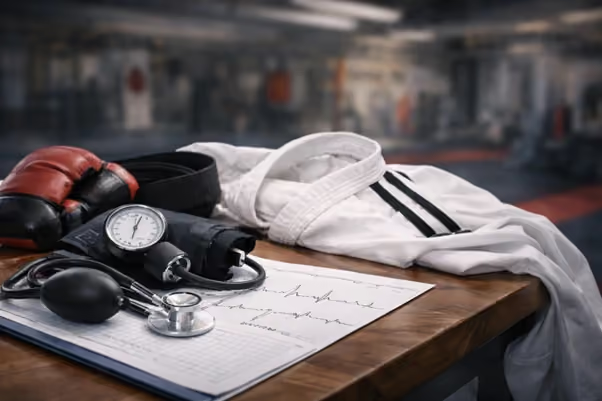
Across dojos and gyms worldwide, martial artists push their bodies to remarkable limits without proper medical screening. As both a medical doctor and former World Champion in Taekwon-Do, I regularly see athletic patients presenting with long-standing issues—elevated blood pressure, recurrent concussions, unresolved joint instability—that were never identified because no baseline screening was done.
Sports cardiology classifications describe boxing and mixed martial arts as activities with both high dynamic and high static loads, creating dramatic blood pressure increases during training. Professional fighters face mandatory screening in many jurisdictions, yet amateur martial artists often train for years without baseline evaluation.
Why Screening Prevents Problems
A Calgary study found 5.4% of MMA bouts were cancelled during pre-bout examination due to neuroimaging failures, abnormalities, or incomplete screening. In clinical practice, amateur fighters typically present only after problems become symptomatic—persistent headaches, exertional dizziness, shoulder instability—despite years of training. Basic screening identifies these issues before symptoms escalate.
Cardiovascular Screening
According to research and my clinical experience, hypertension is the most common abnormal finding during athlete screening. The combination of elevated blood pressure and head trauma creates intracranial hemorrhage risk. Athletes with persistently elevated blood pressure (≥130/80 mmHg US standards, ≥140/90 mmHg European standards) require evaluation.
Essential screening:
- Personal history: chest pain, syncope, dyspnea, murmur
- Family history: premature cardiac death before age 50, specific cardiac conditions
- Blood pressure in both arms
- Heart auscultation standing and supine
- Assessment for Marfan syndrome
White coat hypertension is common. Out-of-office monitoring (home or 24-hour) should verify elevated office readings. When athletes present with borderline pressure, I emphasize home recordings during normal training weeks, addressing training load, recovery, sleep, and stimulant use. Early identification often allows lifestyle-based control without interrupting training.
Concussion History and Baseline Testing
Research from World Karate Championships revealed 29.9% of youth karate athletes reported concussions. Only 24.5% could correctly identify what constitutes a concussion, and 68.9% believed loss of consciousness was required.
Athletes in high-risk sports—wrestling, boxing, judo, martial arts—should undergo baseline neurocognitive testing. Those with three or more concussions or delayed recovery warrant specialist evaluation and conservative return-to-contact approach; restriction may be advised.
Concussion history should document:
- Total previous concussions
- Mechanism of each injury
- Symptom duration
- Time between concussions
- Persistent symptoms
In concussion clearance discussions, I focus on cumulative exposure, recovery pattern, and symptom behavior under load. Athletes with repeated concussions often underestimate subtle cognitive or emotional changes. Structured symptom review and objective testing are essential. Modifying sparring intensity or frequency often provides a safer path than all-or-nothing decisions.
Musculoskeletal Screening
Previous injury is a major reinjury risk factor, especially without proper rehabilitation. The 90-second musculoskeletal screen is 51% sensitive and 97% specific. It assesses cervical spine motion, shoulder symmetry, elbow/wrist flexibility, hand function, quadriceps symmetry, hip/knee/ankle motion, and spine alignment.
Any previous injury requires comprehensive site-specific evaluation. Athletes need no joint effusion, normal range of motion without instability, and 80-90% normal strength before clearance.
From clinical work and high-level Taekwon-Do experience, shoulder and knee issues are commonly underestimated in striking arts. Athletes adapt around instability or restricted motion rather than addressing it, masking pathology until performance declines. Early screening allows targeted rehabilitation before compensatory patterns become entrenched.
Bloodborne Pathogen and Medical Condition Screening
Most commissions require HIV, Hepatitis B surface antigen, and Hepatitis C antibody testing, valid for six months (some allow twelve months). Fourth-generation HIV tests can become reactive approximately 2-4 weeks post-exposure, though typically reliable by 18-45 days. With 1.2 million Americans living with HIV (13% unaware) and over 2.4 million with Hepatitis C, routine screening is crucial.
Certain conditions modify rather than preclude training. Athletes with diabetes require regular foot, retinopathy, nephropathy, neuropathy, and cardiovascular evaluation. Those with controlled asthma should demonstrate adequate control with minimal rescue inhaler use. Prior ACL reconstruction, shoulder dislocation, or other major injuries require documented full rehabilitation—normal range of motion, adequate strength (90% of unaffected side), and sport-specific functional capacity.
In my practice, managing these conditions focuses on planning rather than restriction. For asthma, this involves confirming inhaler technique and timing. For post-injury athletes, clearance is based on functional movement quality and sport-specific load tolerance, not time alone.
Red Flag Symptoms
Cardiovascular:
- Chest pain during exertion
- Unexplained shortness of breath
- Palpitations or irregular heartbeat
- Dizziness or near-syncope during training
Neurological:
- Any loss of consciousness
- Persistent headache after head impact
- Vision changes
- Balance or coordination difficulties
- Confusion or concentration difficulty
- Nausea/vomiting after head contact
Musculoskeletal:
- Joint instability during normal movement
- Severe, persistent pain limiting function
- Significant swelling within hours
- Inability to bear weight or use limb
These symptoms require immediate training cessation and medical evaluation. Clinically, outcomes differ markedly between athletes who report early warning signs and those who continue despite symptoms. Early evaluation often allows minor adjustments and rapid return, whereas delayed presentation frequently results in prolonged restriction or permanent limitations.
Practical Implementation
Athletes:
- Schedule comprehensive physical examination with sports medicine physician
- Complete detailed health history emphasizing cardiovascular and neurological concerns
- Obtain blood pressure measurement (consider home monitoring if elevated)
- Document all previous concussions
- Address prior significant injuries with rehabilitation confirmation
- Consider baseline neurocognitive testing for regular sparring/competition
- Complete bloodborne pathogen screening for contact training
Coaches and Gym Owners:
- Require medical clearance before contact sparring
- Maintain confidential records with strict privacy and access controls
- Establish concussion response protocols
- Create sports medicine physician referral relationships
- Educate athletes about warning signs
- Implement graduated return-to-training protocols
Competitive Athletes:
- Initiate screening 4-6 weeks before competition season
- Update screening annually or when changing competition level
- Repeat baseline neurocognitive testing every 2 years
Career Longevity Through Prevention
Martial artists who sustain long careers treat their bodies as high-performance instruments requiring regular maintenance, prompt attention to problems, and realistic limitation assessment.
From a doctor’s perspective, medical screening identifies baseline status, recognizes risk factors, and implements safeguards. The karate practitioner with borderline hypertension monitors blood pressure, modifies intensity when elevated, and potentially begins treatment. The fighter with previous concussions implements protective measures, adjusts training approach, and maintains vigilant symptom monitoring.
When evaluating athletes for long-term participation, the conversation focuses on sustainable trajectory—cumulative training load, recovery adequacy, symptom progression or resolution, and realistic performance goals aligned with health status.
Medical screening represents the foundation of sustainable participation. Every martial artist faces a choice: train smart with appropriate medical oversight, or train until forced to stop by preventable injury.
Moving Forward
If you've trained for months or years without medical evaluation, establish your baseline now. Schedule comprehensive examination, document concussion history, check blood pressure, address nagging concerns.
For those preparing for competition, treat medical screening as seriously as technical preparation. Your combinations and sequences matter little if underlying conditions limit safe competition.
Medical screening provides the foundation for safe, sustainable martial arts practice. Whether training for fitness or pursuing championship titles, understanding your baseline health status represents your fundamental responsibility to yourself and training partners.
Step onto the mats with confidence built on comprehensive knowledge of your body's capabilities and limitations. That's the path to martial arts longevity.
About Author
Dr. Antti Rintanen is a licensed medical doctor and former world champion in Taekwon-Do, with a strong interest in translating medical knowledge into clear, practical guidance for everyday life. His work bridges clinical insight with practical training strategies, helping athletes and active individuals perform at their best while staying healthy. He writes at drantti.com, where he covers a wide range of topics from stress management and sleep habits to practical medical topics such as athlete blood tests and supportive tools for back pain.