

SPAS Ukrainian Martial Art: The Ancient Cossack Combat System Reborn
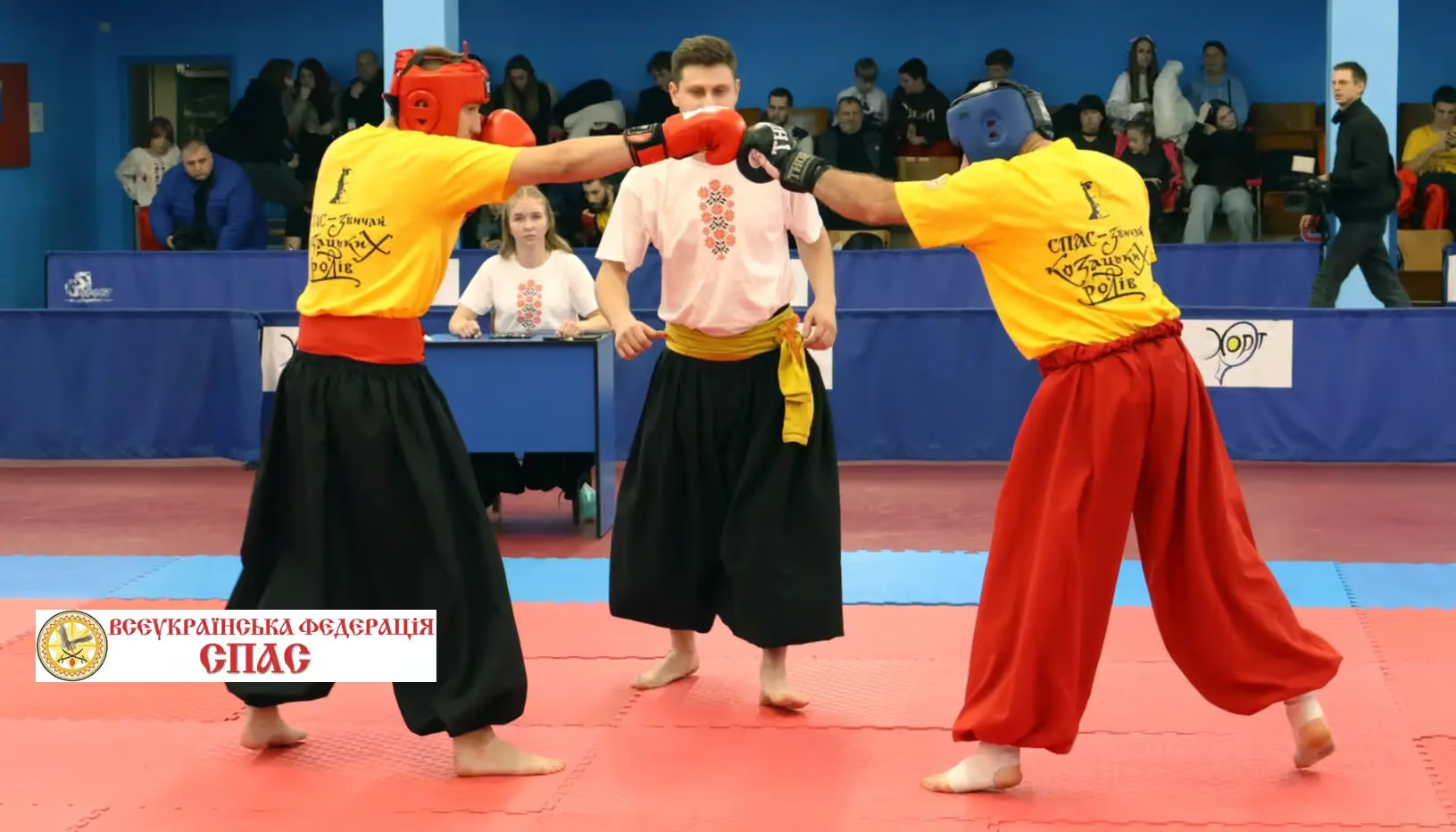
On Khortytsia Island, where the Dnipro River once rushed through rocky rapids, the Zaporizhzhya Cossacks built more than a fortress. They cultivated a warrior culture that would define Ukrainian martial heritage for centuries.
Among the Ukrainian martial arts trace their origins to ancient warrior traditions, SPAS stands as one of the most historically rooted yet least understood systems outside its homeland. While Combat Hopak gained international recognition through theatrical demonstrations and Horting evolved into a modern sport, SPAS remained closely tied to its birthplace—the island fortress where Cossack fighters perfected techniques born from necessity, refined through discipline, and preserved through cultural pride.
This exploration examines the SPAS Ukrainian martial art not merely as a collection of techniques, but as a living connection to the Zaporizhzhya Cossack ethos. Whether you're a practitioner exploring regional fighting systems or a martial artist seeking to understand how geography and culture shape combat philosophy, SPAS offers insights that transcend borders and time periods.
The Historical Roots of SPAS: Zaporizhzhya Cossacks and Khortytsia Island
The story of SPAS begins where the Dnipro River narrows, creating natural barriers that both protected and defined a people. Khortytsia Island became more than strategic geography. It became a crucible for martial culture.
Khortytsia—The Cradle of Cossack Martial Culture
Khortytsia Island stretches approximately 12.5 kilometers along the Dnipro River, its varied terrain reflecting the diversity of Ukraine itself—rocky cliffs, oak forests, steppe meadows, and wetlands. This largest river island in Ukraine holds archaeological evidence spanning millennia, from Bronze Age settlements to medieval fortifications.
The island's strategic importance in Ukrainian history cannot be overstated. Byzantine Emperor Constantine VII documented it as early as the mid-10th century, calling it St. George's Island. Kyivan Rus' princes held military councils here in 1103 and 1224, recognizing the tactical advantage these rapids provided.
But Khortytsia's true martial significance emerged during the 16th through 18th centuries, when it became the site of the Zaporizhzhya Sich—the fortified settlement and military base of the Zaporozhian Cossacks. Here, on this island positioned beyond the Dnipro's treacherous rapids, a unique warrior society developed. The Sich operated as both military stronghold and political center, embodying an egalitarian democracy rare for its time. Cossacks elected their leaders, made collective decisions through rada councils, and maintained discipline through a code that valued personal freedom alongside communal responsibility.
The Warrior Culture That Shaped SPAS
The research on Cossack martial arts revival indicates that Zaporizhzhya Cossacks received systematic martial training, particularly during the reign of Hetman Petro Konashevych-Sahaidachnyi in the early 17th century. This wasn't casual instruction. It was comprehensive military preparation designed to defend Ukrainian lands against Ottoman, Tatar, and Polish-Lithuanian incursions.
Training encompassed multiple combat domains. Cossacks mastered striking techniques derived from traditional fist fighting, grappling methods that would later influence Soviet Sambo development, and weapons proficiency including the shashka sabre, bow, spear, and later, firearms. But technical skill alone didn't define their martial culture.
The Cossack warrior ethos embedded values that still echo in SPAS practice today. Christian spirituality balanced with pre-Christian traditions created a distinctive moral framework. Personal freedom coexisted with collective responsibility. Individual prowess served communal defense. This philosophical foundation separated Cossack martial culture from purely militaristic systems developed elsewhere.
According to analysis of Ukrainian martial arts emergence, the significant influence of religion on Ukrainian consciousness allows scholars to divide martial arts into pre-Christian periods (Trypillian and Indo-European cultures) and Christian eras (Kyivan Rus, Zaporizhzhya Sich). SPAS carries both lineages—ancient movement patterns refined through Christian spiritual discipline.
The training itself adapted to frontier realities. Steppe warfare demanded horsemanship, hit-and-run tactics, and the ability to fight effectively while mounted or dismounted. Close-quarters combat skills proved essential when sabre distance closed to grappling range. Military drills often hid within male folk dances like the hopak, enabling practice even when occupying powers banned Cossack military activities.
This integration of combat training with cultural expression became crucial during periods of suppression, ensuring that martial knowledge survived through generations even when direct instruction faced prohibition.
What Makes SPAS Unique Among Ukrainian Martial Arts?
Ukraine developed multiple martial systems during the 20th and 21st centuries, each serving different purposes within the broader martial landscape. Combat Hopak, codified by Volodymyr Pylat in 1985, became the most internationally recognized through its theatrical presentations and distinctive sharovary pants. Horting, created by Eduard Yeremenko, merged kyokushin karate with Sambo throws to produce a modern combat sport. Belt wrestling preserved traditional folk competition formats.
SPAS occupies a different position in this ecosystem. Rather than creating a new synthesis from existing martial arts, founder Oleksandr Prytula sought to reconstruct and preserve the martial training methods specific to the Zaporizhzhya Cossacks. His work in the 1990s united Cossack clans and university clubs, gathering fragmented knowledge from elderly practitioners and historical sources.
The Ukrainian Parliament recognized SPAS as an official sport in 2010, providing government backing and enabling integration into school curricula. This institutional support helps ensure transmission to younger generations, though SPAS practitioners emphasize cultural preservation over competitive sport development.
The annual "Spas on Khortytsia" festival anchors this preservation effort. Held on the island where Cossack martial culture originally flourished, the gathering brings together practitioners, historians, and cultural enthusiasts. Demonstrations of techniques, weapons work, and traditional rituals maintain living connections to historical practice methods.
To explore the full landscape of Ukrainian combat systems, one must understand how each serves distinct functions. Combat Hopak emphasizes theatrical and competitive applications. Horting prioritizes sport competition structured similarly to MMA. SPAS focuses on cultural transmission and historical accuracy, making it less visible internationally but more deeply rooted in specific regional heritage.
This doesn't mean SPAS exists only as historical reenactment. Modern rules allow hand, foot, and throw attacks, scored similarly to Sambo competitions but incorporating Cossack salute rituals that maintain cultural distinctiveness. Cross-training between SPAS, Combat Hopak, and MMA practitioners occurs regularly, particularly among Ukrainian police and military units seeking practical combat skills grounded in national martial traditions.
The Philosophy and Cultural Context of SPAS
Martial arts cannot be separated from the values and worldviews of the cultures that produce them. SPAS embodies philosophical principles that emerged from Cossack society's unique structure and historical experience.
Cossack Values Embedded in Practice
The Zaporizhzhya Sich operated as a military democracy—a social organization that balanced individual autonomy with collective discipline. This egalitarian ethos permeates SPAS training methodology. While the system recognizes skill levels and teaching hierarchies, it avoids the rigid rank structures common in many Eastern martial arts.
According to traditional Cossack combat principles, Cossack martial culture stressed communal decision-making through rada councils, Christian spirituality balanced with warrior pragmatism, and personal freedom that never came at the expense of communal defense. These weren't abstract ideals. They shaped training priorities and tactical approaches.
Freedom through skill and unity through tradition—this phrase captures the dual nature of SPAS practice. Technical proficiency enables personal autonomy on the battlefield, while adherence to traditional forms maintains cultural continuity. The modern SPAS practitioner doesn't simply learn to fight. They connect to centuries of Ukrainian martial heritage.
Morale-building songs accompany training, linking physical practice to cultural identity. The Cossack salute ritual that begins and ends sessions serves similar functions—maintaining traditions that distinguish Ukrainian martial culture from systems developed under different cultural conditions.
Pre-Christian and Christian Influences
The analysis of Ukrainian martial arts emergence highlights how religion significantly influenced the consciousness of Ukrainian martial culture, allowing division into pre-Christian and Christian periods.
Pre-Christian influences trace back to Trypillian culture and broader Indo-European martial traditions. Archaeological findings show ritual wrestling figurines and flint spear drills dating to ancient periods. These early combat systems emphasized practical survival skills and ritual combat that served social functions within tribal structures.
The Christian era, beginning with Kyivan Rus and continuing through the Zaporizhzhya Sich period, introduced Orthodox spiritual elements. Cossacks balanced warrior ferocity with Christian mercy, tactical ruthlessness with spiritual discipline. This synthesis created a martial philosophy distinct from purely secular combat systems or those rooted in Eastern religious traditions.
Modern SPAS practice maintains this balance. Training develops physical capability and tactical effectiveness while encouraging practitioners to view martial skill as a component of broader personal development. The system doesn't separate physical technique from spiritual cultivation, nor does it elevate mystical elements above practical combat application.
This integrated approach reflects historical Cossack martial culture more accurately than systems that emphasize either pure sport competition or elaborate philosophical frameworks disconnected from combat realities.
How Does SPAS Compare to Russian Martial Arts?
Geography creates neighbors. History creates complexities. Ukrainian and Russian martial arts share some common roots in broader Slavic warrior traditions, yet evolved along distinct paths shaped by different cultural priorities and historical experiences.
SPAS vs. Systema
Systema practitioners often claim Cossack origins for their martial art, pointing to historical connections between Cossack fighting methods and techniques later refined by Soviet special forces. The Systema's evolution and Cossack connections traces these links, noting how Cossack combat methods influenced Soviet military hand-to-hand combat development during the 1920s.
However, significant differences separate SPAS from Systema beyond national identity claims. Systema emphasizes fluid, unstructured movement based on four core principles: breathing, relaxation, structure, and movement. Training avoids set kata or rigid techniques, encouraging practitioners to develop personalized defensive responses. This approach reflects Soviet military priorities—creating adaptable fighters capable of responding to unpredictable battlefield situations.
SPAS maintains more codified techniques and training structures, preserving specific methods documented from Zaporizhzhya Cossack military instruction. The kolovyi (circular movement) principle provides a foundational concept, but technical applications follow established patterns rather than purely individualized expression.
Systema development occurred largely within Soviet military and special forces contexts, emerging publicly only after the USSR's dissolution in 1991. SPAS reconstruction happened openly through cultural preservation efforts, working to recover techniques that Soviet-era suppression had fragmented or eliminated.
These aren't value judgments about effectiveness. They're observations about different developmental paths. Systema optimized for Soviet military needs. SPAS prioritizes cultural preservation and historical accuracy in transmitting Zaporizhzhya Cossack martial heritage.
SPAS vs. Sambo
The relationship between SPAS and Sambo involves more direct technical overlap. Combat Sambo's integration of Cossack techniques occurred explicitly during the 1920s when Viktor Spiridonov and Vasili Oshchepkov synthesized various wrestling and striking methods into a cohesive Soviet martial art.
Sambo creators studied traditional Cossack wrestling, Armenian kokh, Georgian chidaoba, and multiple other ethnic martial traditions across the Soviet Union, combining them with Japanese judo that Oshchepkov learned directly from Kano Jigoro. The result was an effective combat and sport system that served Soviet military and law enforcement needs while providing competitive athletic opportunities.
SPAS scoring systems use formats similar to Sambo competitions, but incorporate Cossack salute rituals that maintain cultural distinctiveness. Both systems allow throws, strikes, and submissions, though emphasis and technical details differ based on their distinct developmental contexts.
The fundamental difference lies in purpose. Sambo was created as a Soviet synthesis—explicitly combining the best elements from multiple sources to produce an optimized combat system and sport. SPAS aims to preserve and transmit techniques specific to Zaporizhzhya Cossack martial training, maintaining historical authenticity over technical optimization.
Modern practitioners of both systems sometimes cross-train, particularly in Ukraine where Russian martial arts like Sambo and Systema remain practiced alongside indigenous Ukrainian systems. This practical approach reflects martial arts pragmatism—techniques work or they don't, regardless of cultural origin. But it doesn't eliminate the distinction between cultural preservation and technical synthesis.
Core Techniques and Training Methods in SPAS
The comprehensive guide to Ukrainian fighting styles identifies hoydok (circular movement) as a defining characteristic of SPAS technical methodology. This principle shapes striking, grappling, and weapons applications throughout the system.
Hoydok doesn't simply mean moving in circles. It describes a tactical approach that uses circular footwork and body rotation to create angles, generate power, and evade direct attacks. Rather than meeting force with opposing force, SPAS techniques redirect incoming energy while positioning for counterattacks from advantageous positions.
Short-range strikes characterize SPAS's empty-hand combat applications. Unlike systems that emphasize long-range kicking or boxing-style extended combinations, SPAS focuses on close-quarters efficiency. This tactical priority reflects historical Cossack combat realities—battles often devolved into chaotic melees where extended techniques proved less useful than compact, powerful strikes delivered at grappling distance.
The system integrates hand, foot, and throw attacks fluidly. A practitioner might enter with low kicks targeting the opponent's base, transition to hand strikes as distance closes, then execute throws when grappling range is achieved. This comprehensive approach ensures effectiveness across all combat distances rather than specializing in a single range.
Weapon modules preserve traditional Cossack arms training. The shashka sabre, distinguished by its guardless hilt and slight curve, formed the Cossack warrior's primary weapon. Training emphasizes mounted and dismounted applications, reflecting the cavalry heritage of Zaporizhzhya Sich fighters.
The kama knife represents close-quarters weapons work, teaching principles applicable to various blade types. Short staff techniques round out weapons training, providing methods for improvised weapons and developing structural understanding that transfers to empty-hand applications.
Training methodology balances solo drilling, partner practice, and free application. Forms preserve traditional movement patterns while partner exercises develop timing, distance management, and adaptive responses. Sparring under modified rules allows practitioners to test techniques while minimizing injury risk.
This structured yet practical approach maintains technical precision without sacrificing combative applicability—a balance that historically effective martial arts often achieve better than systems designed primarily for sport competition or theatrical demonstration.
SPAS in the Modern Era: Revival and Global Reach
The Soviet period created significant challenges for Ukrainian martial culture. The USSR officially banned "nationalist" Cossack rituals during the 1930s purges, imprisoning instructors and suppressing cultural practices deemed threatening to Soviet unity. Paradoxically, Soviet sport science elevated Ukrainian grapplers and boxers, producing Olympic champions while erasing the cultural contexts that originally developed their training methods.
The scholarly perspective on Ukrainian martial arts renewal documents how martial techniques survived through folk dance preservation. State folk ensembles kept hopak choreography alive, safeguarding kicks, squats, and movement patterns that encoded combat applications even when direct martial instruction faced prohibition.
Ukraine's independence in 1991 created opportunities for cultural revival. Oleksandr Prytula led SPAS reconstruction efforts, conducting ethnographic expeditions to villages and Kuban Cossack settlements where elderly practitioners retained fragmented knowledge. He united Cossack clans and university clubs, gathering scattered information and systematizing it into a coherent training curriculum.
The annual "Spas on Khortytsia" festival, held at Khortytsia's role as cultural preservation center, serves as the movement's spiritual center. Thousands gather on the island where Zaporizhzhya Sich once stood, participating in demonstrations, workshops, and competitions that maintain living traditions.
Government recognition in 2010 provided institutional support through school curricula integration and funding for cultural programs. This differs from purely grassroots preservation efforts, creating infrastructure for long-term transmission to younger generations.
International practice remains limited compared to more widely promoted Ukrainian martial arts like Combat Hopak's codification by Volodymyr Pylat, which established schools across Europe and North America. SPAS prioritizes depth over breadth, focusing on authentic transmission within Ukraine while welcoming serious international students willing to engage with its cultural context.
Cross-training between SPAS practitioners and other martial artists occurs regularly. Ukrainian MMA fighters sometimes incorporate SPAS throws and circular movement principles. Police and military units blend SPAS techniques with modern combatives. Combat Hopak practitioners study SPAS for historical accuracy in their theatrical presentations.
This practical integration demonstrates SPAS's technical viability while maintaining its distinct identity as a cultural preservation system rather than a commercial martial art optimized for global marketing.
Why Should Martial Artists Explore Ukrainian Combat Systems?
What Can Modern Practitioners Learn from SPAS?
SPAS offers tactical approaches developed under specific historical conditions that produced genuinely effective combat methods. The kolovyi circular movement principle provides alternatives to linear striking common in boxing and Muay Thai. Close-range integration of strikes, throws, and grappling addresses gaps that sometimes exist between specialized systems.
Beyond technique, SPAS demonstrates how martial arts serve cultural preservation functions. Training connects practitioners to historical lineages and collective identities in ways that transcend individual skill development. This dimension often gets lost in modern martial arts focused exclusively on competition success or self-defense practicality.
How Does SPAS Training Differ from Other Grappling Arts?
Unlike judo's emphasis on throwing or Brazilian jiu-jitsu's ground-fighting specialization, SPAS maintains balance across striking, throwing, and submission applications. The system doesn't separate these elements into distinct training modules but integrates them through drills that develop transitions between combat ranges.
Tactical priorities also differ. SPAS evolved for battlefield applications where prolonged ground fighting proved dangerous due to multiple opponents. Techniques emphasize rapid position changes, quick finishes, and maintaining mobility rather than controlled positional dominance on the ground.
These priorities create different movement patterns and technical emphases compared to sport grappling arts, though underlying biomechanical principles remain consistent.
Is SPAS Practiced Outside Ukraine?
Limited international practice exists, primarily among Ukrainian diaspora communities and martial artists specifically interested in regional fighting systems. Language barriers and cultural context requirements create higher entry thresholds than commercially oriented martial arts.
Those seriously interested in SPAS training should expect to engage with Ukrainian culture, history, and often language. This isn't gatekeeping—it reflects the system's nature as cultural preservation rather than exportable product. The depth of understanding required to transmit SPAS authentically exceeds what weekend seminars or online courses typically provide.
Conclusion
SPAS Ukrainian martial art represents more than historical curiosity or technical collection. It embodies the martial spirit of the Zaporizhzhya Cossacks—warriors who defended their homeland, maintained democratic principles in autocratic times, and developed combat methods refined through necessity rather than sport.
The circular movements trace back to battles fought on Khortytsia Island centuries ago. The integration of strikes, throws, and weapons reflects frontier warfare realities where survival demanded comprehensive skill. The cultural rituals maintain connections to communities that valued individual freedom within collective responsibility.
Whether you train in SPAS directly, study it for historical perspective, or simply appreciate the diversity of martial traditions, the system offers valuable insights. It demonstrates how geography shapes tactics, how culture influences philosophy, and how martial arts serve purposes beyond individual combat effectiveness.
The Zaporizhzhya Cossacks are gone. The Sich no longer stands. But their martial heritage persists through those who train in SPAS, maintaining techniques born from fierce independence and refined through disciplined practice.
Mastery is not achieved in moments of celebration. It is built in repetition, cultural understanding, and respect for those who walked the path before. For practitioners willing to engage deeply with Ukrainian martial culture, SPAS offers that connection—a living link to warrior traditions that shaped nations and defined identities.
To explore more martial arts history and cultural traditions, examine how different regions developed distinct fighting systems, and understand the broader context in which SPAS exists, continue your journey through the rich landscape of global martial heritage.
The path rewards those who respect it.