

Philippines Olympic Boxing Legacy: The Stories of Filipino Fighting Champions
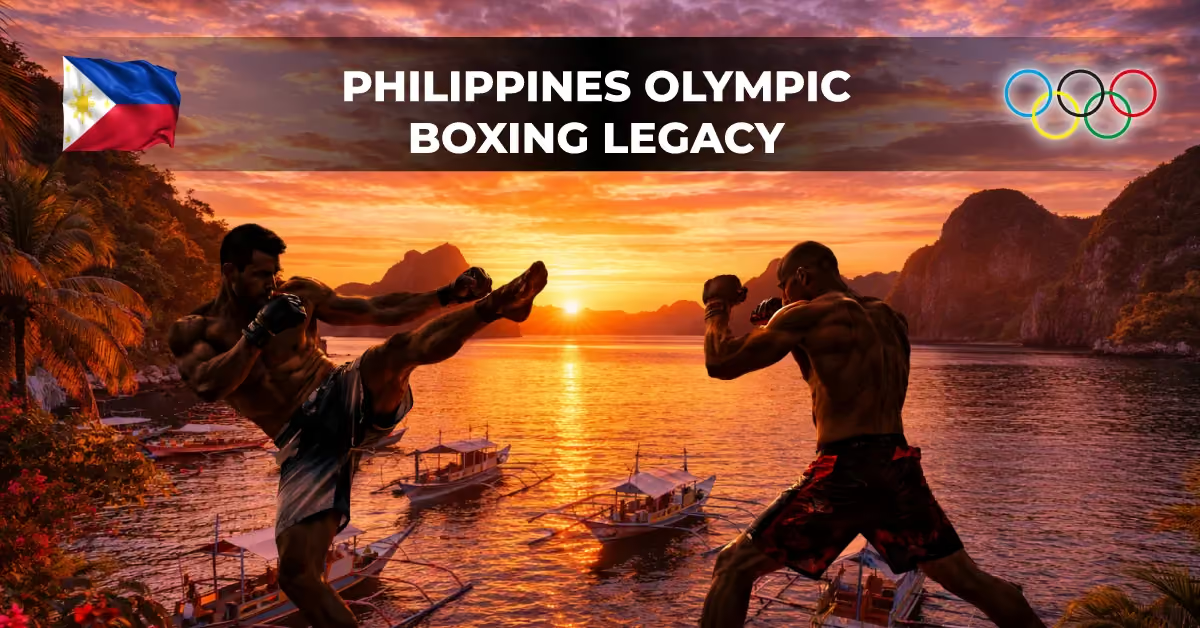
The Philippines stands as one of the most remarkable boxing nations in Olympic history, with 11 Olympic boxing medals spanning 92 years of competition—from Jose Villanueva's pioneering bronze in 1932 to Aira Villegas' bronze in 2024. These achievements represent 100% of the Philippines' Olympic medals in combat sports disciplines, establishing boxing as the undisputed king of Filipino Olympic success.
This extraordinary boxing legacy reflects the Philippines' deep-rooted warrior culture, dating back to the ancient martial arts of Arnis, Kali, and Eskrima. The fighting spirit that once enabled Datu Lapu-Lapu to defeat Ferdinand Magellan's forces in 1521 has translated into modern Olympic excellence, creating a pipeline of world-class fighters who consistently punch above their weight on the global stage.
Historical Foundation: Ancient Warrior Traditions Meet Modern Combat
Pre-Colonial Combat Heritage
The Philippines' combat sports excellence stems from centuries-old martial traditions. Filipino martial arts—collectively known as Arnis, Kali, or Eskrima—originated from the need for self-defense among pre-Hispanic Filipino settlements. Archaeological evidence and oral traditions suggest these fighting systems existed long before Spanish colonization in 1521, developing through cultural exchanges with neighboring Southeast Asian civilizations.
The first documented use of Filipino martial arts against foreign invaders occurred during the Battle of Mactan on April 27, 1521, when Datu Lapu-Lapu and his warriors defeated Portuguese explorer Ferdinand Magellan, leading Spanish forces. This victory demonstrated the effectiveness of indigenous Filipino fighting systems against technologically superior opponents—a theme that continues in modern Olympic boxing where smaller Filipino fighters defeat larger international competitors.
Traditional Martial Arts: The Foundation
Arnis: The National Martial Art
Republic Act No. 9850, signed on December 11, 2009, officially recognized Arnis as the Philippine National Martial Art and Sport. This legislation defined Arnis as "an indigenous Filipino martial art and sport characterized by the use of swinging and twirling movements, accompanied by striking, thrusting and parrying techniques for defense and offense."
The three main forms of Arnis include:
- Espada y Daga (sword and dagger)
- Solo Baston (single stick)
- Sinawali (double stick patterns resembling woven sawali mats)
While Arnis is not an Olympic sport, its principles of timing, distance, and body mechanics directly translate to boxing success. Many Filipino boxers, including Olympic medalists, have backgrounds in traditional martial arts that enhance their ring awareness and defensive skills.
Southeast Asian Games Dominance
The Philippines has dominated arnis competition whenever the sport is included in the Southeast Asian Games. At the 2019 SEA Games held in the Philippines, Filipino arnisadores won a record 14 gold medals, 4 silver, and 2 bronze medals—one of the largest single-sport medal hauls in SEA Games history. This dominance demonstrates the natural advantage Filipinos possess in their indigenous martial art and the potential for traditional combat skills to translate to international success.
The Olympic Boxing Dynasty: Complete Medal History
1932 Los Angeles Olympics: The Pioneer
🥊 Jose Villanueva - Bronze Medal (Men's Bantamweight)
Jose Villanueva's bronze medal marked the beginning of the Philippines' legendary boxing tradition. Competing at a very young age, Villanueva became the first Filipino boxer to win an Olympic medal, establishing a legacy that would span nearly a century. His achievement was part of one of the Philippines' most notable Olympic performances until 2020, with the country winning three total medals.
Villanueva's impact extended far beyond his bronze medal. He became a patriarch of Filipino boxing, mentoring future champions and establishing training methodologies that influenced generations. His son Anthony would later win silver in 1964, creating the first Olympic boxing dynasty in Philippine sports history. Jose's dedication to the sport after his competitive career helped maintain the Philippines' boxing culture during the lean years between medals.
1964 Tokyo Olympics: The Controversial Silver
🥊 Anthony Villanueva - Silver Medal (Men's Featherweight)
Anthony Villanueva's silver medal remains one of the most controversial decisions in Olympic boxing history. Fighting in his father's footsteps, Anthony faced Soviet Union's Stanislav Stepashkin in the final. Many ringside observers, including international media, believed Anthony had won the fight convincingly with superior technique and aggression.
The 3-2 split decision favoring the Soviet fighter was met with immediate controversy. Several boxing experts suggested that Cold War politics influenced the judging, as was common in amateur boxing during the 1960s. Despite the controversial loss, Anthony's achievement ended the Philippines' 28-year medal drought and proved that Filipino boxing excellence could be sustained across generations.
Anthony later became one of the Philippines' most respected boxing coaches, training numerous national champions and passing on the technical knowledge that made Filipino boxing distinctive. His coaching philosophy emphasized the importance of boxing IQ over pure physical power—a principle that continues to define Filipino boxing success.
1988 Seoul Olympics: The Revival
🥊 Leopoldo Serantes - Bronze Medal (Men's Light Flyweight)
Leopoldo Serantes ended the Philippines' longest medal drought in Olympic history at that time—24 years without a medal in any sport. His bronze medal marked the return of Philippine boxing excellence and coincided with the broader democratization of the Philippines following the People Power Revolution in 1986.
Serantes' path to bronze included victories over experienced international competitors before losing in the semifinals to Bulgaria's Ivan Ivanov, who went on to win gold. His bronze medal performance demonstrated that Filipino fighters could still compete at the highest levels despite limited resources and training facilities compared to boxing powerhouses like Cuba and the Soviet Union.
The 1988 Olympics marked a turning point for Philippine boxing development. Serantes' success attracted renewed government and private sector interest in boxing programs, leading to improved training facilities and coaching development that would benefit future generations of Filipino fighters.
1992 Barcelona Olympics: The Elder Brother
🥊 Roel Velasco - Bronze Medal (Men's Light Flyweight)
Roel Velasco became the first of the legendary Velasco brothers to win Olympic bronze, setting the stage for his younger brother Onyok's even greater success four years later. Competing in the same weight class as Serantes, Roel demonstrated the depth of Filipino talent in the light flyweight division.
Roel's bronze medal performance included impressive victories in the early rounds before losing in the semifinals to Cuba's Rogelio Marcelo, who won gold. His technical boxing style and defensive capabilities showcased the evolution of Filipino boxing from the aggressive, come-forward style of earlier champions to a more scientific approach emphasizing ring generalship.
As the elder brother, Roel served as mentor and training partner for Onyok, helping refine the techniques and strategies that would make his younger brother one of the most beloved Filipino Olympians. Their relationship exemplified the family-based approach to Filipino boxing development that has produced multiple Olympic medalists.
1996 Atlanta Olympics: The People's Champion
🥊 Mansueto "Onyok" Velasco - Silver Medal (Men's Light Flyweight)
Onyok Velasco's silver medal represents the emotional peak of Philippine Olympic boxing. His nickname "Onyok" (meaning "small" in Filipino) perfectly captured the essence of Filipino boxing—undersized fighters with oversized hearts who could compete with anyone in the world.
Velasco's journey to the final captivated the Philippine public like no Olympic athlete before or since. His technical brilliance, combined with his humble personality and inspirational backstory, made him a national hero. The final against Bulgaria's Daniel Petrov was controversial, with many believing Onyok had done enough to win gold, but his silver medal cemented his status as the most beloved Filipino boxer of all time.
Onyok's impact transcended sports. His success during the 1990s economic growth period in the Philippines symbolized the nation's potential to compete globally despite its small size. His fighting style—quick, intelligent, and resilient—became synonymous with Filipino characteristics and inspired a generation of young boxers who saw that technique and heart could overcome size and power disadvantages.
2020 Tokyo Olympics: The Renaissance
The 2020 Tokyo Olympics marked the greatest period in Philippine boxing history, with three medals contributing to the country's record-breaking performance.
🥊 Nesthy Petecio - Silver Medal (Women's Featherweight)
Nesthy Petecio shattered the ultimate barrier in Philippine boxing by becoming the first female Filipino boxer to win an Olympic medal. Her achievement was groundbreaking not only for Philippine boxing but also for women's sports in a country where female athletes often receive less support and recognition than their male counterparts.
Petecio's path to silver included impressive victories over experienced international competitors before facing Japan's Sena Irie in the final. Fighting in front of a Japanese home crowd due to COVID-19 restrictions, Petecio lost a controversial decision that many observers felt could have gone either way. Despite the loss, her silver medal opened doors for women's boxing in the Philippines and inspired young girls across the archipelago.
Her success came after years of dedication despite limited support for women's boxing. Petecio often trained alongside male boxers and faced skepticism about women's participation in combat sports. Her Olympic medal validated women's boxing in the Philippines and led to increased investment in female boxing programs.
🥊 Carlo Paalam - Silver Medal (Men's Flyweight)
Carlo Paalam's silver medal represents the most inspiring rags-to-riches story in Olympic history. A former garbage scavenger from Cagayan de Oro, Paalam literally collected scraps and recyclables to help his family survive in extreme poverty. Boxing became his escape from destitution and eventually his path to Olympic glory.
Paalam's Olympic journey included one of the greatest upsets in boxing history when he defeated Rio 2016 gold medalist Shakhobidin Zoirov of Uzbekistan in the semifinals. The victory demonstrated that determination, proper training, and Filipino fighting spirit could overcome any obstacle, including the pedigree of established champions.
His final loss to Britain's Galal Yafai was competitive, and Paalam's silver medal transformed his life and became a symbol of hope for impoverished Filipino youth. His story proved that Olympic dreams were possible regardless of socioeconomic background, inspiring boxing programs in disadvantaged communities across the Philippines.
🥊 Eumir Marcial - Bronze Medal (Men's Middleweight)
Eumir Marcial's bronze medal was significant for demonstrating Philippine boxing excellence beyond the traditional lighter weight classes. A professional boxer who returned to amateur competition for the Olympics, Marcial showed the depth of Filipino boxing talent and the commitment athletes were willing to make for Olympic glory.
Marcial's middleweight bronze proved that Filipino fighters could compete successfully in heavier divisions where size and power traditionally matter more than in the lighter classes where Philippines had historically excelled. His semifinals loss to Cuba's Arlen Lopez, who won gold, was competitive and showed that Filipino boxing development had expanded beyond its traditional strengths.
As a professional boxer, Marcial's Olympic participation required significant sacrifice, including giving up professional purses and risking injury in amateur competition. His dedication inspired other professional Filipino fighters to consider Olympic participation and demonstrated the continuing importance of amateur boxing in the Philippines.
2024 Paris Olympics: Centennial Excellence
The 2024 Paris Olympics marked 100 years since the Philippines' first Olympic participation in the same city, and Filipino boxers commemorated the centennial with continued excellence.
🥊 Nesthy Petecio - Bronze Medal (Women's Featherweight)
Nesthy Petecio made history by becoming the first Filipino boxer in the modern Olympic era to win multiple Olympic medals. Her bronze medal at the centennial Olympics demonstrated remarkable consistency at the highest level of international competition and cemented her legacy as the greatest female boxer in Philippine history.
Competing in her second Olympics, Petecio faced the pressure of defending her status as the face of Philippine women's boxing. Her bronze medal performance, including victories over strong international competitors before losing in the semifinals, proved that her Tokyo success was not a fluke but the result of sustained excellence.
Petecio's multiple Olympic medals placed her in elite company globally and established a new standard for Filipino boxing achievement. Her success at both Tokyo and Paris inspired the next generation of female Filipino boxers and ensured that women's boxing would remain a priority in Philippine sports development.
🥊 Aira Villegas - Bronze Medal (Women's Flyweight)
Aira Villegas' bronze medal represented the new generation of Filipino boxing talent and ensured continuity in the Philippines' Olympic boxing success. At just 23 years old, Villegas showed that the pipeline of Filipino boxing talent remained strong and that the success of previous generations had inspired new champions.
Villegas' Olympic performance demonstrated the depth of Philippine women's boxing development following Petecio's pioneering achievements. Her bronze medal in the flyweight division showed that Filipino women could succeed across different weight classes and that the infrastructure for women's boxing had improved significantly.
Her success in Paris, combined with Petecio's multiple medals, established the Philippines as a legitimate power in women's Olympic boxing and promised continued success in future Olympics. Villegas' youth suggests that she could compete in multiple Olympic cycles, potentially adding to the Philippines' boxing medal collection.
Weight Class Analysis: Filipino Boxing Success Patterns
Flyweight Division Dominance (5 medals)
The flyweight divisions (light flyweight and flyweight) have produced the most Filipino Olympic medals with five total:
- Light Flyweight: Serantes (1988 Bronze), Roel Velasco (1992 Bronze), Onyok Velasco (1996 Silver)
- Flyweight: Paalam (2020 Silver), Villegas (2024 Bronze)
This success reflects the natural physical characteristics of many Filipino boxers, who often excel in lighter weight classes where technique, speed, and endurance matter more than raw power. The flyweight success also demonstrates the continuity of Filipino boxing excellence across different eras.
Featherweight Achievement (3 medals)
The featherweight division has produced three medals spanning six decades:
- Anthony Villanueva (1964 Silver)
- Nesthy Petecio (2020 Silver, 2024 Bronze)
Petecio's achievements in featherweight demonstrate both the evolution of Filipino boxing to include women and the consistency of success in this weight class. The 56-year gap between Anthony Villanueva's silver and Petecio's first medal shows the importance of sustained development programs.
Expansion to Heavier Divisions
Eumir Marcial's middleweight bronze (2020) represented a breakthrough for Filipino boxing in heavier weight classes. Traditionally, Filipino boxers succeeded in lighter divisions, but Marcial proved that with proper development, Filipino fighters could compete successfully at higher weights where international competition is typically more physical.
This expansion to heavier divisions suggests that Filipino boxing development has evolved beyond its traditional strengths and could produce medals across more weight classes in future Olympics.
Boxing Dynasties and Family Traditions
The Villanueva Dynasty
The Villanueva family created the first Olympic boxing dynasty in Philippine sports history:
- Jose Villanueva (1932 Bronze) - The patriarch who started Filipino Olympic boxing
- Anthony Villanueva (1964 Silver) - The son who proved excellence could be inherited
This father-son combination spanned 32 years and established the importance of family traditions in Filipino boxing development. Jose's mentorship of Anthony created a template for boxing development that emphasized technical knowledge passed between generations.
The Velasco Brothers
The Velasco brothers represented the most successful sibling combination in Philippine Olympic history:
- Roel Velasco (1992 Bronze) - The elder brother who paved the way
- Onyok Velasco (1996 Silver) - The younger brother who became a national icon
Their success demonstrated the importance of training partnerships and family support in developing Olympic-level boxers. Roel's experience and guidance were crucial to Onyok's development, and their combined success inspired other boxing families to pursue Olympic dreams.
The Quest for Olympic Boxing Gold
Despite 10 Olympic boxing medals, the Philippines has never won Olympic gold in boxing—the sport's Holy Grail remains elusive. Several fights were close enough to have gone either way:
- Anthony Villanueva (1964): Many believed he defeated the Soviet fighter
- Onyok Velasco (1996): The decision against Bulgaria's Daniel Petrov was controversial
- Nesthy Petecio (2020): Her final against Japan's Sena Irie was extremely close
The pursuit of boxing gold continues to drive Filipino fighters and represents the ultimate goal for the nation's boxing program. With continued development and the success of recent Olympics, that elusive gold medal may finally be within reach.
Modern Development and Future Prospects
Women's Boxing Revolution
The emergence of Filipino women's boxing, led by Nesthy Petecio and continued by Aira Villegas, represents a revolutionary development in Philippine combat sports. Prior to Petecio's 2020 breakthrough, women's boxing received minimal support and recognition in the Philippines.
The success of Filipino women boxers has led to:
- Increased funding for women's boxing programs
- Development of female coaching expertise
- Inspiration for young girls to pursue boxing
- Recognition that Filipino fighting excellence transcends gender
Training and Infrastructure Improvements
Recent Olympic success has attracted increased investment in boxing infrastructure and training programs. The establishment of modern training facilities and the recruitment of international coaching expertise have enhanced the development of Filipino boxers.
The Inspire Sports Academy and other private initiatives have provided world-class training facilities that were previously unavailable to Filipino boxers. These improvements, combined with government support through the Philippine Sports Commission, have created better pathways for developing Olympic-level talent.
Regional Dominance as Olympic Foundation
The Philippines' continued dominance in Southeast Asian Games boxing provides the foundation for Olympic success. Regular victories against regional rivals like Thailand, Vietnam, and Indonesia serve as stepping stones to global competition and help identify athletes with Olympic potential.
The depth of talent demonstrated at regional competitions ensures a continuous pipeline of potential Olympic medalists. This systematic development approach, from local competitions through regional dominance to Olympic success, has proven effective for sustained boxing excellence.
Cultural Impact and National Identity
Boxing as National Metaphor
Filipino Olympic boxing success has become a metaphor for the nation's ability to compete globally despite size and resource disadvantages. The image of undersized Filipino fighters defeating larger international opponents resonates deeply with Filipino national identity and the concept of "David vs. Goliath" struggles.
This symbolic importance extends beyond sports, representing the Filipino diaspora's success in international contexts and the nation's ability to excel in areas where talent and determination matter more than size or wealth.
Inspiration Across Socioeconomic Lines
The stories of Olympic boxing medalists, particularly Carlo Paalam's journey from garbage collector to silver medalist, demonstrate that Olympic dreams are accessible regardless of socioeconomic background. These inspirational narratives encourage young Filipinos to pursue boxing and other sports as pathways to better lives.
Boxing's accessibility—requiring minimal equipment and facilities compared to other sports—makes it particularly appealing to disadvantaged communities where many future champions may be found.
Other Combat Sports: Limited Olympic Presence
While boxing dominates Philippine Olympic combat sports success, the country has participated in other combat disciplines with limited medal success:
Taekwondo
- Participation: 1988-2024 (regular participation)
- Best Result: Multiple 9th place finishes
- Notable Athletes: Benjamin McMurray (1988), Stephen Fernández (1992)
Judo
- Participation: 1964-2024 (sporadic participation)
- Best Result: Multiple early round eliminations
- Notable Athletes: Kiyomi Watanabe (2020, 2024)
Wrestling
- Participation: 1936-1980s (no active Olympic program)
- Best Result: Early round participation only
- Status: No current Olympic program
Fencing
- Participation: 1988, 1992, 2024 (32-year gap)
- Best Result: First round eliminations
- Notable Achievement: Samantha Catantan's 2024 qualification ended 32-year absence
These sports represent potential areas for future development, but significant investment in training, coaching, and infrastructure would be required to achieve the success levels seen in boxing.
Future Olympic Prospects
Los Angeles 2028 Opportunities
The 2028 Los Angeles Olympics present strategic opportunities for Philippine combat sports:
- Proximity to large Filipino-American communities could provide support
- Continued boxing medal prospects across multiple weight classes
- Potential breakthrough in other combat sports with increased development
Boxing Gold Medal Chase
The quest for the Philippines' first Olympic boxing gold medal remains the ultimate goal. Recent near-misses and the depth of current talent suggest that this achievement may be within reach in the coming Olympics.
Traditional Martial Arts Olympic Inclusion
While Filipino martial arts like Arnis are not currently Olympic sports, the IOC's interest in diverse, culturally significant sports could potentially create opportunities for future inclusion. The organized international structure of Filipino martial arts provides a foundation for potential Olympic consideration.
Manny Pacquiao: The Olympic Connection That Never Happened
When discussing the Philippines’ legacy in Olympic boxing, it’s impossible not to mention Manny Pacquiao—even though he never competed in the Games. His absence from the Olympics is one of the most fascinating “what‑ifs” in Philippine sports history, and his influence on the country’s Olympic boxing culture remains undeniable.
A Boxing Icon Who Never Became an Olympian
Pacquiao turned professional at just 16 years old, driven by poverty and the need to support his family. This early jump into the pro ranks meant he bypassed the amateur system entirely, including the Olympic pathway. In many ways, Pacquiao’s story reflects a broader reality for Filipino boxers: economic pressures often push young talents to turn professional early, long before they can pursue Olympic dreams.
Despite never wearing the Philippine colors on the Olympic stage, Pacquiao has always been deeply connected to the nation’s amateur boxing community. He has publicly supported Olympic hopefuls, funded training programs, and used his global platform to spotlight Filipino fighters. His presence has helped elevate the sport’s visibility and inspire generations of young boxers who did go on to compete in the Games.
A Symbol of Filipino Fighting Spirit
Pacquiao’s career embodies the same qualities that define the Philippines’ Olympic boxing success: resilience, discipline, and an unbreakable will to rise above adversity. For many Filipinos, he represents the pinnacle of what a Filipino boxer can achieve—making him a symbolic figure in any discussion of the country’s Olympic combat sports achievements.
Even without an Olympic medal, Pacquiao’s influence is woven into the narrative of every Filipino boxer who steps into the Olympic ring. His success helped create a national culture that celebrates boxing as the country’s strongest Olympic discipline.
Pacquiao’s Olympic Flag-Bearer Moment (Beijing 2008)
Manny Pacquiao’s closest brush with the Olympic stage came in 2008, when he was chosen as the flag bearer for the Philippine delegation at the Beijing Olympics opening ceremony. Despite never having competed in the Games, Pacquiao led Team Philippines during the Parade of Nations, a powerful symbol of his status as the country’s most iconic boxer. His presence at the ceremony bridged the gap between professional and amateur boxing, underscoring how deeply he is woven into the narrative of Philippine Olympic combat sports.
From the Ring to the Screen: Leading Team Philippines on Physical: 100 Asia
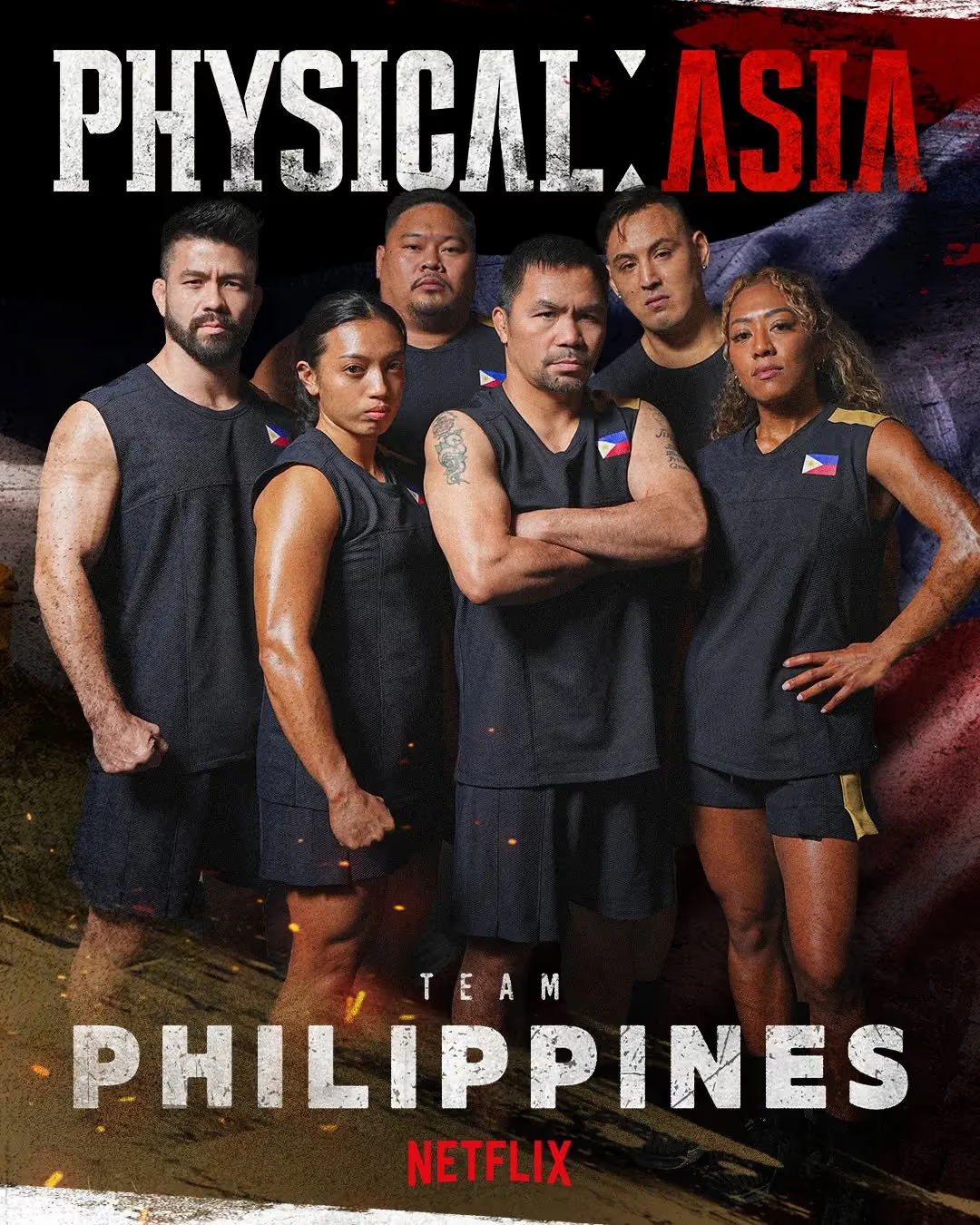
Pacquiao’s leadership role extends beyond traditional sports. In the upcoming Physical: 100 Asia show, he serves as the leader of the Filipino team, guiding a diverse group of athletes, fighters, and fitness champions. His presence on the show reinforces his status as a national icon and mentor figure—someone who continues to represent Filipino strength and competitiveness on the international stage.
This appearance also highlights how Pacquiao’s influence has evolved: from world champion boxer to cultural ambassador, inspiring Filipinos not only in the ring but across all arenas of physical excellence.
Conclusion: A Century of Fighting Excellence
The Philippines' Olympic combat sports legacy represents one of the most remarkable stories in international competition. From Jose Villanueva's pioneering bronze in 1932 to Aira Villegas' bronze in 2024, Filipino boxers have consistently demonstrated that skill, determination, and cultural fighting heritage can overcome resource limitations and size disadvantages.
Eleven Olympic boxing medals across 92 years establish boxing as the Philippines' premier Olympic sport and demonstrate sustained excellence across multiple generations. The evolution from male-only competition to include groundbreaking female champions like Nesthy Petecio shows that Filipino fighting excellence transcends gender and continues to evolve.
The stories behind each medal—from family dynasties like the Villanuevas and Velascos to inspirational journeys like Carlo Paalam's rise from poverty—reflect broader themes of Filipino resilience, family values, and the pursuit of excellence against overwhelming odds.
As the Philippines enters its second century of Olympic participation, the boxing foundation built over decades provides a strong base for continued success. The quest for that elusive first Olympic boxing gold medal continues to drive Filipino fighters, while the success in women's boxing and potential expansion to other combat sports promise new opportunities for glory.
The warrior spirit that enabled ancient Filipino heroes like Lapu-Lapu to triumph over superior forces lives on in modern Olympic boxing rings, where undersized Filipino fighters continue to prove that heart, technique, and determination can defeat any opponent. This legacy ensures that boxing will remain the cornerstone of Philippine Olympic success for generations to come, carrying forward a century-long tradition of fighting excellence on the world's greatest sporting stage.
Related Article: Martial Arts in the Olympics