

PNF Stretching for Martial Artists: The Science-Backed Method to Unlock Real Range of Motion
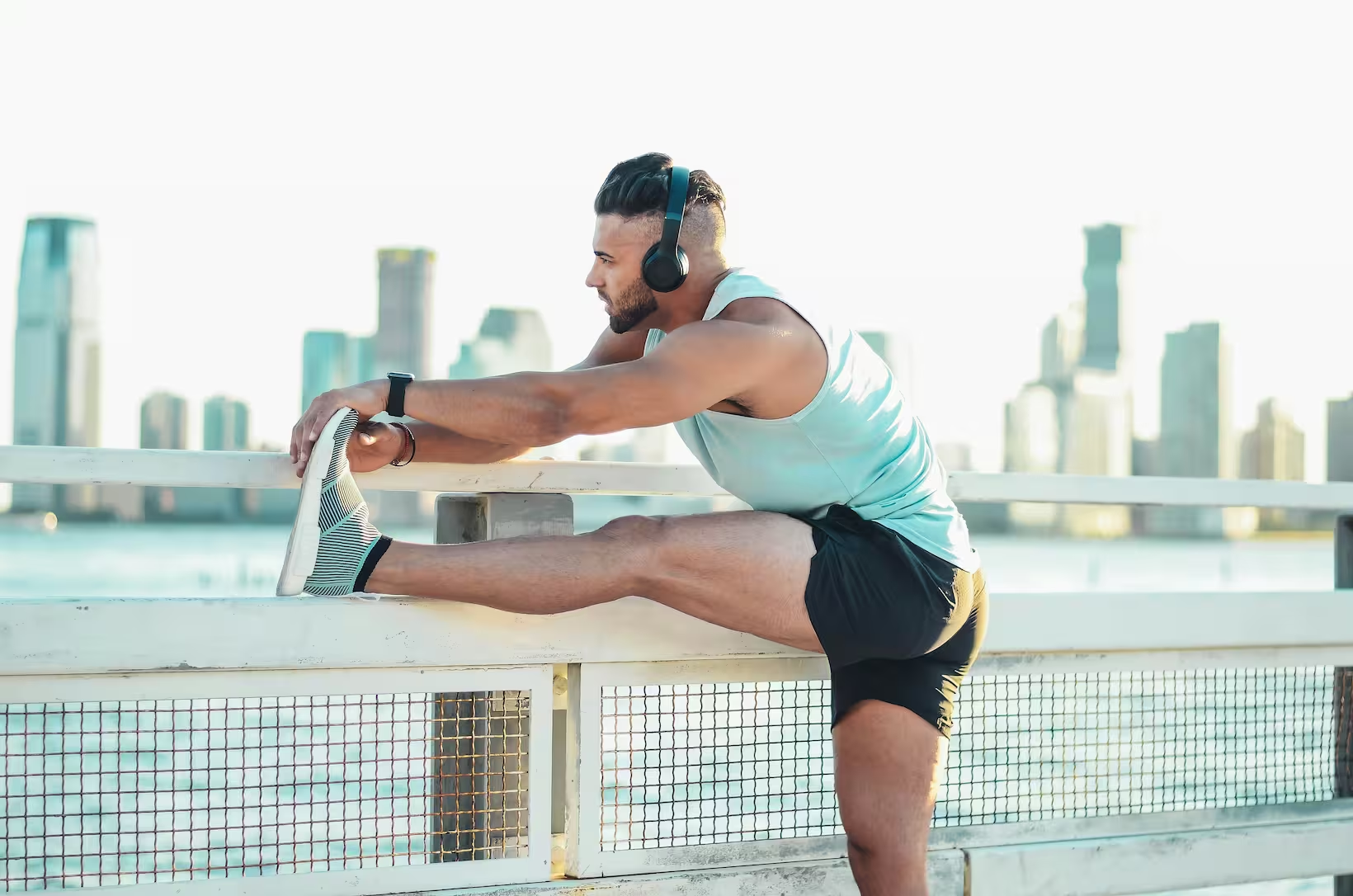
In martial arts, progress rarely comes from effort alone. It comes from refinement, from understanding the mechanics behind the movement and applying the right method at the right time.
Most practitioners spend years doing the same static stretches before and after class. The hips loosen slightly. The kicks get a little higher. Then improvement stalls for weeks, months... sometimes indefinitely. It's a frustrating plateau that has nothing to do with lack of dedication and everything to do with the method.
PNF stretching offers a different path. It's a flexibility technique grounded in how your nervous system actually works, and it produces measurable gains faster than any passive stretching approach. This guide breaks down what PNF is, the science that explains why it works, how it applies directly to the movements you train every day, and how to build a simple protocol into your existing practice.
What Is PNF Stretching? A Clear Definition
Proprioceptive Neuromuscular Facilitation (PNF) is a stretching method developed in the 1940s by neurologist Dr. Herman Kabat. It was originally designed to treat patients with neuromuscular conditions, including polio and multiple sclerosis. Physical therapists recognised early on that by working with the nervous system's natural reflexes, they could produce significantly greater range of motion than passive techniques allowed.
The core concept is straightforward: instead of simply holding a muscle at its length limit, you stretch it, then contract it isometrically against resistance, then relax and stretch it further. That cycle of tension and release encourages the nervous system to permit greater lengthening each time.
The Three PNF Variations
Hold-Relax (HR): A passive stretch is applied to the target muscle. You then push isometrically against resistance for approximately six seconds. After releasing the contraction, the muscle is stretched further into the new range.
Contract-Relax (CR): Similar to Hold-Relax, but the muscle moves concentrically through a range of motion against resistance. More dynamic and particularly useful with a training partner.
Contract-Relax-Antagonist-Contract (CRAC): After the contraction and relaxation phase, you actively fire the opposing muscle group to push deeper into the stretch. As outlined in research comparing PNF stretching variations, this approach is particularly valuable for activities requiring large ranges of motion like high kicks in Muay Thai or Karate.
The Neuroscience Behind PNF Stretching
When a muscle is stretched near its limit, the body's Golgi tendon organs (GTOs) send signals to the spinal cord indicating that tension is high. The nervous system responds by reducing muscle activation, a protective mechanism called autogenic inhibition. PNF takes advantage of this reflex by introducing a brief contraction while the muscle is already at length, deepening the GTO response and allowing greater relaxation into the stretch.
This mechanism is supported by research on PNF mechanisms and range of motion, which found that PNF-induced range of motion gains can persist for 90 minutes or more following a session.
Static stretching lengthens the muscle passively over time, but it doesn't retrain the nervous system's perception of what length is safe. PNF does. It teaches the body that greater range is acceptable. That's why the mind-body connection in martial arts is so relevant here. Flexibility is a reflection of what the nervous system is willing to permit.
Dive deeper: The Science Behind Stretching
How Flexibility Directly Translates to Martial Arts Performance
In Muay Thai and Karate, hip flexor and hamstring mobility determine how high and how cleanly you can deliver a roundhouse or side kick. A 2021 meta-analysis comparing flexibility training methods found that PNF stretching improves flexibility approximately twice as fast as static holds.
In Brazilian Jiu-Jitsu and wrestling, adductor and hip flexibility allow you to re-establish guard during scrambles and maintain positional control. Flexible muscles also absorb external force better, reducing the risk of pulls and tears.
In clinch work and takedown defence, thoracic and shoulder mobility affect how well you can manage underhooks, overhooks, and collar grips. Restricted movement forces compensatory patterns that create openings.
The principle is consistent: flexibility gives you the potential range. Strength at end-range turns that potential into controlled output. Your broader skill development practice depends on all three working together.
A Practical PNF Stretching Protocol for Martial Artists
The most important variable is timing. PNF can temporarily reduce maximal force output when performed before explosive training. Use it after your main session, in a dedicated mobility block, or on recovery days. This is not a warm-up tool.
Hold each contraction for approximately six seconds at 60–70% of maximum effort. Higher intensities increase soreness risk without producing better gains.
Partner-Assisted Hamstring PNF
Lie on your back. Have your partner raise one leg to mild tension. Push your leg gently down against their resistance for six seconds. No movement, just steady pressure. Release, breathe out, and allow your partner to ease the leg slightly deeper. Hold 20–30 seconds. Repeat two to three times per leg.
Adductor / Groin PNF
Sit in a wide-leg position (butterfly or side split as far as your range allows). Apply mild pressure inward with your elbows on your knees. Press your knees up against your hands for six seconds. Release, breathe out, and allow gravity and gentle pressure to take you slightly deeper. Hold 20–30 seconds and repeat.
Hip Flexor PNF
Begin in a deep lunge with one knee on the floor. Tilt the pelvis forward to feel the hip flexor engage. Push the rear knee gently into the floor for six seconds. Release, exhale, and allow the front hip to sink slightly deeper. This variation requires no partner and integrates well into post-training cool-downs.
How Often Should Martial Artists Use PNF Stretching?
Two to three sessions per week is sufficient for consistent flexibility gains without excessive recovery demand. A controlled study on martial arts athletes over four weeks found measurable improvements in both joint flexibility and muscle strength following a structured PNF protocol. Consistency was the deciding variable.
Expect noticeable improvement in four to six weeks. Expect meaningful, lasting change in three to six months. The nervous system requires repeated exposure to new ranges before it treats them as safe and usable.
Common Mistakes That Limit Your Results
Stretching cold muscles. Five to ten minutes of light movement before any deep flexibility work is non-negotiable. The risk of injury on a cold muscle under contraction is real.
Contracting at maximum effort. Contracting at 60–70% of maximum is effective and reduces the soreness risk, as supported by research reviewing PNF benefits and protocols.
Using PNF before explosive training. Use dynamic drills to prepare for class. Save PNF for after.
Inconsistency. The nervous system needs regular reminders of the new range to maintain it. Consistent sessions build lasting range. Occasional sessions produce occasional results.
The Path to Range Is Built One Session at a Time
PNF stretching reflects a principle that runs through every serious martial arts practice: progress comes from understanding the system you're working with, not from forcing it.
Whether you're working toward cleaner high kicks, more fluid guard transitions, or simply moving through training with less restriction, the principles are the same:
- Respect the warm-up
- Maintain consistent practice
- Trust the process.
Mastery is not achieved in moments of breakthrough. It is built in patient repetition, session by session, range by range. Stay consistent. The path rewards those who respect it.
Continue reading: The Mental Side of Overcoming Physical Limits in Martial Arts