

A Knee to a Kneeling Fighter: Inside the Akylbek vs Osmanli Disqualification
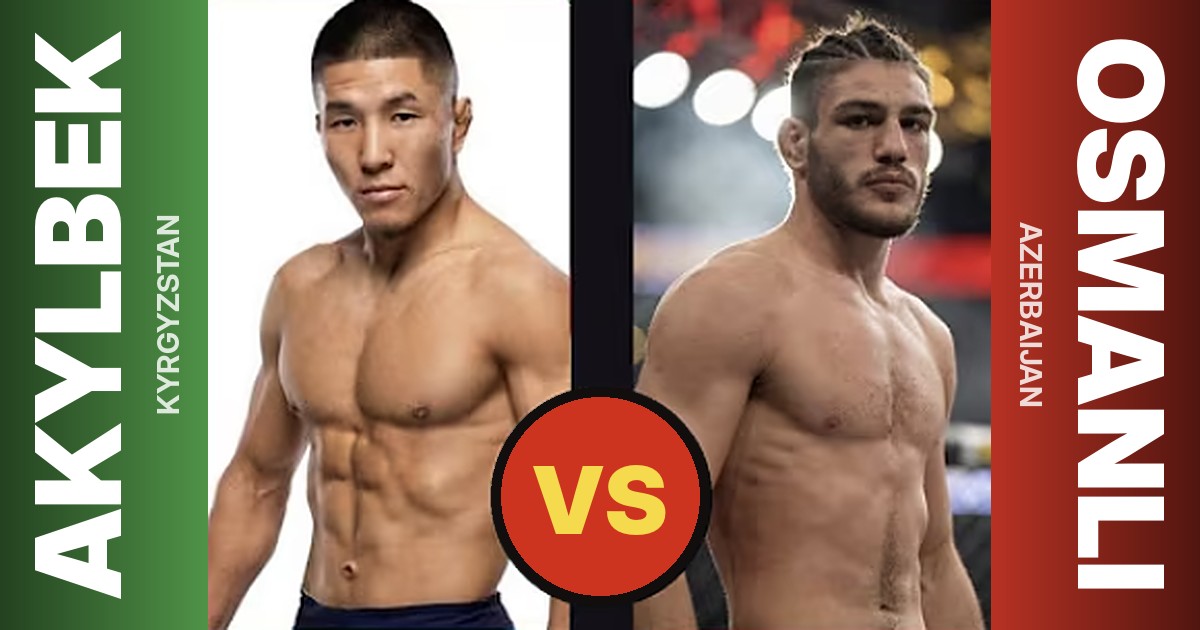
On the night of September 26, two 22-year-old bantamweights walk out at the Meta Apex in Las Vegas with the same prize waiting for them: a contract with the Ultimate Fighting Championship (UFC). Ilimbek Akylbek of Kyrgyzstan and Mehemmedeli Osmanli of Azerbaijan have spent a full season of The Ultimate Fighter (TUF) earning this final. Akylbek vs Osmanli lasts two minutes and nineteen seconds.
It ends with Akylbek down on his knees, a knee to his head, and Osmanli disqualified.
Kneeing the head of a grounded opponent is one of the clearest lines in mixed martial arts. As we set out in our guide to UFC illegal moves, it sits on the prohibited list for good reason. The foul took a second. The conversation that followed it has lasted a week, and much of it has drifted away from what martial arts is supposed to teach.
How Akylbek vs Osmanli Unfolded in 2:19
Both men arrive with real pedigree. According to Heavy, Akylbek won a title with Octagon League in Kazakhstan and has fought under the ONE Championship banner. Osmanli held titles in two divisions with New Generation Fighting and went 3-0 with UAE Warriors. Both were coached by Michael Bisping on the show.
The opening exchanges are brisk. They trade on the feet, testing range. Then Akylbek changes levels, takes Osmanli down in the center of the Octagon and climbs to full mount, looking for damage from the top.
Osmanli does the hard work of escaping. After roughly a minute underneath, he is back on his feet, and the fight resets. That reset is where it turns.
Akylbek slips as they square up again. Osmanli rushes in on an opponent who is on his knees on the canvas, and lands a left knee to the head.

In the seconds after the strike, Akylbek grabs at Osmanli's leg. Referee Kerry Hatley steps in, and Akylbek rolls onto his back, where he stays down for several minutes.
Hatley reviews the replay, then waves the fight off. The official result: Akylbek wins by disqualification, due to an illegal knee to a downed opponent.
With that ruling, Akylbek becomes the first fighter from Kyrgyzstan to win The Ultimate Fighter. Osmanli's nine-fight winning streak ends, and he takes the second loss of his professional career.
Why Is a Knee to a Grounded Opponent Illegal?
Because a fighter with a knee on the canvas has lost the one thing that truly protects the head: the ability to move it. At the moment of impact, Akylbek is down on one knee, folded forward, with both gloves wrapped around his head. He isn't reaching for a grip or posting on the mat. He is covering up. A tight guard can absorb a punch, but it can't take his head out of the path of a knee thrown at close range by a standing opponent. He can't step back, turn or circle away. That's why the rule doesn't ask whether the downed fighter's hands are up. Once his knee touches the canvas, he is grounded, and his head is off limits to knees and kicks.
Akylbek, down on his knees, was grounded by any reading.
The rulebook is just as clear about when a foul can end a fight. The Unified Rules of Mixed Martial Arts, as published by the UFC, state:
"Disqualification may occur after any combination of fouls or after a flagrant foul at the discretion of the referee."
Source: Unified Rules of Mixed Martial Arts | UFC
The rule puts that decision in the referee's hands. With only one foul on the record, the flagrant foul clause is the one that applies, and the referee used it. The ruling tells you exactly how he read the moment: not as an accident or a borderline call, but as a flagrant foul. And because he checked the replay first, it was a considered decision, not a snap judgment from a bad angle.
A Fighter on His Knees Is Not a Target
Here, the rulebook and the martial arts codex say the same thing. Long before cages and athletic commissions, martial arts traditions drew a line around an opponent who had gone down. You control the exchange. You do not strike a person who can no longer defend themselves.
The karate Dojo Kun, recited at the end of training in many dojos, closes with a warning against impetuous courage: the hot-blooded urge to act before thinking.
A knee to a kneeling opponent is that urge in a single motion. It may come from momentum, adrenaline or a split-second misread. Those things explain it. They do not make it sportsmanship.
Fights move fast, and no one who has competed pretends otherwise. That is exactly why control is trained, not assumed. A fighter who has drilled the habit of reading the opponent's base, knee down, hands down, stop, has that habit available when the heat rises.
Sportsmanship in the cage is not softness. It is the discipline to hold back the one strike that both the rules and the art forbid.
None of this makes Osmanli a bad person or a lost prospect. He is 22, and one moment does not define a career. But the moment deserves an honest name.
Clown, Flop, Oscars: The Akylbek vs Osmanli Debate After the Bell
Within hours, the story shifted from the knee to the fighter who received it.
Osmanli spoke first. On Instagram Live, he called Akylbek "fake," saying he grabbed his leg and then, once the referee stepped in, put on a "show, like a clown," as Sherdog reported. His complaint was not about the foul itself. It was about Akylbek's reaction to it.
Some of the sport's best-known veterans joined in. Speaking on a YouTube show alongside Jorge Masvidal and Chris Weidman, Dustin Poirier argued that Akylbek realized mid-scramble he could win the show by staying down, and compared the moment to the Oscars. "Headshots aren't delayed," Poirier said. Masvidal called it "a flop 3000" and suggested the thigh, rather than the knee, took most of the contact, according to EssentiallySports.
Fans followed. Many accepted that the knee was illegal but questioned how a fighter could hold a leg one moment and appear badly hurt the next. Some said Akylbek had "pulled an Aljo", a reference to Aljamain Sterling, who won the UFC bantamweight title in 2021 after an illegal knee from Petr Yan.
At the time of writing, Akylbek has not responded publicly to any of it.
Was Akylbek Faking? Why That Is the Wrong Question
No one outside the medical team can know how hurt Akylbek was. More importantly, a sport built on respect should not be asking the question in public at all. Here is why.
The Foul Came First
Responsibility for what follows an illegal strike rests with the fighter who threw it. That is not a technicality. It is the logic of the entire rulebook. Akylbek did not choose to take a knee to the head while on the canvas, and everything that happened afterward happened because of that strike.
Headshots Can Be Delayed
Poirier's line deserves a calm correction, because it sounds like experience and many people believe it. The international consensus statement on concussion in sport from the 2022 Amsterdam conference, published in the British Journal of Sports Medicine, notes that the signs and symptoms of concussion can appear immediately or develop over minutes or hours.
A fighter can reach for a leg on instinct, the way a body trained for years keeps fighting, and still be hurt. A reflex is not proof of health. That is why the same consensus advises removing an athlete from play whenever a concussion is suspected. In combat sports, the standard is caution, not suspicion.
The Ruling Was Never His to Make
Akylbek did not disqualify Osmanli. The referee did, after reviewing the replay, under a rule that gives him that authority for a flagrant foul. Accusing the fouled fighter of acting quietly shifts responsibility for the ruling onto the one person in the cage who had no say in it.
We Have Been Here Before
In 2021, the same accusation followed Sterling after Yan's knee at UFC 259. Henry Cejudo was among those who said Sterling was acting. He later posted a video apology to Sterling, conceding that "it was an illegal strike." Accusations made in the heat of a result have a way of ageing poorly.
The Fair Question Is About the Rules, Not the Man
There is a reasonable debate to be had. A disqualification rewards the fouled fighter when he cannot continue, and some argue that creates an incentive to stay down. That is a conversation for commissions and rule makers, held calmly and in general terms. It is not a reason to call a 22-year-old a clown on the night he took a knee to the head.
What Respect Looks Like After a Foul
Judo's founder, Jigoro Kano, built his art on Jita Kyoei: mutual welfare and benefit. You train with a partner, not against an object. That principle does not switch off because a contract is on the line.
In practice, respect after a foul looks simple:
- For the fighter who commits it: check on your opponent, own the foul and let the officials work. Even Petr Yan, whose knee cost him his title, said afterward that he had not meant to throw an illegal shot.
- For coaches and gyms: drill the stop. In sparring, make "knee down, hands off" a trigger to reset, until recognizing a grounded opponent is as automatic as the strike itself.
- For commentators, veterans and fans: let the medical team speak first. Words from respected fighters carry weight with every young athlete who is watching.
Akylbek vs Osmanli will be remembered for two minutes and nineteen seconds, but both fighters have long careers ahead of them. Akylbek leaves with a historic win for Kyrgyzstan. Osmanli leaves with a loss and, hopefully, a lesson he can carry into every exchange that follows.
The rest of us leave with a choice about how we talk about fighters. Martial arts begins and ends with respect for the person across from you: before the fight, during it, and most of all when they are down.
Skill is measured by what you can do. Character is measured by what you choose not to do. Train both. The path rewards those who respect it.