

10 Best Memoirs Written by Martial Artists That Every Fighter Should Read

The greatest lessons in martial arts don't always come from a coach's instruction or a thousand repetitions on the heavy bag. Sometimes, they come from a page.
The best martial arts memoirs do something rare — they pull back the curtain on the minds of fighters who have stood at the highest levels of their craft and force you to sit with the full weight of what that journey actually costs. Not just the wins. The losses. The loneliness. The years before anyone was watching.
Whether you train in judo, boxing, Brazilian Jiu-Jitsu, or mixed martial arts, these ten books offer something no highlight reel can — the internal map of a fighter's life. If you're looking for more martial arts and combat sports media to fuel your training and perspective, consider this your reading list.
1. Bruce Lee — Artist of Life
This isn't a traditional memoir. It's something more intimate — a collection drawn from Bruce Lee's private notebooks, letters, poetry, and philosophical writings, edited by Lee estate-authorized scholar John Little.
What makes Artist of Life essential is its window into Lee's thinking process. The book spans his reflections on gung fu, his engagement with Western and Eastern philosophy (from Plato to Taoism), his approach to psychology, and the development of Jeet Kune Do as a philosophical system — not just a fighting method.
Named one of TIME magazine's 100 Greatest Men of the Century, Lee's influence on martial arts is unmatched. But this book reveals the man behind the icon — a voracious reader, a disciplined thinker, and someone who viewed martial arts culture and history not as a hobby but as a vehicle for total self-actualization.
If you only read one book on this list, this is the one that will change how you think about the martial arts path itself.
Best for: Practitioners interested in martial arts philosophy, personal development, and the intersection of Eastern and Western thought.

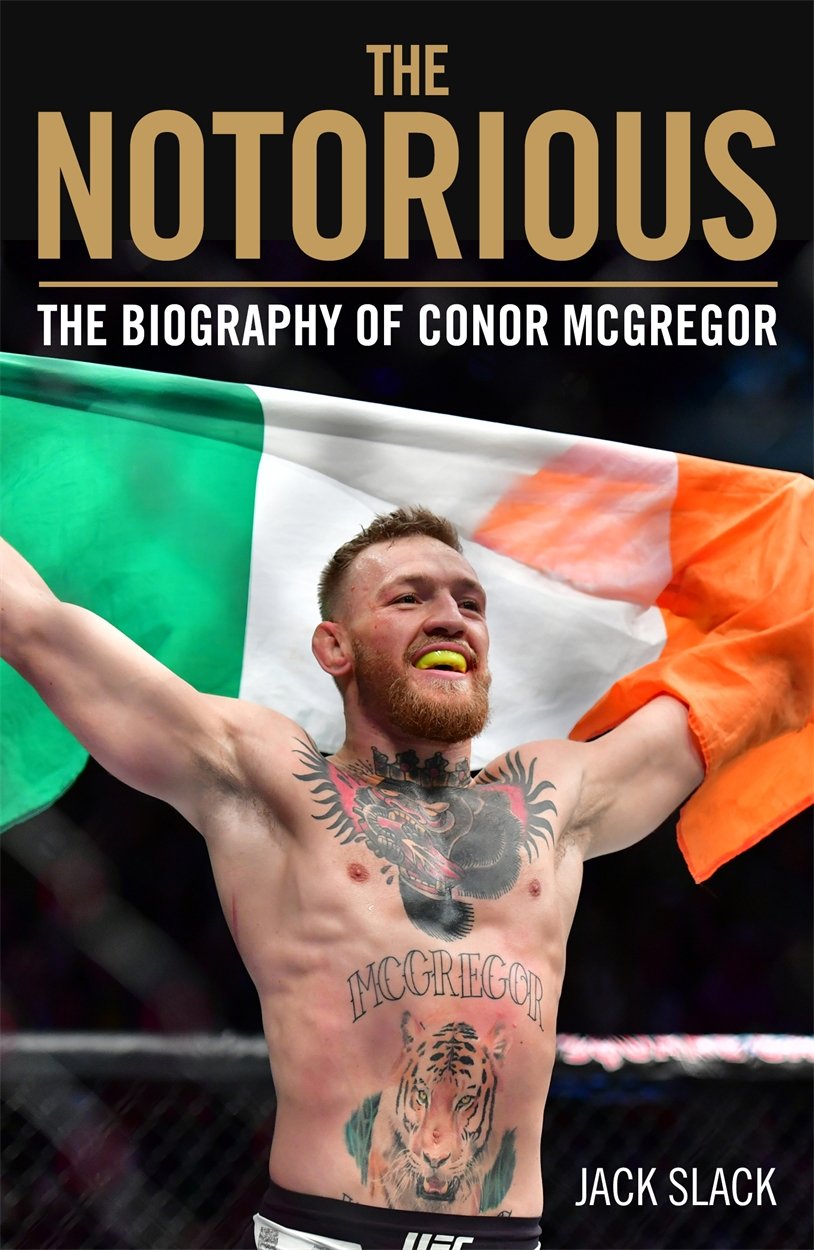
2. Conor McGregor — Notorious (by Jack Slack)
Conor McGregor has not written his own memoir — but combat sports analyst Jack Slack has produced the definitive account of his career. Notorious: The Life and Fights of Conor McGregor traces McGregor's rise from a teenager trading techniques with friends in a Dublin shed to the first fighter in UFC history to hold two world titles simultaneously.
What sets this book apart from the typical celebrity biography is Slack's analytical lens. Each fight is broken down tactically — how McGregor evolved from a confident slugger into a measured sharpshooter, how he adapted his game between opponents, and what his improvements revealed about his martial intelligence. The book also explores the broader MMA ecosystem, touching on fighter pay, marketing, and safety.
For those who see McGregor only as the trash-talking showman, this book offers a more grounded perspective — the story of a man who left a plumbing apprenticeship and social welfare behind through relentless self-belief and martial arts mastery.
Best for: MMA fans and students of fight strategy who want technical depth alongside biography.
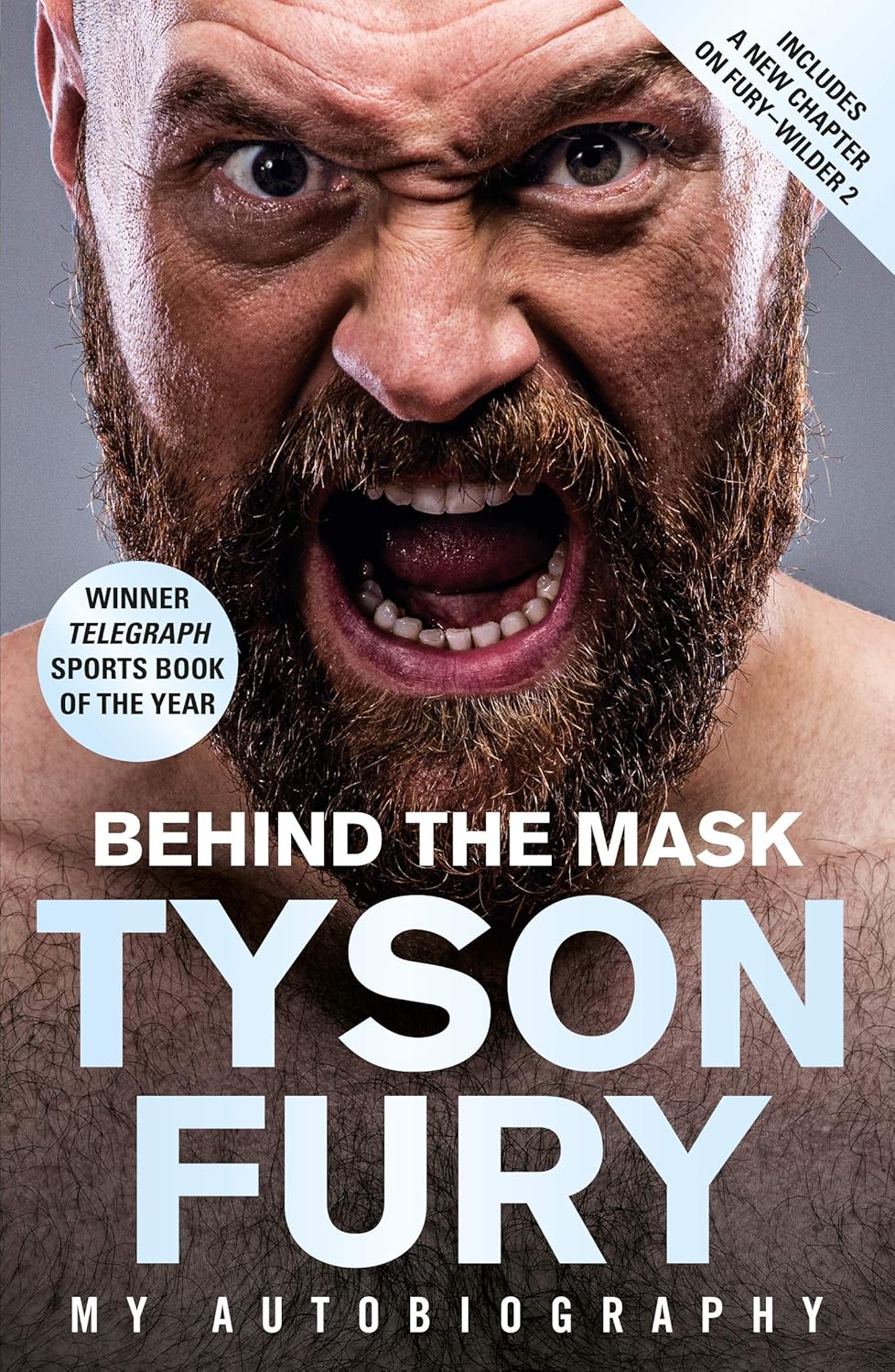
3. Tyson Fury — Behind the Mask
Winner of the Telegraph Sports Book of the Year, Behind the Mask is the autobiography of one of boxing's most unlikely champions. Born three months premature and weighing just one pound at birth, Tyson Fury — named after his father's boxing hero, Mike Tyson — grew up in a Manchester family of Irish Traveller heritage with fighting in its blood.
Fury's story is not just about winning the heavyweight title. It is about losing everything after winning it. The book recounts his descent into substance abuse, severe depression, and the darkest moment of his life — an episode he details for the first time in these pages. It then follows his improbable comeback, culminating in his legendary bouts with Deontay Wilder.
What makes Behind the Mask resonate beyond boxing is Fury's openness about mental health. He writes with a raw candor that earned him the title of "People's Champion" — and the book proves why that label fits. You don't need to be a boxing fan to be moved by this story.
Best for: Anyone interested in resilience, mental health in combat sports, and the human side of heavyweight boxing.
4. Mike Tyson — Undisputed Truth
If Behind the Mask is a story of redemption, Undisputed Truth is its darker, wilder counterpart. Co-written with Larry Sloman, Mike Tyson's autobiography is widely regarded as one of the most brutally honest sports memoirs ever written.
Tyson's journey from the streets of Brownsville, Brooklyn — where he was bullied as a child and drawn into crime — to becoming the youngest heavyweight champion in boxing history at age twenty is extraordinary enough. But the book doesn't stop at the glory years. It takes you through the full arc: the mentorship of Cus D'Amato, the championship era, the prison sentence, the substance abuse, the bankruptcy, and the eventual path toward stability.
Related article: The Fighter Mindset: Tracing the Evolution of Mike Tyson | Combatpit
The writing has been compared to a blend of Dickens and Hunter S. Thompson — grimly tragic on one page, laugh-out-loud funny on the next. Tyson's voice is unmistakable throughout, mixing street candor with philosophical musings and literary references that consistently surprise. The New York Times called it a genuine effort by a troubled soul to understand his own journey.
Best for: Readers who want the rawest, most unfiltered account of a fighter's life — triumphs, failures, and everything in between.

5. Ronda Rousey — My Fight / Your Fight
Written at the height of her dominance as the undefeated UFC women's bantamweight champion, Ronda Rousey's memoir is a raw account of the path that made her a pioneer in women's combat sports.
The book is structured in two halves — the first tracing her development as a judoka, including her Olympic bronze medal in 2008, and the second following her explosive entry into MMA. Throughout both, Rousey writes with disarming honesty about the loss of her father, her struggles with an eating disorder, the intensity of international judo competition, and the financial realities of being a fighter before the big paychecks arrived.
What separates this from a standard athlete biography is the specificity. Rousey doesn't deal in vague motivational language. She names the costs — physical, emotional, financial — and she names the moments where everything could have gone differently.
For a deeper look at this book, read our full review of My Fight / Your Fight.
Best for: Women in martial arts, judo practitioners, and anyone interested in the mindset behind pioneering a new era in combat sports.

6. Georges St-Pierre — The Way of the Fight
A New York Times bestseller, GSP's memoir is part autobiography, part philosophy manual, part training guide — and it works because St-Pierre approaches everything in his life with the same analytical precision he brought to the octagon.
From his beginnings as a mercilessly bullied child in Quebec who discovered karate as a survival mechanism, to his years working as a garbage collector while training in every spare moment, to his rise as one of the most dominant UFC welterweight champions in history, St-Pierre's story is one of methodical self-construction. He holds black belts in both Kyokushin karate and Brazilian Jiu-Jitsu, and his book reflects that cross-disciplinary approach.
What makes The Way of the Fight distinctive is its structure. The story isn't told chronologically. It's organized around principles — fear, discipline, innovation, mentorship — with voices from GSP's inner circle (including coach Firas Zahabi and John Danaher) woven throughout. The result reads less like a memoir and more like a manual for pursuing excellence in any discipline.
Best for: Martial artists interested in training philosophy, cross-disciplinary development, and the mind-body connection in combat sports.

7. Rickson Gracie — Breathe: A Life in Flow
An instant New York Times bestseller, Breathe is the memoir of the fighter many consider the greatest Gracie of all time — and perhaps the most dominant martial artist in any combat discipline, period.
Co-written with longtime student and friend Peter Maguire, the book traces Rickson's life from the beaches of Rio de Janeiro to the vale tudo arenas of Japan. It covers the full history of the Gracie family dynasty — from Carlos Gracie's early study of Japanese jujitsu under Mitsuyo Maeda to Hélio's development of what became Gracie Jiu-Jitsu. Rickson's own story is woven through this family history: his childhood fights, his relationship with yoga master Orlando Cani (who taught him the diaphragmatic breathing that became his signature), and his decision to fight in Japan rather than the UFC.
The book is candid about family fractures, personal tragedies, and the ego that comes with being raised in a clan of warriors. Rickson doesn't exempt himself from criticism. The result is a memoir that serves as both a history of BJJ's most important family and a meditation on what it means to live in flow — on and off the mat.
Best for: Brazilian Jiu-Jitsu practitioners, grapplers, and anyone interested in the origin story of the art that transformed modern martial arts.

8. Michael Bisping — Quitters Never Win: My Life in UFC
Michael Bisping's autobiography is, in many ways, the ultimate underdog story in MMA. A Sunday Times bestseller and Amazon bestseller in the UK, Quitters Never Win follows Bisping from his working-class upbringing in Lancashire, England, through a thirteen-year UFC career that nearly ended multiple times — and culminated in one of the greatest upsets in the sport's history.
Bisping fought his way to the Number One contender position three separate times, only to be knocked back each time. He competed for much of his later career with severely compromised vision — a detail he recounts with harrowing honesty. When he finally got his title shot at age thirty-seven, he became the first British-born UFC world champion.
The book is loaded with humor, brutal candor, and the kind of behind-the-scenes stories (including a kidnapping attempt while filming in South Africa) that remind you this is not fiction. Bisping has been called Britain's Rocky Balboa, and after reading his story, it's hard to argue with that comparison.
Best for: UFC fans, anyone who values perseverance over natural talent, and readers who appreciate a fighter who can laugh at himself.

9. Chuck Liddell — Iceman: My Fighting Life
Chuck Liddell was the face of the UFC during its transition from underground spectacle to mainstream sport. Iceman tells his story from his childhood in the poorest section of Santa Barbara, through his years studying kempo karate and collegiate wrestling at Cal Poly, to his reign as the UFC light heavyweight champion who helped legitimize mixed martial arts in America.
The book delivers exactly what you'd expect from Liddell — straightforward, no-frills storytelling that mirrors his fighting style. Each chapter is titled with a lesson or piece of advice. The fight accounts are vivid and detailed, particularly his legendary trilogy with Randy Couture and his long-running feud with Tito Ortiz. You also get the side of Liddell that most fans didn't see: the accounting major, the devoted father, the man who was as loyal to his friends as he was fearless in the octagon.
Iceman is a time capsule of an era when the UFC was still fighting for survival — and one man's knockout power helped keep it alive.
Best for: UFC historians, fans of the sport's early mainstream era, and readers who appreciate direct, unpretentious storytelling.

10. Randy Couture — Becoming the Natural
Randy Couture's nickname was always ironic. There was nothing "natural" about his path to becoming a six-time UFC champion. He was undersized, outgunned, and perpetually underestimated — and he made a career out of proving people wrong.
Becoming the Natural follows Couture from a turbulent childhood, through his years in the U.S. Army, to his unlikely emergence as one of MMA's most beloved fighters. The book is refreshingly honest about his personal life — his difficult relationships, his business disputes with the UFC, and the constant challenge of cutting weight as an aging fighter competing against younger, bigger opponents.
What makes Couture's memoir stand out is its lack of bravado. He doesn't pretend that every fight was destined for victory. He doesn't paint himself as invincible. Instead, he gives you the full picture — the doubt, the preparation, the decision-making — and lets the reader draw their own conclusions. It's the kind of honesty that made Couture a fan favorite in the first place.
Best for: Fans of MMA history, wrestlers transitioning to MMA, and anyone inspired by fighters who peaked later in life.

What Makes a Great Martial Arts Memoir?
Looking across these ten books, a few common threads emerge.
The best martial arts memoirs don't hide behind highlight reels. They include the losses — the fights that went wrong, the relationships that suffered, the moments where quitting would have been the easier path. Vulnerability is what separates a memorable memoir from a press release with chapters.
They also tend to reveal how a fighter thinks, not just what they did. The tactical breakdowns in Slack's Notorious, the philosophical frameworks in GSP's The Way of the Fight, the breathing methodology in Rickson's Breathe — these are the elements that make a book useful to a practitioner, not just entertaining to a fan.
And they share one more quality: an understanding that martial arts culture is bigger than any single fight. Every author on this list, in their own way, writes about the discipline as a path — not a destination.
Which Martial Arts Memoir Should You Read First?
That depends on what you're looking for.
If you want philosophy and self-discovery, start with Bruce Lee's Artist of Life. If you want the rawest, most unfiltered account of a fighter's life, go straight to Mike Tyson's Undisputed Truth. For the ultimate underdog story, pick up Michael Bisping's Quitters Never Win. If your training is rooted in grappling and BJJ, Rickson Gracie's Breathe is essential reading. And if you're a woman navigating the world of combat sports, Ronda Rousey's My Fight / Your Fight remains one of the most honest accounts of what that journey looks like from the inside.
No matter where you start, each of these books offers something that training alone cannot — the lived experience of someone who walked the path before you, written down so you don't have to learn every lesson the hard way.
The mat teaches through repetition. The page teaches through reflection. Both are part of the practice.