

Beginner's Guide to Boxing Training Gear: What You Actually Need (and What You Don't)
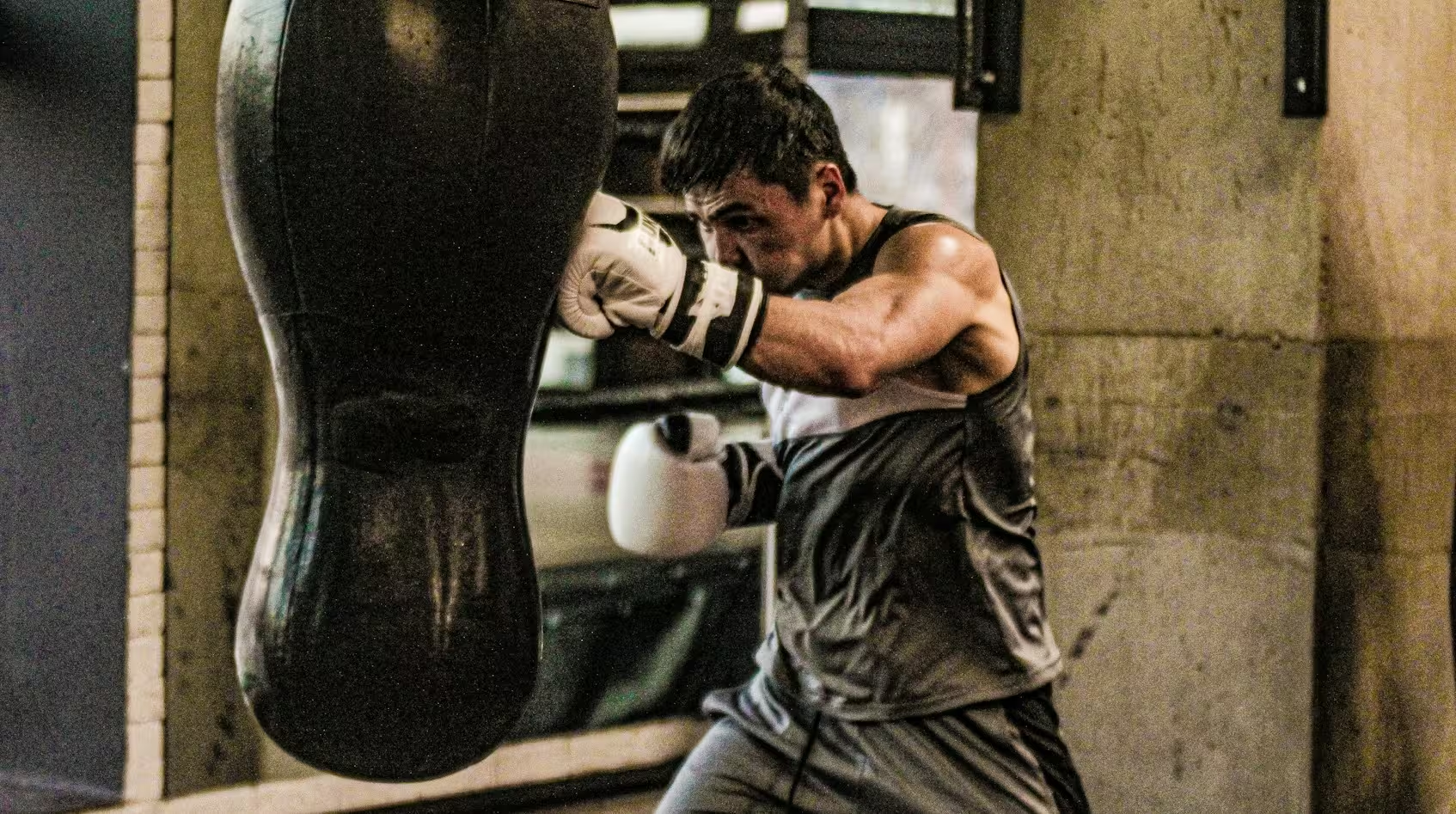
Most people walk into boxing training with either too much gear or the wrong gear entirely.
Both are expensive mistakes. And both happen for the same reason: the internet makes it look like you need everything before you can start.
You don't. The foundation of boxing training — whether you're working at a gym or building a setup at home — comes down to three pieces of equipment. Everything else follows after you've built some consistency and decided this is something worth investing in further.
This guide walks you through what matters from day one, what to skip for now, and why the order in which you build your gear matters more than most people realize.
The Three Essentials
Boxing Gloves
Your gloves are the most important equipment decision you'll make as a beginner. Not because of brand or aesthetics, but because a poorly chosen pair affects how you train from the first session.
Cheap gloves tend to lack structured wrist support and adequate padding. Both of those matter more than they sound. Weak wrist support puts stress on the joint with every impact on the bag. Inadequate padding means your hands absorb force that the glove should be managing. Neither issue is noticeable in the first session. Both show up in weeks two and three — usually as discomfort that discourages training.
When you're choosing gloves, the weight matters. For bag work and pad work as a beginner, 12oz to 16oz is the standard range. Lighter gloves (10oz and below) are built for competition, not training. Heavier gloves (16oz and above) are typically used in sparring. If you're training solo or in fitness-oriented classes, 12oz to 14oz gives you a good balance of protection and bag feel.
RDX Sports carries a full range of boxing training gloves with multi-layer padding and structured wrist support — a solid starting point before your first session.
Deeper dive: Boxing Glove Sizing Guide: Finding the Perfect Fit
Hand Wraps
If there's one item in boxing that beginners consistently skip and consistently regret skipping, it's hand wraps.
Wraps serve a function that gloves alone cannot. They stabilize the small bones of the hand — particularly the metacarpals — and compress the soft tissue around the wrist joint. When you punch, those structures move. Wraps limit that movement and distribute the impact more evenly across the hand.
The injury that comes from skipping wraps isn't dramatic. It's gradual. A sore knuckle that doesn't heal. A wrist that starts clicking. Over a few weeks, it compounds into something that keeps you off the bag.
Traditional cotton wraps (180 inches for most adults) are the standard choice. They take around two minutes to learn properly and become automatic within a few sessions. RDX hand wraps are a reliable option — affordable, durable, and available in the right length for adult hands.
Put them on before every session. No exceptions.
A Punching Bag
If you're training at home, a heavy bag is where your technique turns into conditioning.
Shadowboxing develops movement and timing. But the bag introduces resistance — and resistance teaches you things about your technique that air simply cannot. Your hip rotation either transfers power or it doesn't. Your guard either holds its position after a punch or it drifts. These adjustments happen faster when you're hitting something.
For beginners, a standard hanging heavy bag between 70 and 100 pounds is the most versatile option. It moves enough to simulate real feedback but has enough mass to absorb full combinations without swinging wildly.
If space is limited, a freestanding bag is a practical alternative. It requires no ceiling mount and can be moved when not in use. The trade-off is that freestanding bags tend to shift position under heavy power shots, which can interrupt your combinations. For technique-focused early training, that's a minor issue. RDX's range of punch bags covers both hanging and freestanding options across different sizes.
What You Don't Need Yet
Understanding what to skip is as important as knowing what to buy. Beginners who over-invest in gear early often end up with equipment they can't use and a setup that looked better on paper than in practice.
Headgear is designed for sparring — specifically, for protecting the skin and reducing the jarring from impact with another person. Bag work and shadowboxing generate none of that. You don't need headgear until you're sparring regularly, and most coaches won't put a beginner in sparring until several months into training.
A mouthguard follows the same logic. It protects your teeth and jaw during contact with another person. No contact means no need. When you do begin sparring, a boil-and-bite mouthguard is adequate for early sessions. Custom-fitted guards are worth it later, once you've committed to the sport.
Boxing shoes are useful but not essential. Your footwork will benefit from the thin sole and ankle support that boxing shoes provide — but that benefit is marginal compared to the fundamentals you're still building. A good pair of cross-trainers with a flat, non-marking sole works fine for the first several months.
Advanced equipment — speed bags, double-end bags, focus mitts, and slip balls — all have real training value. They also require a degree of foundational skill to use productively. The speed bag is a rhythm tool, and that rhythm takes weeks to develop. The double-end bag demands timing that beginners haven't calibrated yet. These are investments worth making once you have a foundation worth building on.
The Most Common Beginner Mistakes
Skipping hand wraps is the most frequent — and the most avoidable. The cost of wraps is negligible. The cost of an overuse injury that interrupts your training is not.
Buying gloves based on price alone is a close second. Entry-level gloves from reputable brands are available in a reasonable price range. Gloves that cost significantly less than that are usually producing the savings through compromises in padding density or wrist construction. Buy once, buy right.
Building the setup before building the habit. This is a subtler mistake. Some beginners invest in a full home gym before they've established consistent training. The equipment then becomes an expectation rather than a tool, and inconsistent training feels like a failure of discipline rather than a normal part of the process. Start with the three essentials. Add equipment as your training demands it.
A Simple Starting Setup
Gloves. Wraps. Bag.
That's the whole list for the first three to six months of boxing training. Not because the other equipment lacks value, but because those three items are enough to build the technical foundation that makes everything else meaningful.
Boxing rewards patience and repetition more than it rewards preparation. A well-wrapped hand throwing clean combinations on a decent bag will develop more than the same hand throwing sloppy ones in a fully-equipped home gym.
Get the foundation right. The rest follows naturally.
Continue reading: Wearable Technology in Boxing: What the Science Says About Smart Gloves and Technique Feedback