

Combat Sports Equipment Market: Trends Shaping the Future of Martial Arts Training


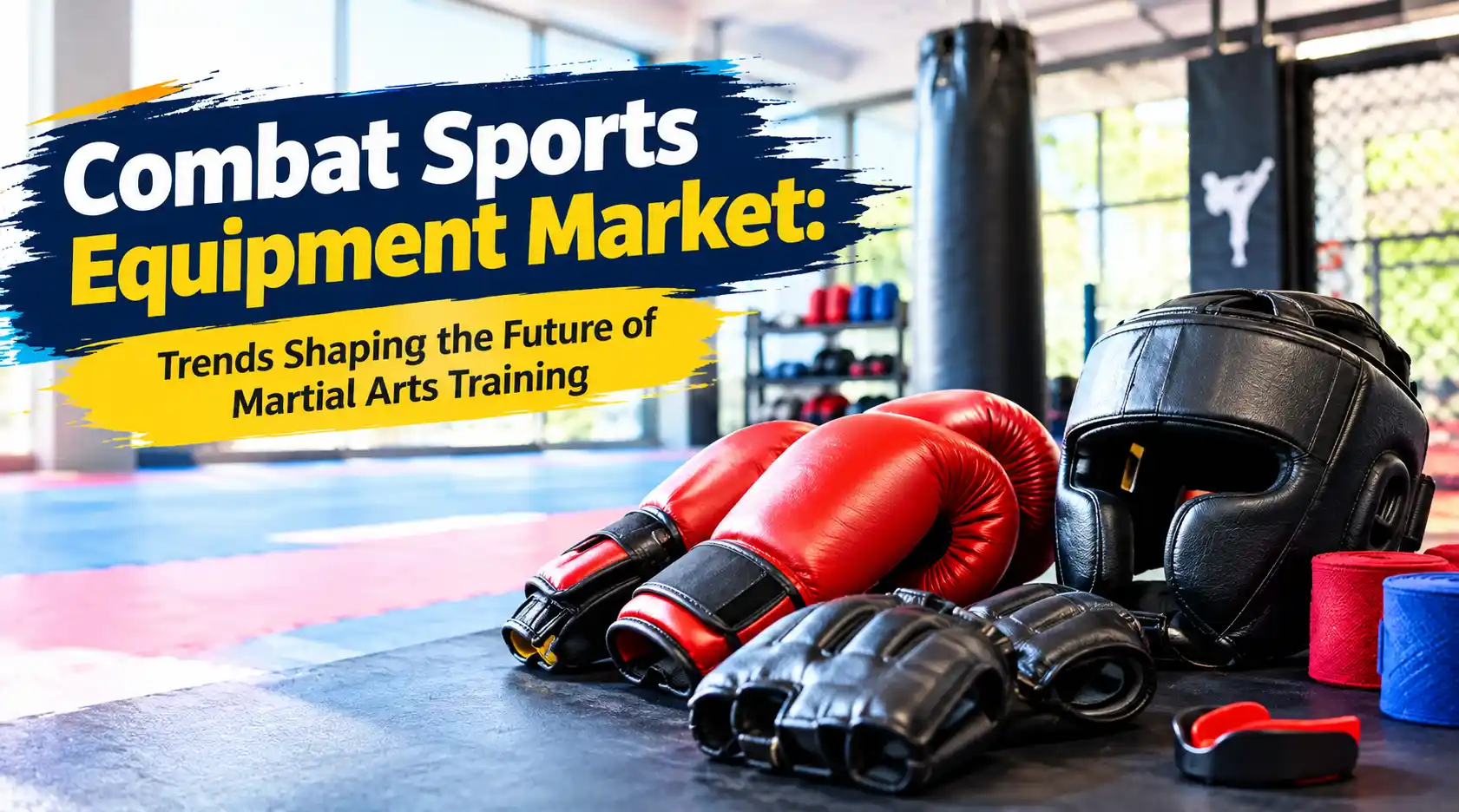
The field of combat sports has definitely transcended beyond mere professional competitions. Boxing, mixed martial arts, karate, taekwondo, judo, wrestling, kickboxing, and countless other forms of combat sport have become part of specialized institutions where they are taught from academies, gyms, schools, community centers to even personal training sites. This evolution is changing the very nature of the equipment, which will no longer be equipment for competitions but equipment for training and injury prevention.
As a result, the combat sports equipment industry faces a number of trends working together simultaneously. There is an increase in safety requirements, there is a growing need for data-driven training, there are developments in materials science, there is a need for equipment that functions well under various conditions.
Emerging Trends Reshaping Combat Sports Equipment, Training, Safety, and Performance:
- Safety Is Moving to the Centre of Equipment Design
Safety still proves to be a powerful driver for developing the equipment. The striking, kicking, grappling, throwing, and frequent physical interaction are the elements of combat sports. As a result, the equipment needs to cope with the impacts without restricting the freedom of movements excessively. Research carried out on Olympic combat sports reveals that the types of injuries vary greatly depending on the sport. Thus, there are head and facial injuries in boxing, while joint injuries prevail in judo and wrestling.
Such an approach is having an impact on how the equipment is being developed and chosen. For instance, training venues nowadays are requiring sport-specific combinations of gloves, wraps, head protection, mouthguards, shin guards, body pads, and the proper flooring.
- Lightweight Protection and Better Mobility
Protection is increasingly being weighed against mobility. Heaviness or inadequate ventilation of equipment may affect a player’s footwork, defense, kicks, or training, especially in intensive training. As such, the design of equipment has been shifting towards lightness, good ventilation, anatomical design, and weight balance.
This trend is of great significance for headgear, body armor, shin guards, and gloves. Equipment that ensures security of the athlete and also allows natural movement is better for training than equipment which guarantees protection but causes discomfort and heat. This can be seen from the ASTM standard for headgear which explicitly acknowledges lightweight and streamlined designs with adequate ventilation.
- Smart Equipment and Data-Based Training
The digital revolution is slowly starting to reshape the connection between the athlete and the training equipment. The possibilities opened up by wearable sensors, connected technology, impact measurement technology, and performance analytics tools allow the quantification of certain elements of training which previously could only be analyzed via observation
The connection between the devices will be particularly applicable in the boxing discipline and other disciplines that rely on strikes. Smart punching bags, sensor-equipped gloves, and strike tracking mechanisms are being developed based on measurements such as the number of strikes, speed, force, timing, and duration of training.
- The Rise of Multi-Functional Training Equipment
Today’s training venues look to purchase gear which can be utilized in several different workouts. In today’s modern martial arts class, technical drilling, conditioning, reaction drills, strength training, mobility work, and sparing are common features, hence the demand for multi-use training gear.
The heavy bags, double-end bags, stand-up bags, striking pads, grappling dummies, resistance training equipment, agility training equipment, and the modular mats, therefore, take on an important place in the broader fitness gear market. This is because the use of some of this equipment is not limited to martial arts, but includes cardiovascular training and general fitness.
- Home Training Is Influencing Product Format
There is an impact being felt on the design of combat sports equipment as a result of the growing trend of exercise at home. This includes small and portable, easy to store designs due to space considerations, as well as consideration of noise and vibrations for users training in apartments.
Users training at home will also have different needs compared to those using the equipment in professional academies. This includes ease of assembly, portability, adjustability, minimal maintenance, and multifunctionality as opposed to durability, frequency of use, easy replacement, and ease of cleaning by commercial academies.
- Hygiene and Material Performance Are Gaining Importance
There are practical hygiene issues when equipment is shared. Gloves, pads, headgear, mats, and protection gear become frequently exposed to sweating and contact, thus their wash ability, moisture resistance, drying ability, and odor are essential factors. Thus, material choice becomes more and more associated with the ease of maintenance. Synthetic leather, foams, and moisture resistant surfaces are tested for their wear ability.
Durability becomes crucial, as combat sports equipment suffers from high mechanical loads. The lifespan is influenced by such factors as seams, zippers, straps, and padding, and replaceable parts prevent throwing away the usable equipment.
- Sustainability Is Becoming a Product-Development Consideration
Factors pertaining to environmental sustainability are starting to be considered in the creation of sports equipment. However, the process is technically challenging as a great number of products that are used in combat sports contain various layers of materials, synthetic polymer materials, adhesives, foams, fabrics, and metallic parts that can affect the recycling process.
Manufacturers are thus looking into ways on how to minimize material waste, maximize product lifespan, and incorporate recycled materials when applicable. The aspect of increasing product lifespan is especially important when it comes to commercial settings due to the fact that it minimizes product replacements and material needs.
- Youth and Recreational Training Are Expanding Equipment Requirements
The requirements of children, novices, and recreational practitioners will be different from those of elite practitioners. Children will need proper sizing, proper weight of the equipment, proper fixation methods, and protection that is suitable for the level of training and physical development of the user. Combat sport injury research emphasizes the need for a correlation between the type of equipment and training used by users. The types of injuries sustained are different for each discipline and for different participation levels.
What the Next Phase of the Market May Look Like
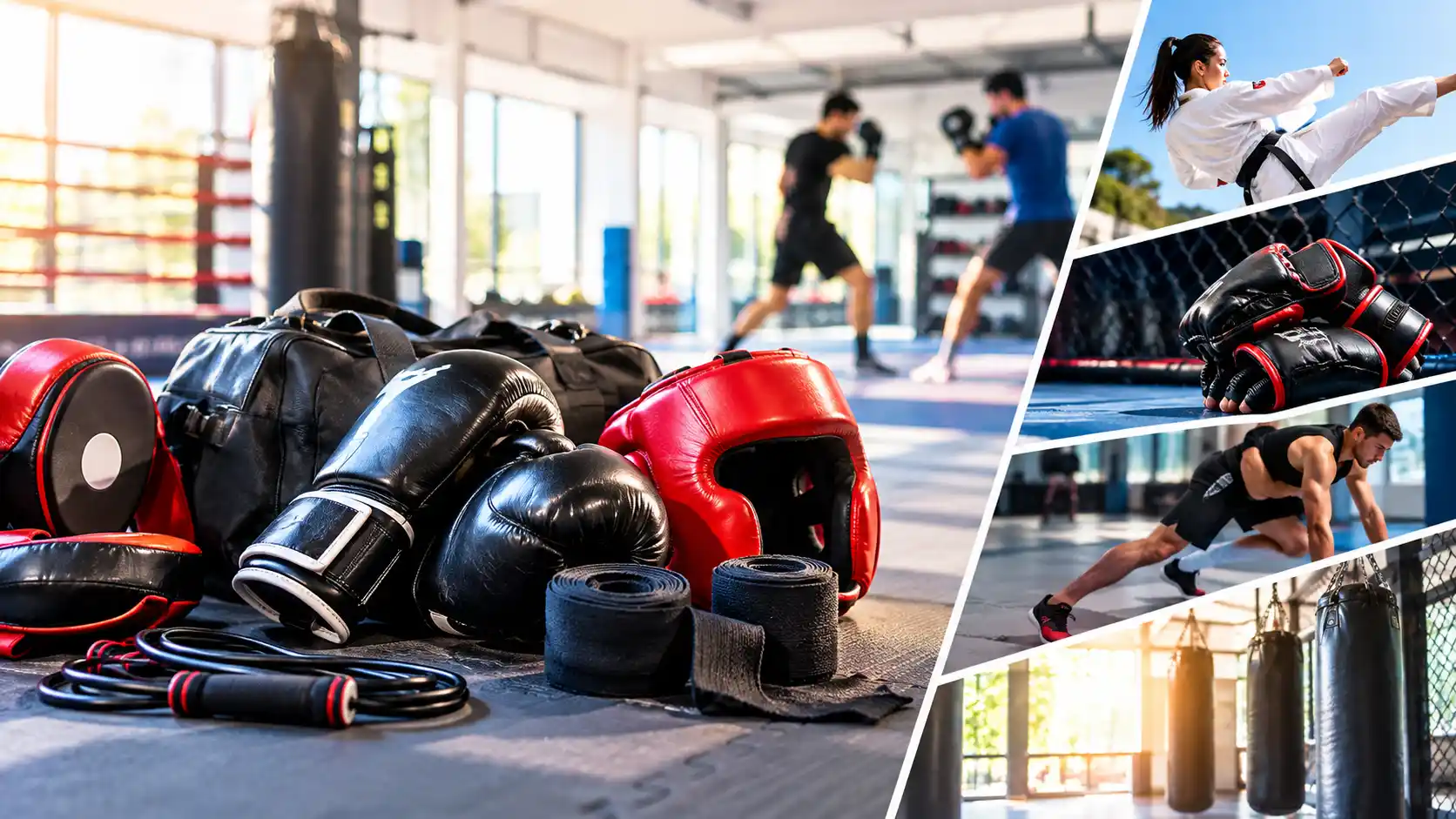
The direction the combat sports equipment industry takes into the future will not necessarily hinge on a single disruptive product but rather on how different elements come together to form improvements. Protection, movement, digital measurements, cleanliness, robustness, and versatility are now all interlinked and no longer independent product features. The use of equipment needs to be evaluated against any shifts in training styles, participation, facilities, safety measures, and technology use.
Main Factors Influencing Equipment Development in the Future
The future development of combat sports equipment will be affected by the change in training conditions and user needs. Increasing numbers of training facilities, professionals, and amateur athletes expect to use equipment that offers high performance and good comfort properties. Firstly, it is the advancement in the ergonomic properties of equipment, when manufacturers pay attention to natural body movements and training conditions. Manufacturers are concerned about improving equipment comfort, its weight, and flexible properties depending on the style of training. Secondly, it is the increasing numbers of users of combat sports from different groups. Increasing popularity among beginners, young athletes, fitness users, and home-based users leads to the need for simple and adjustable equipment.
Also, commercial training centers are dictating innovation in products through the need for equipment that can withstand frequent use and can be easily maintained and replaced. On the other hand, innovations in materials are helping improve impact resistance, life span of products, and comfort. In summary, the trend in the market is towards safety, adaptability, durability, and convenience in equipment. Such trends are anticipated to influence combat sport equipment.
The Evolving Landscape of Martial Arts Equipment
As per the Pristine Market Insights analysis, future of combat sport equipment will largely depend on how well the industry reacts to the changing needs of the participants, coaches, gyms, and general users. Safety is still important, but nowadays the evolution of equipment is also about mobility, performance tracking, hygiene, durability, sustainability, and ease of use.
In addition, development of other specifically functional fitness equipment market, is also affecting the evolution of combat sports equipment because both segments of the market are becoming increasingly similar and interconnected due to the growth of functional fitness, wearables, compact equipment, and home exercises. Thus, the current trends in injuries' research and equipment standards show that the future of the combat sports equipment market is going to be characterized by technological performance and protection of users. However, at the same time, thanks to new technological opportunities and changes in participation patterns, there might appear some new ways of designing, monitoring, maintaining, and using such equipment. Therefore, the further evolution of combat sports equipment will be mostly characterized by innovations.
About Author
Pristine Market Insights is a specialized provider of syndicated market research, offering detailed analysis on a global, regional, and country-specific level. We serve clients with market intelligence for over 100 countries, with a particular focus on major economies and key emerging markets. Our expertise includes in-depth analysis for the US, Canada, Germany, France, Italy, Spain, Nordics, Russia, UK, Benelux, Brazil, Mexico, India, China, South Korea, GCC, and Japan, among other 100+ countries.