

Does Boxing Headgear Actually Prevent Concussions? What the Research Reveals
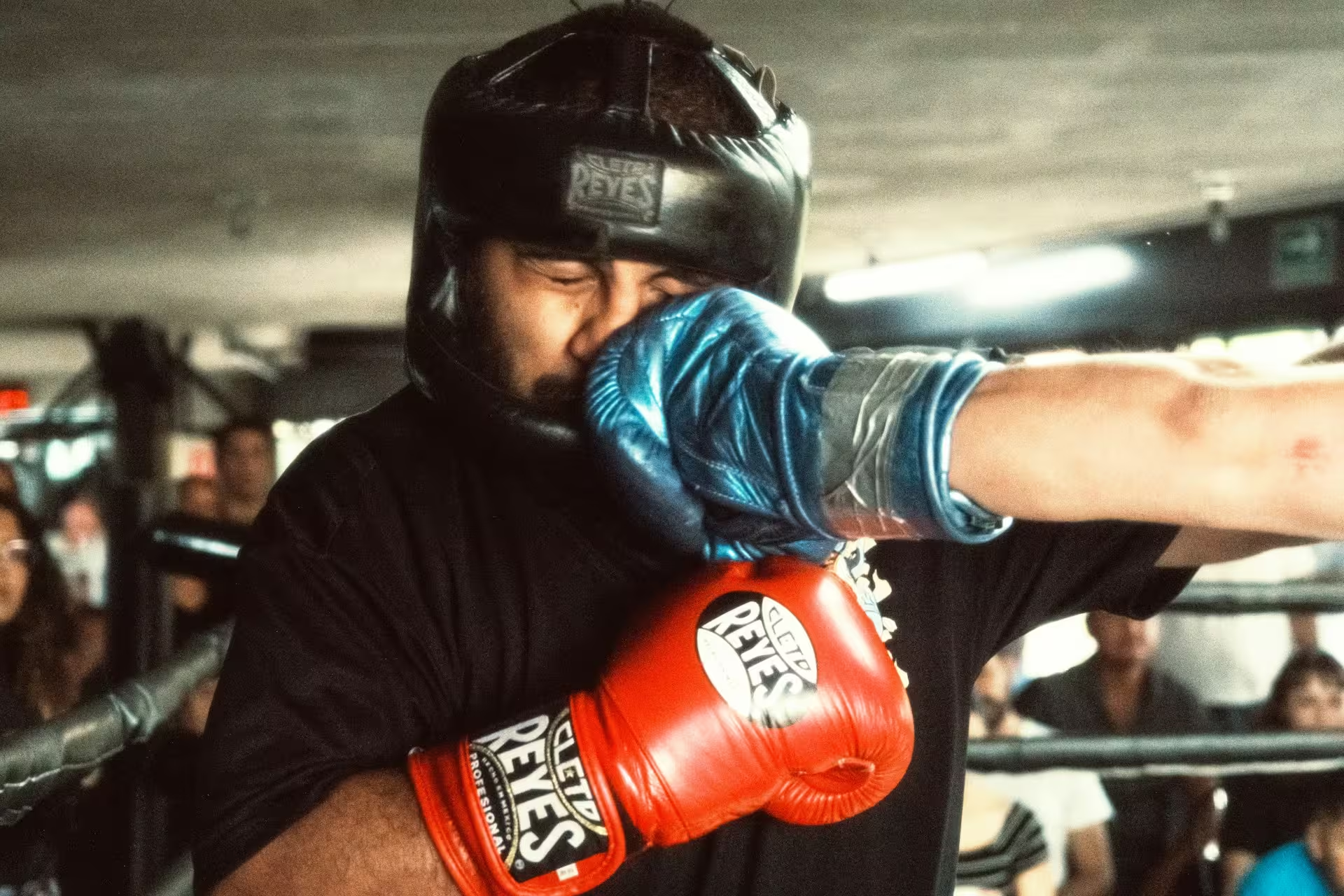
If you have trained in boxing for any length of time, you have almost certainly been told that headgear keeps you safe. It's presented as a basic precaution, the same way shin guards are worn in Muay Thai or mouthguards are worn across every combat discipline. The assumption is simple: more protection means less injury.
The science is not so simple. A 2023 systematic review and meta-analysis published in the Clinical Journal of Sport Medicine analyzed 84 studies on head trauma in boxing. Its findings challenge some of the most widely held beliefs in the sport, including the belief that headgear reliably protects the brain. If you train, coach, or manage fighters, this is information worth understanding clearly.
Boxing's Concussion Rate Compared to Other Combat Sports
Before examining headgear specifically, it helps to understand where boxing sits in the broader landscape of combat sports injury.
The 2023 meta-analysis found that boxers carry a significantly elevated concussion risk compared to practitioners of other combat sports. The risk ratio for boxing was 0.253, compared to 0.065 for other disciplines such as karate and taekwondo. That is a substantial gap. Research cited in the study indicates that concussions in karate occur roughly once per 1,156 matches, while boxing consistently registers among the highest concussion frequencies of any contact sport.
This is partly structural. Boxing rules permit fighters to continue after a knockdown. Championship bouts run up to 12 rounds. The entire scoring system rewards effective strikes to the head. Whereas sports like judo or wrestling distribute impact across the body, boxing concentrates it at the skull. That concentration matters enormously when assessing neurological risk over a career.
One important nuance: boxing's overall injury rate per training hour is actually comparable to, and sometimes lower than, many non-combat contact sports. The elevated risk is specific to head trauma, not to injury in general. That distinction should inform how coaches and fighters think about training design rather than serving as reassurance to avoid the harder conversation.
How Does Boxing Headgear Actually Work?
To understand why headgear has limits, you need to understand what causes a concussion. The injury does not occur when something hits the outside of the skull. It occurs when rapid acceleration, deceleration, and rotational forces cause the brain to move inside the cranial cavity. Padding on the exterior of the head can absorb some linear impact energy, but it cannot stop the brain from rotating within the skull during a powerful blow.
Deeper dive: Understanding and Managing Concussions in Martial Arts
A review published in the European Journal of Sport Science confirmed that headgear protects well against lacerations and skull fractures, while evidence for protection against concussion and other traumatic brain injuries remains limited and methodologically weak. Most of the studies underpinning headgear's safety reputation relied on indirect evidence, self-reporting, or small non-representative samples. There are almost no randomized controlled trials examining headgear's effect on concussion specifically.
What headgear genuinely does well: it reduces cuts, protects the ears from cauliflower-ear trauma, and absorbs surface-level impact to the facial bones. These are real benefits, particularly for sparring athletes who train at high frequency. But the leap from "reduces cuts" to "protects the brain" is not supported by the evidence.
Related article: Protective Gear and Cauliflower Ear: Prevention and Treatment in Combat Sports
The Larger Target Problem
One counterintuitive finding is that headgear may actually increase the surface area available for a punch to land, particularly glancing blows that generate the rotational forces most associated with concussion. The 2023 Clinical Journal of Sport Medicine meta-analysis flagged this as a potential mechanism by which headgear could increase, rather than reduce, neurological exposure.
The Risk Compensation Effect
Research on protective equipment across many sports has identified a pattern called risk compensation: athletes tend to adopt more aggressive technique when they feel protected. In boxing, this can translate to head-first positioning, more reckless exchanges, and higher punch output directed at the head. The 2012 International Conference on Concussion in Sport noted that protective equipment frequently leads to behavioral changes that can paradoxically increase injury rates. Boxers without headgear tend to be more cautious, in part because the consequences of taking a hard shot are immediately visible.
Why Did the Olympics Remove Headgear, and What Happened?
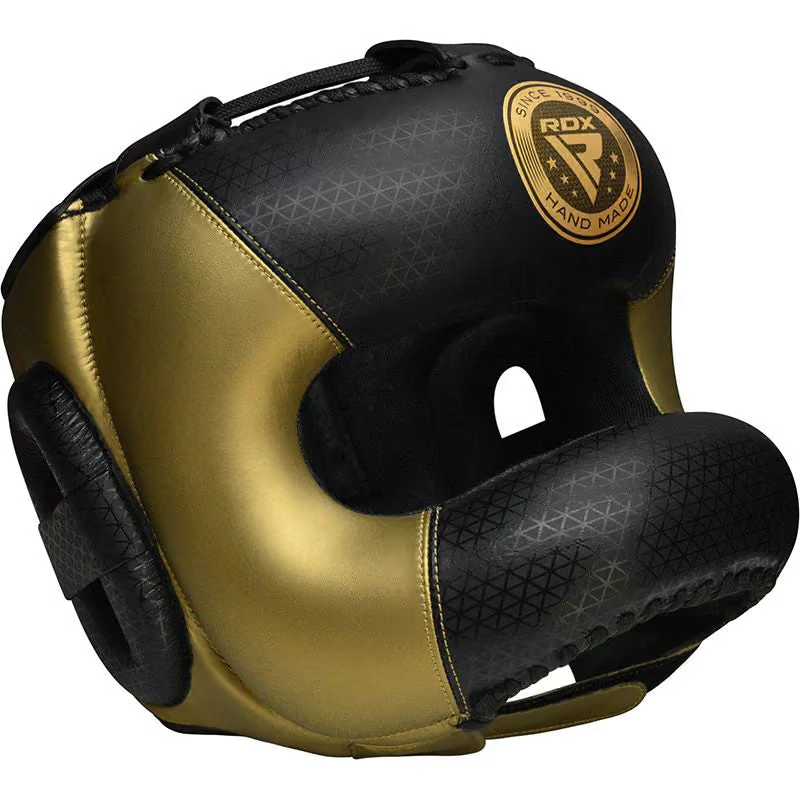
In 2013, the International Boxing Association (AIBA) removed headgear from elite men's competition, starting with the World Championships in Almaty. By 2016, the International Olympic Committee followed suit, and men competed at the Rio Olympics without headgear for the first time since 1984.
The decision was driven by data collected by the AIBA medical commission. Across roughly 15,000 rounds studied, the concussion rate with headgear was 0.38% per boxer per round, compared to 0.17% without it: a reduction of approximately 43% once headgear was removed. A subsequent study of AIBA competition confirmed that stoppages due to head blows decreased significantly after the headgear ban, though the same study noted a corresponding increase in cuts.
It is important to hold this data carefully. The AIBA research has been criticized by independent neurologists for relying on fight stoppages as a proxy for concussion, rather than medical diagnosis. Research has not sufficiently established that boxing without headgear is definitively safer than boxing with it, and the decision continues to generate debate within sports medicine.
What is clear is that female boxers were required to continue wearing headgear at the 2016 and 2020 Olympics, with the stated reason being a relative lack of data on female head injury rates. The asymmetry prompted criticism from those who saw it as discriminatory; more recent research on KO and TKO rates shows that male and female professional boxers have nearly identical stoppage rates when adjusted for minutes of competition, which complicates the assumption that different equipment standards are medically justified.
What the Research Says About Long-Term Brain Injury in Boxing
The headgear question is important, but it sits within a larger concern: cumulative neurological damage over a career.
Chronic Traumatic Encephalopathy (CTE) was first identified in boxers in the 1920s, originally described as "punch-drunk syndrome" before the medical community developed a clearer understanding of its pathology. CTE results from repeated brain trauma and is associated with progressive cognitive decline, memory loss, depression, impulse control disorders, and eventual dementia. Critically, it is not only caused by confirmed concussions: sub-concussive impacts, blows that do not produce obvious symptoms, also contribute to the accumulation of tau protein in the brain tissue.
The 2023 meta-analysis data makes this concrete. Of 631 amateur and professional boxers analyzed, 30% presented with some form of brain atrophy; cognitive disorders were observed in over half; dementia or amnesia in more than 60%. These are not rare findings from a handful of extreme cases. They represent patterns across the studied population.
A peer-reviewed analysis in ScienceDirect confirmed that CTE produces a progressive decline across memory, cognition, mood regulation, and motor function, and that severity appears to correlate with the length of exposure and number of traumatic incidents. No headgear addresses this risk, because no headgear can prevent the sub-concussive accumulation that drives the condition.
The honest reading of the evidence is this: boxing carries a higher long-term neurological risk than most other combat sports, and that risk is not meaningfully offset by protective headgear alone.
Does Headgear Still Have a Role in Training?
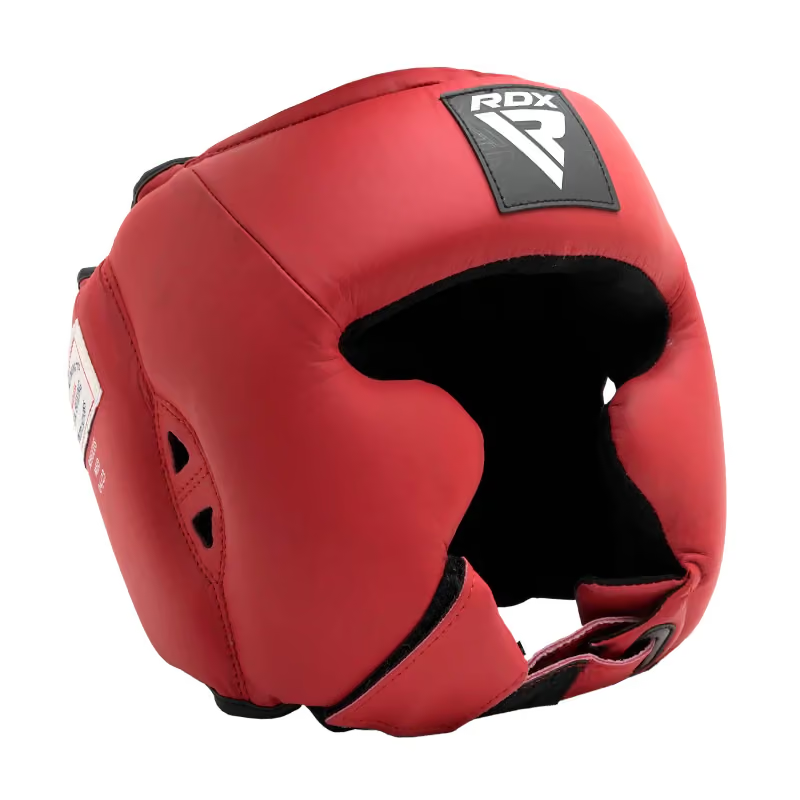
Yes, and this distinction matters. The question is not whether to discard headgear entirely. It is whether to understand what headgear actually does, and to stop expecting it to do things it cannot.
For sparring, particularly in training environments where frequency is high, headgear continues to provide meaningful protection against cuts, bruising, and surface injuries. Keeping a fighter's face intact across months of preparation has practical value. Coaches who work with developing athletes, where controlled contact is the norm rather than full-power exchanges, are making a reasonable choice by using headgear.
The real levers for neurological protection are different. Sparring volume matters: research has consistently shown that the cumulative number of head impacts, not just officially recorded concussions, drives long-term brain injury risk. Reducing full-contact sparring frequency, prioritizing technical rounds, building defensive skill rather than relying on absorbing shots, and giving fighters adequate recovery time between hard sessions: these are the practices that actually shift the risk curve.
Equipment is a support. Craft is the protection.
What Does This Mean for Practitioners?
The evidence does not suggest that boxing should be abandoned. Combat sports carry risk; that has always been true, and informed practitioners accept it. What the research asks of the community is intellectual honesty about where the risk lies and what actually mitigates it.
Headgear was introduced to Olympic boxing in 1984 partly in response to public pressure following high-profile incidents in professional boxing. Its adoption was as much about optics as about evidence. The sport has spent four decades treating it as a proven safeguard, and the science does not fully support that position.
Understanding this is not a reason to panic. It is a reason to train with precision, to coach with care, and to make decisions about sparring intensity and career length based on accurate information rather than inherited assumption.
The foundation of any martial art is awareness: of your opponent, of your body, and of the forces acting on it. That awareness extends to the tools you use and what they can and cannot do.
Conclusion
Boxing headgear reduces cuts and protects the face. It does not reliably prevent concussions, and it offers no meaningful defense against the cumulative neurological damage that drives long-term conditions like CTE. The 2023 Clinical Journal of Sport Medicine meta-analysis makes that case clearly, and it is reinforced by the broader body of sports medicine research.
The sport has a long history of safety evolution: from bare knuckles to gloves, from no rules to regulated competition, from ignoring injuries to mandatory ringside medical coverage. This is the next stage of that evolution: understanding the actual mechanisms of harm clearly enough to address them honestly.
Train with discipline. Coach with precision. Protect what matters most with knowledge, not assumption.