

Kapap: The Complete Guide to Israel's Original Military Combat System
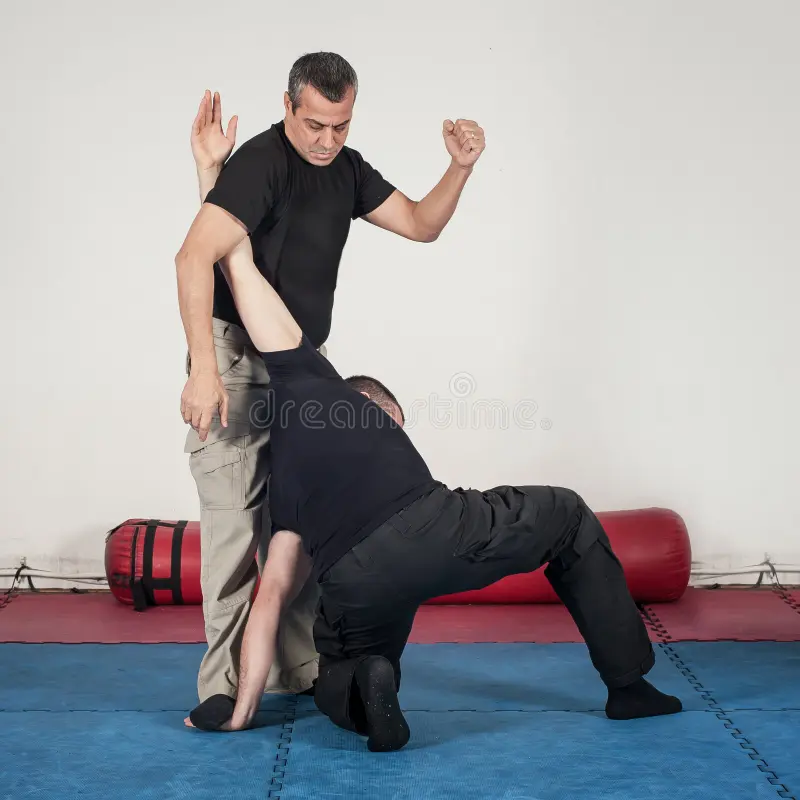
Kapap stands as one of the most misunderstood yet historically significant combat systems in modern martial arts. While the world has embraced Krav Maga as the face of Israeli self-defense, Kapap (Hebrew: קפ״פ, קפא״פ) remains the original foundation from which all Israeli military combat systems emerged. This comprehensive examination explores the rich history, philosophical foundations, and modern applications of this formidable combat doctrine.
The Hebrew acronym Krav Panim el Panim literally translates to "face-to-face combat," embodying the system's core philosophy of direct, uncompromising confrontation with threats. Unlike sport-oriented martial arts, Kapap was never designed for competition or demonstration—it was created for survival in the harsh realities of conflict and personal protection.
Historical Origins: From Survival to System
The Pre-State Foundation (1930s-1940s)
Kapap's origins trace back to the late 1930s within the Jewish Aliyah camps as part of preparatory training before arrival in Mandatory Palestine. The system emerged during a period of intense struggle when Jewish settlers realized they could trust no one but themselves to defend against Arab gangs and hostile forces.
The foundational development occurred within the Palmach (Hebrew: פלמ״ח, Plugot Machatz - "Strike Companies"), the elite unit of the Haganah created on May 14, 1941. During this formative period, Kapap was not yet a defined martial art but rather a comprehensive training regimen designed to develop both defensive and offensive capabilities while strengthening the fighting spirit of practitioners.
Key Historical Figures
Maishel Horovitz emerged as one of the most influential figures in early Kapap development. Born in Russia in 1919, Horovitz's parents were brutally murdered when he was an infant, leaving him to be raised by relatives in Tel Aviv. In the 1930s, he developed a short stick fighting method specifically designed to counter British policemen armed with clubs. His innovative approach became a cornerstone of Haganah combat training, though remarkably, Horovitz himself remained unaware that his system was being taught to soldiers until 1959.
Yitzhak Sade, commander of the Palmach, played a crucial role in adopting and systematizing Kapap training doctrines. Under his leadership, the system evolved from individual techniques into a comprehensive combat methodology.
Gershon Kopler served as the judo and jujutsu instructor who organized and established the self-defense concepts as integral parts of Kapap training within the Palmach and Haganah. His work laid the groundwork for the grappling elements that would become central to the system.
The Transition Period (1948-1960s)
With Israel's declaration of independence on May 14, 1948, the paramilitary Haganah officially transformed into the Israel Defense Forces (IDF). During this transition, Kapap became the official combat doctrine for the IDF, Israeli Police, and various armed forces. The system continued evolving as new immigrants brought diverse fighting traditions and tactical knowledge from their countries of origin.
In 1957, the formation of Sayeret Matkal (Hebrew: סיירת מטכ״ל, Unit 216), Israel's premier special operations unit, marked a significant milestone in Kapap's development. Based on the British SAS model, this elite unit became a testing ground for advanced Kapap techniques and methodologies.
During the 1950s and 1960s, the term "Kapap" began to be used interchangeably with "Krav Maga," leading to widespread confusion about the relationship between these systems. However, within specialized units, Kapap retained its distinct identity and continued developing along military-specific lines.
The Modern Renaissance: Kapap in the 21st Century
Lieutenant Colonel Chaim Pe'er: The Modern Architect
Lieutenant Colonel (Res.) Chaim Pe'er stands as the most significant figure in modern Kapap development. As President and founder of the International Kapap Federation, Pe'er is internationally recognized as the Soke (founder) of the modern Kapap system. His service in Sayeret Matkal, Israel's most elite special forces unit, provided him with the operational experience necessary to refine and systematize Kapap for contemporary applications.
Pe'er's approach transformed Kapap from a collection of techniques into a principle-based system that could adapt to any situation. His philosophy emphasizes understanding core concepts rather than memorizing specific techniques, allowing practitioners to respond effectively to unpredictable threats.
Major Avi Nardia: The Global Ambassador
Major Avi Nardia brought Kapap to international attention in 2002 after leaving the Yamam (Israel's elite counter-terrorism unit). With over 38 years of experience in various martial arts and close-quarters combat, Nardia recognized the need to adapt Kapap for civilian use while maintaining its military effectiveness.
Nardia's contributions extend beyond technique development. He established the philosophical framework that defines modern Kapap, incorporating elements from traditional martial arts while maintaining the system's practical focus. His work has made Kapap accessible to civilians, law enforcement, and military personnel worldwide.
The Evolution of Training Methodology
Modern Kapap training has evolved far beyond its historical origins. The system now incorporates advanced understanding of biomechanics, psychology, and tactical applications. Training methodologies include:
Stress Inoculation Training: Practitioners learn to function effectively under extreme stress through controlled exposure to high-pressure scenarios.
Principle-Based Learning: Rather than memorizing techniques, students learn underlying principles that can be applied across various situations.
Multi-Modal Combat: Training encompasses empty-hand combat, weapons defense, and the use of firearms, knives, and improvised weapons.
Environmental Adaptation: Practitioners learn to use their surroundings tactically, whether in urban environments, confined spaces, or outdoor settings.
Core Philosophy and Principles
The Warrior Mindset
Kapap distinguishes between a "fighter" and a "warrior." A fighter competes for trophies and recognition, while a warrior fights for survival and protection of others. This fundamental distinction shapes every aspect of Kapap training and application.
The system emphasizes that intelligence is your greatest weapon. Practitioners develop lateral thinking skills and situational awareness as primary defensive tools. This approach recognizes that physical confrontation should be a last resort, preceded by avoidance and de-escalation whenever possible.
Mind, Body, Spirit Integration
Kapap's philosophical framework encompasses three interconnected elements:
Mind: The intellectual understanding of combat principles, tactical awareness, and decision-making under pressure.
Body: Physical conditioning, technical proficiency, and muscle memory development.
Spirit: The mental resilience, moral compass, and warrior ethos that guide action in crisis situations.
This holistic approach ensures that practitioners develop not just physical skills but also the mental fortitude necessary for real-world application.
The Principle-Based Approach
Unlike technique-heavy systems, Kapap emphasizes universal principles that can be applied across multiple scenarios. Key principles include:
Economy of Motion: Every movement must serve a purpose, whether defensive, offensive, or positional.
Simultaneous Defense and Attack: Practitioners learn to defend and counter-attack in a single motion, maximizing efficiency.
Adaptability: The system must work regardless of the practitioner's size, strength, or physical condition.
Simplicity: Techniques must be simple enough to execute under extreme stress when fine motor skills deteriorate.
Technical Components and Training Methods
Empty-Hand Combat
Kapap's empty-hand techniques draw from multiple martial arts traditions while maintaining a focus on practical application. The system incorporates:
Striking: Linear and circular strikes designed for maximum impact with minimal risk.
Grappling: Standing grappling, takedowns, and ground control techniques adapted from judo, jujutsu, and wrestling.
Pressure Points: Targeting of vulnerable areas to create opportunities for escape or control.
Body Mechanics: Efficient use of body weight, leverage, and momentum to overcome larger opponents.
Weapons Training
Kapap's weapons training encompasses both defensive and offensive applications:
Stick Fighting: Both short and long stick techniques, drawing from the system's historical roots.
Knife Defense: Comprehensive training in defending against edged weapons while minimizing injury.
Firearm Integration: Tactical shooting, weapon retention, and disarming techniques.
Improvised Weapons: Using everyday objects as defensive tools.
Tactical Applications
Modern Kapap training addresses contemporary threats through specialized modules:
Multiple Attacker Scenarios: Techniques for managing multiple opponents using positioning and environmental factors.
Confined Space Combat: Adaptations for fighting in vehicles, elevators, and other restricted areas.
VIP Protection: Specialized training for executive protection and third-party defense.
Counter-Terrorism: Advanced techniques developed for special operations units.
Kapap vs. Krav Maga: Understanding the Differences
The relationship between Kapap and Krav Maga remains one of the most debated topics in Israeli martial arts. While both systems share historical roots, they have evolved distinct characteristics:
Historical Context
Kapap predates Krav Maga, serving as the original Israeli combat system from which Krav Maga later emerged. During the 1950s, these terms were used interchangeably, contributing to ongoing confusion.
Technical Differences
Krav Maga focuses on rapid neutralization through strikes to vulnerable points, emphasizing quick escape from dangerous situations. Techniques are designed to cause sufficient pain to facilitate escape.
Kapap employs more comprehensive combat solutions, including techniques designed to cause knockouts, fractures, and permanent damage when necessary. The system prepares practitioners for prolonged engagements rather than quick escapes.
Training Philosophy
Krav Maga has been adapted for civilian use, emphasizing personal protection and conflict avoidance. The system is often taught in standardized formats suitable for commercial instruction.
Kapap maintains its military heritage, preparing practitioners for high-risk environments where standard self-defense techniques may be insufficient. Training is typically more intense and comprehensive.
Application Scope
Krav Maga is primarily a self-defense system designed for civilian use, though military and law enforcement versions exist.
Kapap functions as a comprehensive combat doctrine suitable for military, law enforcement, and civilian applications, with specialized training for each context.
Modern Applications and Global Expansion
Military and Law Enforcement
Kapap continues to serve military and law enforcement agencies worldwide. The system's adaptability makes it suitable for various operational requirements:
Special Operations: Elite units use Kapap for close-quarters combat in urban environments and hostage rescue scenarios.
Police Training: Law enforcement agencies adopt Kapap techniques for suspect control and officer safety.
Counter-Terrorism: Specialized units employ Kapap methodologies for anti-terrorism operations.
Civilian Applications
Modern Kapap has been adapted for civilian use while maintaining its effectiveness:
Corporate Training: Companies provide Kapap training to employees working in high-risk environments.
Women's Self-Defense: Specialized programs address the unique security challenges faced by women.
Personal Protection: Individuals learn practical skills for personal safety in contemporary urban environments.
International Expansion
Kapap has experienced significant global growth in the 21st century:
Training Centers: Kapap schools operate in over 20 countries, providing instruction to military, law enforcement, and civilian populations.
Instructor Certification: Comprehensive instructor programs ensure quality and consistency across different regions.
Cultural Adaptation: The system has been adapted to address regional security concerns and legal frameworks.
Training Methodology and Progression
Foundational Training
Beginning Kapap training focuses on fundamental principles rather than specific techniques:
Situational Awareness: Developing the ability to recognize and assess potential threats.
Basic Biomechanics: Understanding how to generate power and maintain balance under stress.
Stress Management: Learning to function effectively under pressure.
Ethical Framework: Understanding the moral and legal implications of physical force.
Advanced Development
As practitioners progress, training becomes increasingly sophisticated:
Scenario-Based Training: Realistic simulations of potential threat situations.
Weapon Integration: Training with and against various weapons.
Team Tactics: Coordination with partners in multi-person scenarios.
Instructor Development: Preparing qualified practitioners to teach others.
Specialized Training Tracks
Different populations require specialized approaches:
Military Personnel: Focus on combat effectiveness and mission success.
Law Enforcement: Emphasis on suspect control and officer safety.
Civilians: Concentration on personal protection and conflict avoidance.
Executive Protection: Specialized training for bodyguards and security professionals.
The Philosophy of Continuous Evolution
Adaptive Learning
Kapap's strength lies in its ability to evolve with changing threats and circumstances. The system incorporates new techniques and concepts while maintaining its core principles.
Integration of New Knowledge: Modern Kapap continues to integrate insights from sports science, psychology, and tactical analysis.
Cultural Sensitivity: The system adapts to different cultural contexts while maintaining its effectiveness.
Technological Integration: Training incorporates modern technology and equipment while preserving fundamental skills.
Research and Development
Ongoing research ensures that Kapap remains relevant and effective:
Biomechanical Analysis: Scientific study of movement patterns and force generation.
Psychological Research: Understanding stress responses and decision-making under pressure.
Tactical Evolution: Continuous refinement based on real-world applications and feedback.
Challenges and Controversies
Commercialization Concerns
As Kapap has gained popularity, concerns have emerged about maintaining authenticity while making the system accessible:
Quality Control: Ensuring that instructors maintain high standards across different regions.
Marketing vs. Reality: Balancing commercial success with authentic training methods.
Standardization: Maintaining consistency while allowing for regional adaptation.
Relationship with Traditional Martial Arts
Kapap's eclectic approach has created tension with traditional martial arts communities:
Respectful Integration: Acknowledging the sources of techniques while creating something new.
Cultural Sensitivity: Respecting the origins of incorporated techniques.
Innovation vs. Tradition: Balancing innovation with respect for martial arts heritage.
The Future of Kapap
Technological Integration
Modern Kapap continues to evolve with technological advances:
Virtual Reality Training: Immersive simulation environments for scenario-based training.
Biometric Monitoring: Real-time feedback on stress responses and performance.
Online Learning: Digital platforms for theoretical knowledge and technique review.
Global Standardization
Efforts are underway to establish international standards while maintaining regional flexibility:
Certification Programs: Standardized instructor certification across countries.
Quality Assurance: Mechanisms to ensure consistent training quality.
Cultural Adaptation: Frameworks for adapting techniques to local contexts.
Research and Development
Ongoing research continues to refine and improve Kapap methodologies:
Scientific Validation: Empirical research on technique effectiveness and safety.
Psychological Studies: Research on stress management and decision-making under pressure.
Medical Integration: Collaboration with medical professionals to optimize training safety.
Conclusion: The Enduring Legacy of Face-to-Face Combat
Kapap represents more than a martial art or self-defense system—it embodies a philosophy of preparation, adaptation, and survival that has proven its worth across decades of real-world application. From its origins in the desperate struggles of pre-state Israel to its current status as a globally recognized combat system, Kapap has consistently evolved while maintaining its core identity.
The system's emphasis on principles over techniques, its integration of mind, body, and spirit, and its adaptability to changing circumstances ensure its continued relevance in an uncertain world. As new generations of practitioners carry forward the Kapap tradition, they do so with the understanding that they are not merely learning physical techniques but embracing a way of life that prioritizes protection of self and others above all else.
Whether applied in military operations, law enforcement activities, or civilian self-defense situations, Kapap remains true to its foundational principle: effective, realistic preparation for face-to-face combat when all other options have been exhausted. In a world where threats continue to evolve, Kapap's commitment to continuous adaptation and improvement ensures that it will remain a vital tool for those who take seriously their responsibility to protect themselves and others.
The legacy of Kapap extends beyond its techniques and training methods to encompass a broader philosophy of resilience, preparation, and moral courage that serves practitioners well beyond the training hall. As the system continues to spread globally and adapt to new challenges, it carries with it the hard-won wisdom of those who developed it in the crucible of real-world conflict, ensuring that future generations will have access to these life-saving skills and principles.