

Top 10 Underrated Martial Arts Styles You Should Know About
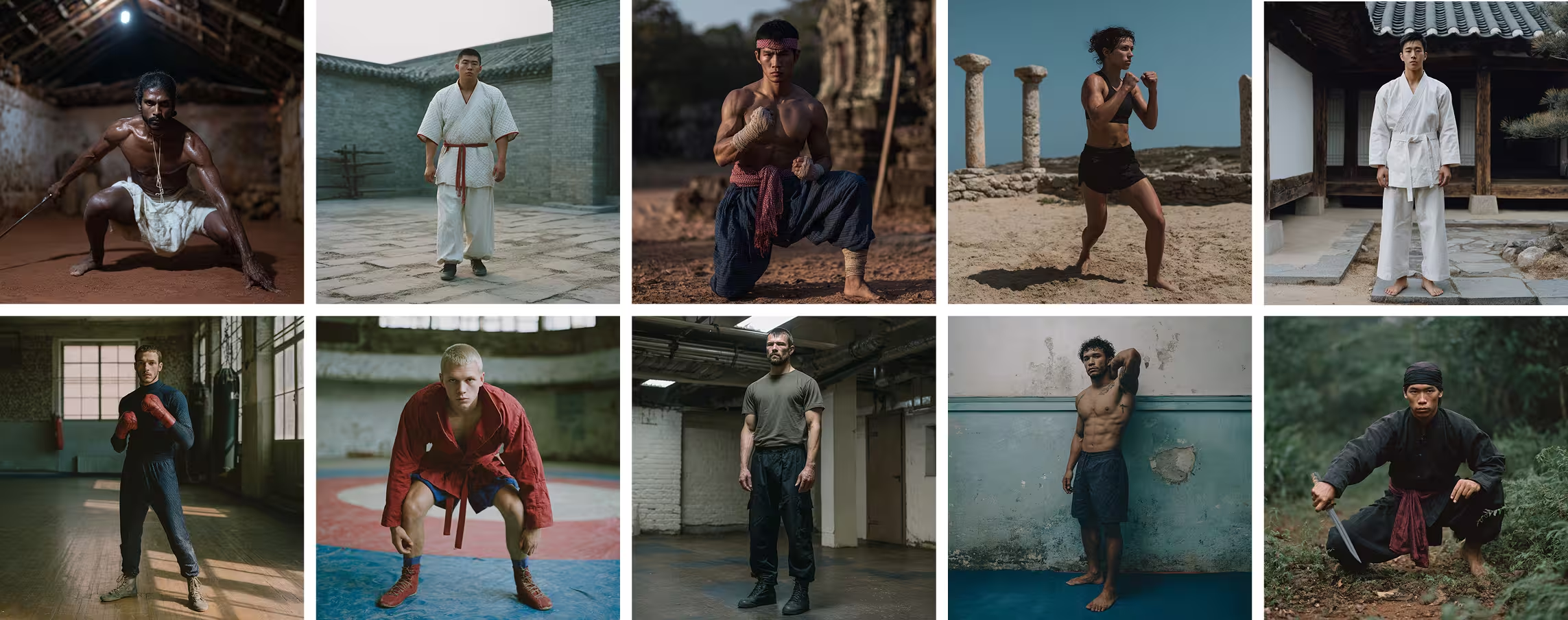
Most people can name five or six martial arts without thinking. Karate, Judo, Brazilian Jiu-Jitsu, Muay Thai, Taekwondo. These names dominate gym signage, competition circuits, and popular culture. But the world of combat arts stretches far beyond these familiar systems. Entire fighting traditions have shaped civilizations, survived wars and colonial suppression, and influenced the very styles we consider mainstream today.
What often separates a well-known martial art from an obscure one has less to do with quality or effectiveness and more to do with geography, media exposure, and historical timing. Some of the most technically sophisticated and culturally rich fighting systems remain unknown to most practitioners simply because they developed in regions without a global media platform, or because political upheaval interrupted their transmission.
This guide explores 10 underrated martial arts styles, comparing their techniques, philosophies, and cultural roots. Whether you train for competition, self-defense, or personal growth, these lesser-known disciplines offer perspective that the mainstream conversation often misses.
1. Savate: France's Elegant Fusion of Foot and Fist
Savate, also known as Boxe Française, is a French combat sport that blends precise kicking techniques with the hand mechanics of English boxing. What makes it immediately distinctive is the footwear requirement. All kicks in Savate are delivered with shoes, and strikes use the toe, heel, or blade of the foot rather than the shin. This changes the biomechanics entirely, producing a style that favors precision and tactical control over raw power.
The art emerged in the early 1800s from two separate traditions. In southern France, sailors in Marseille practiced chausson, a high-kicking style adapted for the unstable footing of ship decks. In Paris, street fighters developed savate des rues, a rougher system built around low, bone-breaking kicks delivered with heavy boots. The two traditions converged in the mid-19th century when Charles Lecour, after experiencing a loss to an English boxer, integrated formal punching techniques into the French kicking framework. That synthesis became modern Savate.
Competition Savate is divided into two formats. Assaut is judged entirely on clean technique, with power deliberately excluded. Combat allows greater contact and more decisive outcomes. Both formats emphasize posture, recovery, and the quality of execution, not just the impact of the strike.
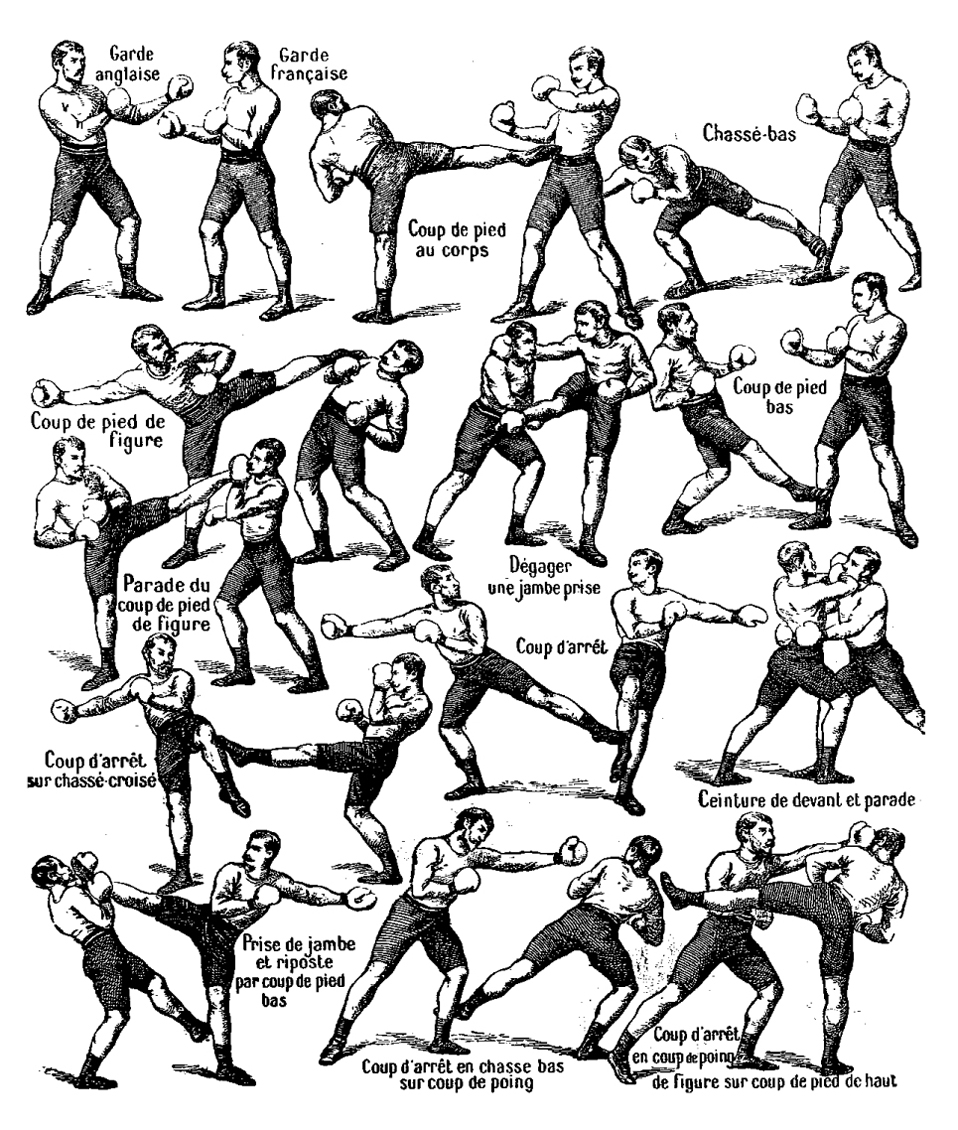
The philosophy behind Savate reflects a broader French tradition of treating combat as a discipline of refinement. Where many striking arts measure progress primarily by power or aggression, Savate measures it by control, footwork, and the intelligence behind each exchange. For practitioners coming from kickboxing or Muay Thai backgrounds, Savate offers a complementary perspective on striking mechanics. Its precision-first approach can sharpen timing and distance management in ways that raw power training cannot.
Combatpit has explored French combat traditions in depth. For a related style from the same lineage, see our article on Chausson: The Maritime Martial Art of 19th-Century France, and for the weapon-based cousin of Savate, check out the glossary entry on Canne de Combat.
Can you find a Savate gym outside of France?
Across 3,375 records spanning 6 cities that we analyzed as of April 2026 for our World Dojo Index, we identified Savate gyms in only two — one in Toronto and one in Rome.
2. Bokator: Cambodia's Ancient Warrior Art
Bokator (Kun L'Bokator) is among the oldest martial arts still practiced anywhere in the world. Oral tradition traces it back more than a thousand years to the armies of the Khmer Empire, and its techniques are depicted in bas-reliefs carved into the walls of Angkor Wat and Bayon temple. The name itself derives from the Khmer phrase bok tao, meaning "to pound the lion," referencing a legend in which a warrior killed a lion with a single knee strike.
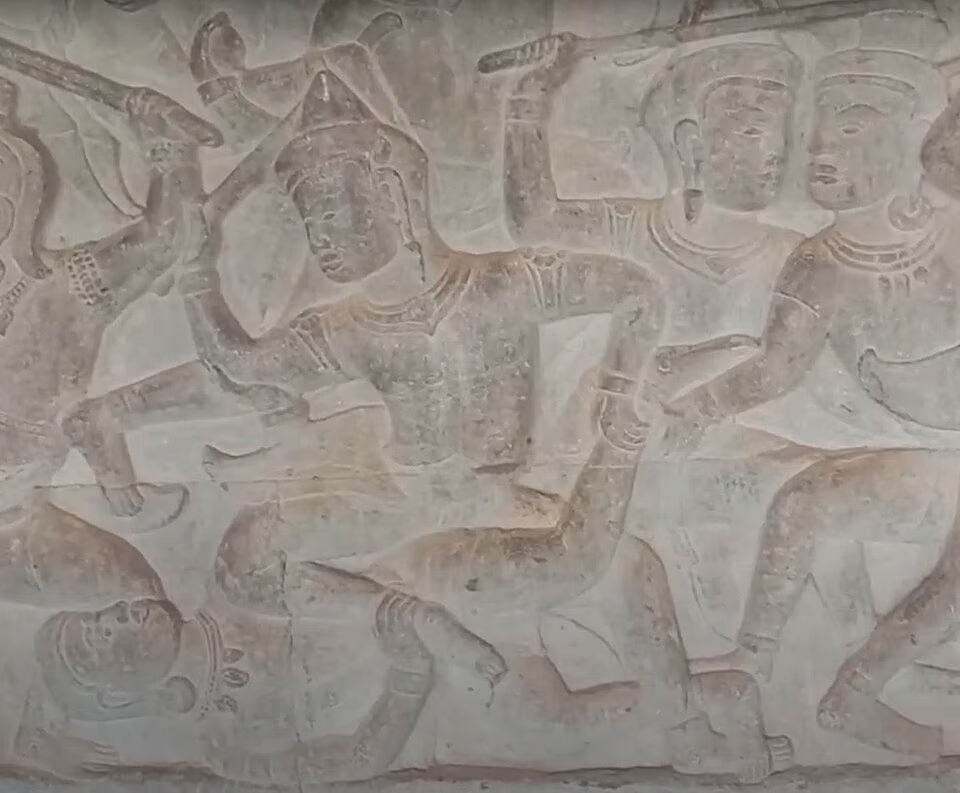
The system is vast. Estimates place the total number of Bokator techniques between 8,000 and 10,000, organized into hundreds of animal-based forms called kbach. These forms draw inspiration from the movements of tigers, eagles, horses, snakes, and other animals, giving the art a distinctive visual character that blends combat utility with ceremonial expression. Students train in elbow and knee strikes, kicks, joint locks, throws, ground fighting, and traditional weapons.
Bokator's modern story is one of survival. During the Khmer Rouge regime (1975-1979), martial artists were systematically targeted. An estimated 90% of Bokator masters were killed. The art nearly disappeared entirely. In the early 2000s, Grandmaster San Kim Sean, one of the few surviving practitioners, dedicated himself to reviving Bokator in Cambodia. His efforts led to the establishment of the Cambodia Bokator Federation and, in 2022, Bokator's inscription on UNESCO's Representative List of Intangible Cultural Heritage. It was also included in the Southeast Asian Games in 2023.
The philosophy of Bokator emphasizes non-violence, discipline, and respect for nature. Training sessions traditionally begin with homage to Brahma, reflecting Indian cultural influences that permeated Angkorian society. The ranking system uses a krama (traditional Cambodian scarf) rather than a belt, with each color representing a different level of proficiency.
For anyone interested in Southeast Asian fighting traditions, Bokator represents a cultural root system. Its influence is visible in Muay Thai, Pradal Serey, Vovinam and other regional arts that developed from the same Angkorian combat heritage.
3. Shuai Jiao: China's Ancient Wrestling Tradition
Shuai Jiao is one of the oldest martial arts in continuous practice. Often translated as "Chinese wrestling," it is a jacket-based grappling system focused on throws, trips, sweeps, and takedowns. Unlike many grappling arts that emphasize ground control, Shuai Jiao keeps the fight standing. The objective is to uproot the opponent and bring them to the ground while remaining on your feet.
Historical records place Shuai Jiao's origins in military training contexts dating back thousands of years. It was practiced at imperial court competitions, military garrisons, and public festivals. The jacket (or dalian) plays a critical role, providing gripping points that enable the technical manipulation of an opponent's balance, posture, and momentum.
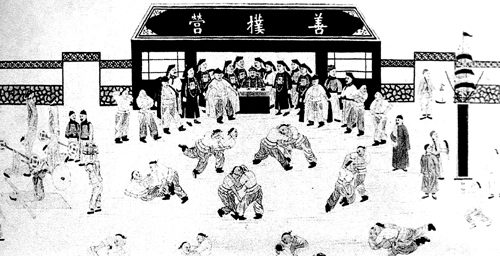
Technique-wise, Shuai Jiao shares significant overlap with Judo, and there is credible historical evidence that Judo founder Jigoro Kano studied Chinese wrestling methods before codifying his own system. Where Shuai Jiao differs is in its emphasis on remaining upright after the throw. There is no extended ground phase. You throw, you stay standing, and you're ready for the next engagement. This makes it particularly relevant for self-defense scenarios and for MMA fighters who want to develop throwing ability without committing to ground work.
The philosophy is pragmatic and military in origin. Efficiency, balance disruption, and tactical footwork take precedence over spiritual or ceremonial dimensions. For those who want to understand the grappling traditions that influenced modern Judo and wrestling, Shuai Jiao is a foundational art worth studying.
Jeff Chan from MMAShredded - check his profile in Combatpit media directory - tried Shuai Jiao and shares his experience in this YOuTube video.
4. Silat: Southeast Asia's Blade-Forged Fighting Art
Silat is not a single martial art but a family of fighting systems practiced across Indonesia, Malaysia, the Philippines, Brunei, and Singapore. Its technical repertoire is broad, encompassing strikes, joint manipulations, sweeps, throws, and extensive weapon training, including the iconic keris (wavy-bladed dagger).
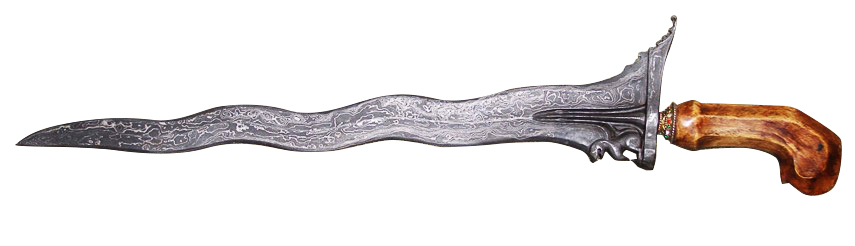
What distinguishes Silat from most martial arts is the depth of its cultural integration. In many communities, Silat is not just a fighting method. It is woven into wedding ceremonies, harvest festivals, rites of passage, and spiritual practice. Some lineages incorporate elements of Islamic tradition, while others draw on pre-Islamic animist beliefs. This dual spiritual dimension gives Silat a cultural weight that goes well beyond technique.
From a technical standpoint, Silat tends to operate at close range. Many systems prioritize rapid entries, off-angle attacks, and destructions (strikes to incoming limbs) that disable an opponent before they can fully engage. Ground positioning, low stances, and deceptive footwork are common features. The weapon integration is not an afterthought. Many Silat systems teach weapon and empty-hand techniques as a unified curriculum, with blade awareness informing every unarmed movement.
For martial artists interested in bridging the gap between armed and unarmed combat, Silat offers one of the most complete frameworks available. Its influence has quietly entered MMA through fighters and coaches who train in Indonesian and Malaysian systems.
Can you find a Silat gym outside of Indonesia and Malaysia?
Across 3,375 records spanning 6 cities that we analyzed as of April 2026 for our World Dojo Index, we identified Silat gyms in three cities — 12 in Singapore, 3 in Toronto, and 1 in Sydney.
5. Kalaripayattu: India's Mother Art
Kalaripayattu is a martial art originating in Kerala, southern India, and is often cited as one of the oldest fighting systems in existence. It combines strikes, kicks, grappling, weapon training, and traditional Ayurvedic healing into a single integrated practice. The training space itself, the kalari, is a sunken earthen pit that serves as both gymnasium and temple.
The system is structured in progressive stages. Students begin with meipayattu (body conditioning and flexibility exercises), advance to wooden weapon training, then progress to metal weapons including swords, shields, and the urumi (a flexible whip-sword that is one of the most difficult weapons to master in any tradition). The highest level of training involves marma shastra, the knowledge of vital pressure points used for both combat application and therapeutic healing.
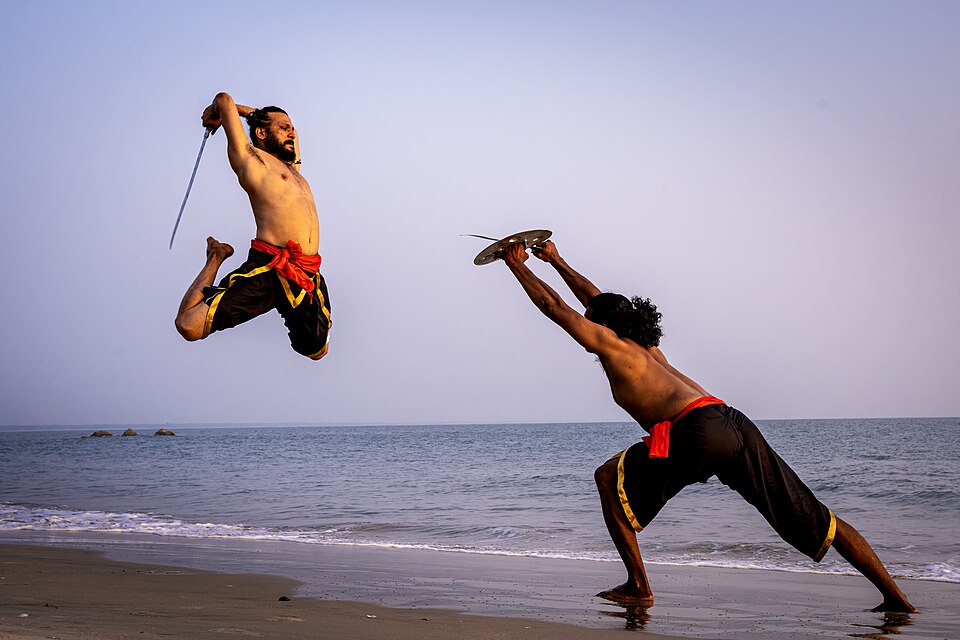
This integration of healing and combat is one of Kalaripayattu's most distinctive features. Masters (known as gurukkal) are often also traditional healers, using the same anatomical knowledge that informs their striking to treat injuries and illnesses. The philosophy treats martial skill and medical knowledge as two sides of the same discipline.
For deeper context, see our full article: Kalaripayattu: The Ancient Martial Art of India.
Can you find a Kalaripayattu gym outside of India?
Across 3,375 records spanning 6 cities that we analyzed as of April 2026 for our World Dojo Index, we identified Kalaripayattu gyms in two cities — 1 in Toronto and 1 in Singapore.
6. Sambo: Russia's Pragmatic Combat System
Sambo was developed in the Soviet Union during the 1920s as a military self-defense system. The name is an acronym for SAMozashchita Bez Oruzhiya, meaning "self-defense without weapons." Its founders, Vasili Oshchepkov and Viktor Spiridonov, drew from Judo, Greco-Roman wrestling, and folk wrestling styles from across the Soviet republics to build a combat system that prioritized practical effectiveness above all else.
Two branches define modern Sambo. Sport Sambo resembles Judo in structure, focusing on throws, pins, and leg locks (a category that Judo restricts). Combat Sambo adds striking, headbutts, and ground-and-pound, making it one of the closest analogs to modern mixed martial arts of any traditional system. This dual identity gives Sambo a unique position: it functions both as a standalone competitive sport and as a foundational system for MMA.
The proof is in the results. Some of the most dominant fighters in MMA history trained primarily in Sambo, including Fedor Emelianenko and Khabib Nurmagomedov. Their success has drawn more attention to the art, but Sambo remains significantly less accessible than Judo or BJJ outside of Russia and Eastern Europe.
The philosophy is bluntly practical. There is no spiritual framework or ceremonial tradition. Sambo was built to work, drawing from whatever source offered the most effective techniques. This "use what works" mentality predates Bruce Lee's Jeet Kune Do philosophy by several decades and represents one of the earliest systematic approaches to cross-style integration.
For deeper context, see our full article: Sambo: The Russian Martial Art and Combat Sport | Combatpit
Can you find a Sambo gym outside of Russia?
Across 3,375 records spanning 6 cities that we analyzed as of April 2026 for our World Dojo Index, we identified Sambo gyms in two cities — 1 in Toronto and 1 in Singapore.
7. Systema: Movement Without Form
Systema is a Russian martial art that defies easy categorization. It has no fixed stances, no preset forms, no belt ranking system. Instead, it teaches principles: relaxation under pressure, continuous breathing, fluid movement, and the ability to adapt to any situation without relying on memorized technique sequences.
The art has roots in Russian military and special forces training, though its exact lineage is debated. Modern Systema is most closely associated with Mikhail Ryabko and Vladimir Vasiliev, who have taught the system internationally since the 1990s. Training sessions can look unusual to outsiders. Practitioners work on receiving strikes without tension, moving through grabs and holds without resistance, and developing sensitivity to an opponent's structure and intent.
The philosophy is built on the idea that rigid technique creates rigid responses. By training the body to move instinctively, without reliance on pre-set patterns, the practitioner becomes adaptable to scenarios that choreographed drills cannot anticipate. Breathing is central. Systema treats breath control not as a supplement to physical training but as its foundation.
For a deeper exploration of Systema's philosophical foundations, see our article: 35 Major Philosophical Principles of Russian Martial Art Systema.
Can you find a Systema gym outside of Russia?
Across 3,375 records spanning 6 cities that we analyzed as of April 2026 for our World Dojo Index, we identified Systema gyms in three cities — 3 in Buenos Aires, 2 in Toronto, and 1 in Rome.
8. Pankration: The Original Mixed Martial Art
Pankration was an ancient Greek combat sport that combined boxing and wrestling with virtually no rules beyond prohibitions on biting and eye gouging. It was introduced into the ancient Olympic Games in 648 BCE and remained one of the most popular events for centuries.
The name translates roughly to "all power" or "all strength," and the format was genuinely open. Competitors could punch, kick, throw, choke, and apply joint locks. Matches often ended by submission (the losing fighter would raise a finger to signal defeat) or by knockout. The sport produced legendary champions, and Greek mythology attributed the creation of Pankration to heroes like Heracles and Theseus.
Pankration is significant not as a historical curiosity but as a conceptual ancestor. It demonstrates that the idea of combining striking and grappling into a single competitive format is not a modern invention. When the Ultimate Fighting Championship launched in 1993, it was, in many respects, rediscovering a format that the Greeks had practiced over two millennia earlier.
Modern efforts to revive Pankration as a competitive sport have gained some traction through organizations affiliated with United World Wrestling. For practitioners interested in the historical roots of mixed martial arts, Pankration offers essential context.
Can you find a Pankration gym outside of Greece?
Across 3,375 records spanning 6 cities that we analyzed as of April 2026 for our World Dojo Index, we identified Pankration gyms in one city — 2 in Toronto.
9. Taekkyon: Korea's Rhythmic Fighting Art
Taekkyon is a traditional Korean martial art that predates Taekwondo by centuries. It is characterized by fluid, dance-like footwork, low sweeping kicks, and a rhythm-based approach to combat that looks remarkably different from most striking arts.
The movement vocabulary emphasizes circular stepping patterns (pumbalkki), leg sweeps, and trips over high kicks and power strikes. Practitioners maintain a continuous rocking motion, shifting weight rhythmically to generate momentum for sweeps and to create unpredictable timing. The effect is a fighting style that is simultaneously evasive and offensive, making it difficult for opponents to read.
Taekkyon was historically practiced as a folk game at Korean festivals and village gatherings. It nearly disappeared during the Japanese colonial period (1910-1945), when traditional Korean cultural practices were suppressed. Song Duk-ki, the last remaining master, preserved the art through the 20th century, and his efforts led to Taekkyon's designation as South Korea's Important Intangible Cultural Property No. 76 in 1983. In 2011, UNESCO inscribed Taekkyon on its Representative List of Intangible Cultural Heritage, recognizing it as a distinct tradition separate from Taekwondo.
For martial artists, Taekkyon offers a fundamentally different approach to footwork and lower-body attacks. Its rhythm-based movement patterns can enhance agility, timing, and unpredictability in ways that supplement more conventional striking training.
10. Luta Livre: Brazil's Working-Class Grappling Art
Luta Livre, meaning "free fight" in Portuguese, is a Brazilian no-gi submission grappling system that developed in parallel with Brazilian Jiu-Jitsu. While BJJ grew from Japanese Judo instruction within upper-class Brazilian circles, Luta Livre emerged from the working-class communities of Rio de Janeiro, where practitioners trained without the expensive gi.
The art was founded by Euclydes "Tatu" Hatem, who developed a submission grappling methodology that emphasized leg locks, chokes, and positional control without relying on gi grips. During the 1980s and 1990s, Luta Livre and BJJ practitioners engaged in a fierce rivalry, with challenge matches and gym confrontations that shaped the competitive culture of Brazilian martial arts. This rivalry paralleled and sometimes intersected with the early development of MMA in Brazil.
Technically, Luta Livre shares significant common ground with no-gi BJJ, but its developmental path was independent. The emphasis on leg locks and lower-body submissions predated the modern no-gi BJJ movement by decades. For grapplers who train primarily without the gi, Luta Livre represents an alternative lineage worth understanding.
For the full story, read: Luta Livre: Brazil's Combat Sport Legacy.
How Do These Underrated Martial Arts Styles Compare?
The 10 styles covered in this list span striking, grappling, mixed systems, and weapon-based traditions. Some, like Sambo and Pankration, are built for competitive combat with minimal philosophical overlay. Others, like Kalaripayattu and Bokator, carry deep spiritual and cultural dimensions that extend well beyond fighting technique.
Weapon integration varies dramatically. Silat and Bokator treat armed and unarmed combat as inseparable. Savate and Taekkyon are purely unarmed systems with no weapon component. Kalaripayattu sits at the extreme end, training students in everything from wooden staves to flexible metal whip-swords.
The diversity is the point. Each of these arts represents a different culture's answer to the same fundamental questions: how do you defend yourself, how do you train the body and mind together, and how do you pass that knowledge forward? No single system answers all of those questions the same way, and that is precisely why exploring beyond the mainstream matters.
Why Should You Explore Underrated Martial Arts?
Cross-training in lesser-known systems can reveal blind spots in your primary art. A Muay Thai practitioner who studies Savate may develop sharper precision in their kicking. A Judo player who examines Shuai Jiao may find techniques that complement their existing throwing game. A no-gi BJJ competitor who studies Luta Livre gains historical context and technical alternatives from a parallel lineage.
Beyond technique, these arts offer cultural enrichment. Understanding the conditions under which a fighting system was created, whether on the decks of Marseille sailing ships, in the temples of Angkor, or in the training halls of the Soviet military, deepens your appreciation for the martial arts as a whole. It connects you to a global community of practitioners whose paths look different from yours but share the same commitment to discipline, refinement, and growth.
The martial arts world is far larger than the mainstream conversation suggests. Each of these 10 underrated styles carries centuries of accumulated knowledge, tested in contexts ranging from ancient battlefields to modern competition rings. Exploring them does not replace depth in your primary art. It broadens the foundation on which that depth is built.
Stay curious. The path rewards those who look beyond the familiar.