

Martial Arts Training Over 40: What the Science Says About Strength, Muscle Loss, and Staying Sharp
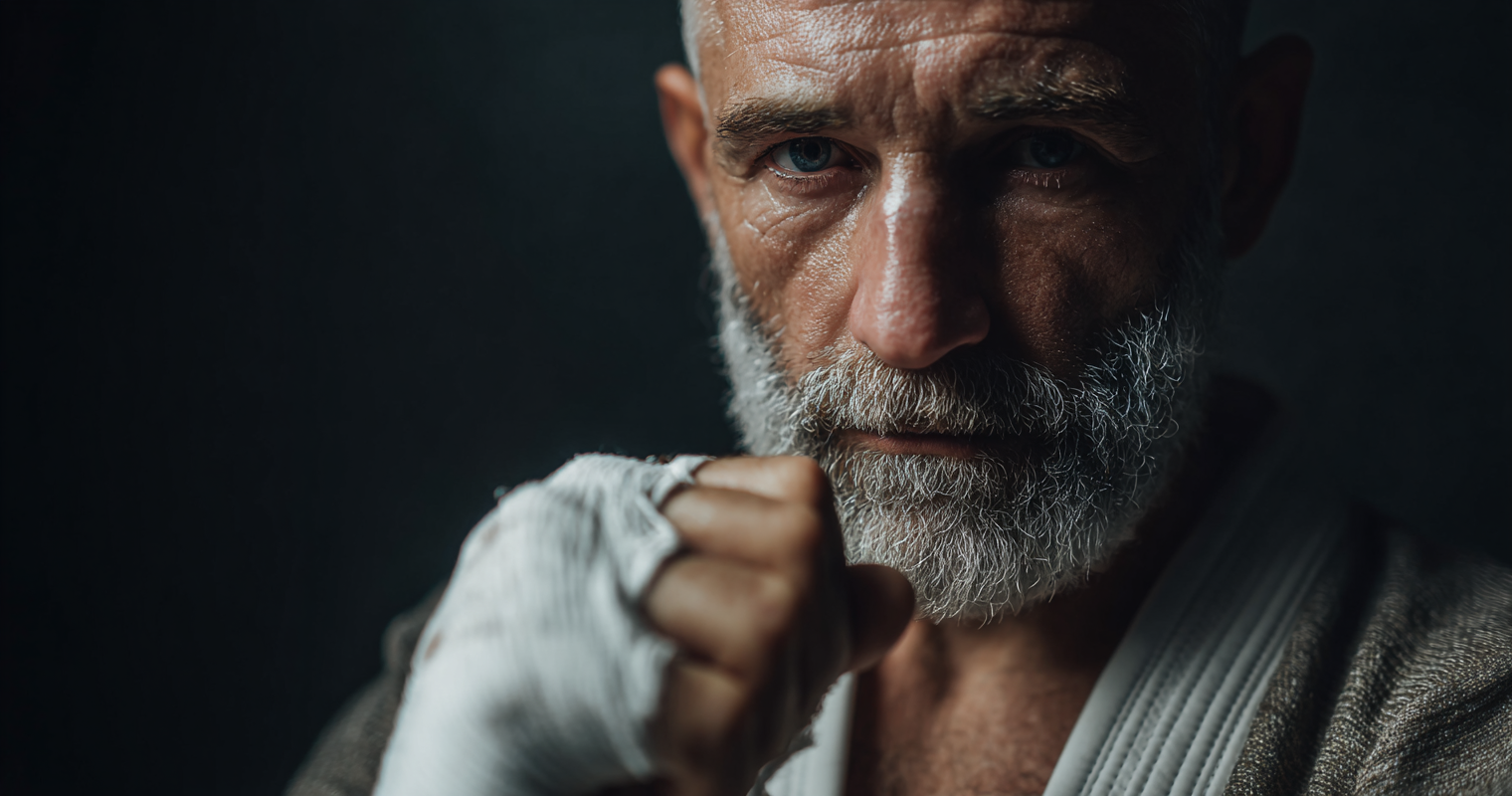
In martial arts, the body is not a machine that simply wears down. It is a living system that responds to demands placed upon it — adapting, compensating, and finding new ways to perform when trained with intelligence and consistency.
But adaptation has conditions. And one of those conditions is time.
The practitioner who trains past forty faces a set of physiological realities that no amount of dedication alone can wish away. Muscle mass declines. Recovery takes longer. The nervous system responds slightly slower than it did at twenty-five. These are not failures. They are the natural processes of a body that has been used — and they are, to a meaningful degree, manageable.
What science now tells us — across decades of aging research, clinical trials, and increasingly, studies specific to martial arts populations — is that how practitioners train in their forties, fifties, and sixties may matter more than how hard they trained in their twenties. The rules of adaptation do not disappear with age. They shift. And the practitioner who understands that shift trains smarter, recovers better, and stays on the mat longer.
This article draws on research from the National Institute on Aging, peer-reviewed journals in sports medicine and gerontology, and martial arts-specific studies to give you a clear, grounded picture of what happens to the aging fighter's body — and what the evidence says you can do about it.
All source links are provided at the end of the article.
What Happens to the Body After 40: The Science of Sarcopenia
The most significant physical challenge facing the aging martial artist is not injury, though injury matters. It is the gradual, almost invisible loss of muscle tissue that begins in the mid-thirties and accelerates through the decades that follow.
This process has a name: sarcopenia. Derived from the Greek for "flesh loss," it describes the progressive decline in skeletal muscle mass, strength, and physical function that accompanies normal aging. The World Health Organization now recognises it as a formal musculoskeletal disease, and it received its own International Classification of Disease code in recent years — a signal of how seriously the scientific community now takes it.
The trajectory is well-documented. Research from the National Institute on Aging's Baltimore Longitudinal Study of Aging — the longest-running scientific study of human aging in the United States, having tracked participants since 1958 — established that muscle mass and strength typically peak between ages 30 and 35. After that, decline begins gradually, at roughly one to two percent per year. The rate accelerates meaningfully after age 65 for women and 70 for men. By age 70, approximately 30 percent of adults experience difficulty with fundamental mobility tasks: walking, rising from a chair, climbing stairs.
For the martial artist, these numbers carry specific weight. Every technique on the mat relies on the same physical foundations that sarcopenia quietly erodes. The hip drive behind a throw. The ground connection in a stance. The structural integrity required to absorb and redirect force. A practitioner who does not address muscle maintenance is not simply losing gym performance — they are losing the physical substrate of their practice.
A 2025 systematic review with meta-regressions published in the Journal of Cachexia, Sarcopenia and Muscle confirmed that resistance training is the first-line intervention for addressing sarcopenic decline — more effective than any pharmaceutical approach currently available. The same review found that the specific variables within resistance training (load, volume, frequency, exercise selection) all meaningfully influence the outcome, suggesting that programme design matters, not just effort.
Research from StatPearls / NCBI further clarifies that sarcopenia is not inevitable in its severity. Sedentary individuals experience it fastest. Active practitioners, especially those who incorporate resistance work alongside their martial arts training, demonstrably slow its progression. The science on this is not ambiguous.
What the Research Says About Older Martial Artists Specifically
Most aging research has focused on general populations — and much of what it finds applies directly to practitioners. But a growing body of literature now examines martial arts populations specifically, and the findings are both encouraging and instructive.
A scoping review published in PubMed Central specifically examined the functional benefits of hard martial arts training for older adults. Drawing on a systematic search of 265 studies and applying the AXIS Critical Appraisal Tool, it found that structured martial arts participation in older populations produced measurable improvements in balance, muscular strength, coordination, and functional mobility. These are not trivial outcomes — they are exactly the physical qualities that allow a practitioner to continue training safely and effectively into advanced age.
A November 2025 systematic review and meta-analysis published in ScienceDirect evaluated the functional benefits and quality of life outcomes from martial arts practice in elderly individuals specifically. Its findings reinforced what practitioners already understand intuitively: that the demands of martial arts training — which engage balance, coordination, power, timing, and spatial awareness simultaneously — produce functional adaptations that conventional exercise often does not replicate.
Perhaps most striking is a 2025 study published in Frontiers in Aging, which examined retired elite martial arts athletes and compared their physical profiles against non-athlete peers of the same age. The results were clear: retired martial arts athletes maintained significantly higher bone mineral density across multiple body regions than their sedentary counterparts — even after years of reduced competitive training. Martial arts practice, in other words, leaves a lasting structural legacy in the body.
The same study noted a significant caveat. Retired martial arts athletes faced elevated risk of weight gain and metabolic disruption following the transition out of high-volume training — a finding with direct relevance to competitors who reduce their training load without adjusting nutrition or supplementary conditioning. The body that was shaped by decades of demanding practice requires continued management when that volume drops.
Bone Density, Falls Prevention, and Why Balance Training Is Not Optional
Sarcopenia does not operate in isolation. It is part of a broader cascade of age-related changes that affect multiple physical systems simultaneously. Bone mineral density declines in parallel with muscle mass, increasing fracture risk. Proprioception — the body's sense of its own position in space — becomes less precise. Balance becomes less reliable. The risk of falls, and the serious injuries that can accompany them, increases substantially.
For the martial artist, this intersects with the demands of training in specific ways. Grappling, throwing, and groundwork all place considerable stress on the skeletal system. Falls, which are central to training in judo, wrestling, BJJ, and many striking arts, require both proprioceptive precision and structural integrity to execute safely. The practitioner whose bone density and balance have deteriorated without being addressed is at elevated risk — not only of injury during training, but of falls in daily life.
The National Institute on Aging's 2024 Healthy Aging Month program included an expert Q&A on falls prevention and bone health in older adults, highlighting that both exercise and awareness are essential components of managing fall risk. The review identified balance training specifically as a distinct and necessary component of any effective conditioning programme for older adults — not a nice-to-have, but a fundamental requirement.
This is where the intersection between modern sports science and traditional martial arts training becomes genuinely interesting. Many classical martial arts systems have emphasised balance as a core physical discipline for centuries — not as an add-on, but as foundational. Tai Chi, for example, which originated as a martial art before its health benefits were recognised more broadly, has been the subject of significant clinical research. A 2025 study published in Frontiers in Physiology found that 16 weeks of Tai Chi practice produced significant improvements in sit-to-stand ability, reaction time, and neuromuscular control in older adults. These are not incidental benefits — they are the physical qualities that keep a practitioner functional on and off the mat.
A 2024 randomised controlled trial published in JMIR Aging took this further, testing a hybrid programme that combined strength training with Tai Chi practice in older adults diagnosed with sarcopenia. The hybrid approach produced better outcomes for skeletal muscle preservation than either intervention alone — a finding that has direct implications for how aging practitioners might structure their supplementary training.
Strength Training for the Aging Practitioner: What the Evidence Recommends
The NIA has supported research on strength training for older adults for more than forty years, and the accumulated findings are consistent. Resistance training preserves muscle mass, improves mobility, maintains independence, and extends the healthy years of life. It is, alongside cardiovascular exercise, the most well-evidenced physical intervention available for the aging body.
NIA-supported researcher Eric Shiroma, Sc.D., whose work focuses on the science of exercise in aging populations, has noted that one of the most significant variables in how people age physically is not chronological age itself but the extent to which they maintain structured physical activity — and specifically, activity that challenges the muscular system with progressive load.
For the aging martial artist, the practical implications are straightforward. Technique training alone — even high-volume technique training — may not provide sufficient mechanical stimulus to maintain muscle mass through the decades of decline that begin in middle age. The demands of a typical class are considerable, but they are not always sufficient to produce the kind of progressive overload that resistance training provides. This is why integrating structured strength and conditioning into a martial arts training programme becomes increasingly important — not optional — as practitioners age.
A 2024 literature review on sarcopenia prevention from the University of Nebraska offered a clear practical framework: two to three resistance training sessions per week, targeting major muscle groups, with progressive increases in load over time. Protein intake of 30 to 50 grams per meal was highlighted as a meaningful nutritional complement. The review emphasised that it is never too late to begin. Studies have shown that even practitioners in their seventies and eighties demonstrate meaningful muscular adaptations to resistance training when it is introduced consistently and progressively.
Understanding neuromuscular efficiency becomes particularly relevant here. As practitioners age, the nervous system's ability to recruit muscle fibres efficiently is often preserved longer than raw muscle mass — which is why experienced older practitioners can appear disproportionately capable relative to their physical size. Resistance training that emphasises compound, multi-joint movements (rather than isolated machine work) supports this quality and transfers more directly to the demands of the mat.
Recovery, Calorie Restriction, and the Longevity Research That Applies to Fighters
Among the most striking recent findings in aging science is research demonstrating that calorie restriction — done deliberately and within safe parameters — can slow the biological pace of aging at a cellular level.
The NIA's CALERIE (Comprehensive Assessment of Long-Term Effects of Reducing Intake of Energy) study, which tracked participants across two years of controlled caloric restriction, produced a landmark 2023 finding: participants who reduced caloric intake by approximately 12 percent over two years showed measurable slowing of biological aging as measured by DNA methylation markers. In the same year, a companion study found that calorie restriction modulates the transcription of genes related to stress response and longevity specifically in human muscle tissue — the finding was published in Aging Cell in October 2023.
These findings do not advocate for crash dieting or severe restriction. What they suggest is that practitioners who manage their body composition with care — who avoid significant excess and maintain a moderate, sustainable caloric approach — may be conferring genuine biological benefits beyond the obvious physical ones. The practitioner who maintains a healthy weight is not just performing better on the mat. They may be aging more slowly at a cellular level.
For the aging martial artist, the CALERIE research also has a cautionary note. The study found that caloric restriction alone caused modest declines in lean body mass and aerobic capacity — but that combining caloric restriction with physical activity substantially protected against these losses. The lesson is consistent with what the broader evidence shows: nutrition and training are not separate variables. They interact. Reducing calories without maintaining physical activity is a partial intervention at best, and potentially counterproductive for muscle preservation.
How Does Martial Arts Training Compare to Conventional Exercise for Aging Adults?
This is a question the research is beginning to answer with increasing precision.
A 2024 scoping review published in the International Journal of Exercise Science examined the psychological and cognitive advantages for older individuals who practise hard martial arts. Across 13 studies involving 514 participants aged 50 and above, the review found that martial arts participation was associated with improved cognition, decreased anxiety, and reduced depression. These outcomes go beyond the physical — they reflect the integrated nature of martial arts training, which demands mental engagement alongside physical effort in a way that many conventional exercise modalities do not.
This distinction matters for how practitioners understand the value of their art as they age. Time on the mat is not simply exercise. It is sustained engagement with a complex physical and cognitive system. The evidence suggests this complexity is part of what makes it effective — not just for physical fitness, but for the kind of functional, whole-person vitality that determines quality of life in later decades.
The findings on Tai Chi are worth revisiting in this context. A 2025 review published in Frontiers in Psychology on the neural mechanisms of martial arts in promoting mental health in older adults found that Tai Chi and other martial arts practices strengthen connectivity within brain networks associated with coordination, balance, and executive function — while simultaneously elevating BDNF (Brain-Derived Neurotrophic Factor), a protein central to neuronal survival and cognitive health. The martial arts, in other words, appear to address the aging body and brain in parallel.
What Does Smart Training Past 40 Actually Look Like?
The research converges on a set of principles that translate directly into how aging practitioners might structure their training. These are not rigid prescriptions — they are frameworks, to be adapted based on individual capacity, training history, and current physical state.
Maintain technical training, but manage load intelligently. There is no evidence that older practitioners should significantly reduce time on the mat. What the evidence does support is structured variation in intensity — alternating periods of higher demand with deliberate recovery phases. Understanding load management and applying it to a weekly schedule is one of the most practical interventions available to the practitioner over forty.
Add resistance training as a complement, not an afterthought. Two to three dedicated sessions per week, focusing on compound movements that build and maintain muscle mass across the major groups, represents the evidence-based minimum. For practitioners whose arts involve grappling and throwing, lower-body strength and hip stability are particularly important targets. For strikers, rotational power and shoulder stability deserve specific attention. The article on strength and conditioning for martial artists explores this integration in depth.
Prioritise flexibility and balance work as its own discipline. The research on falls prevention and functional mobility is clear: flexibility and balance training produce specific adaptations that strength and cardiovascular work do not fully replicate. Stretching, mobility work, and balance challenges — whether embedded in the martial art itself or added through supplementary practice — become increasingly valuable with age. The evidence on flexibility training for martial artists and specifically on PNF stretching is worth revisiting in this context.
Manage nutrition with awareness, not obsession. Supporting muscle preservation requires adequate protein intake. The evidence suggests 30 to 50 grams of high-quality protein per meal as a meaningful benchmark for older adults engaged in regular physical training. Caloric balance — neither significant excess nor severe restriction — is associated with better long-term outcomes.
Treat recovery as training. Sleep quality, active recovery sessions, and deliberate deload periods are not signs of reduced commitment. They are part of the programme. The adaptations produced by training occur during rest. A practitioner who compresses recovery in favour of more volume is not training harder — they are training less efficiently.
Is Martial Arts Safe to Begin or Continue After 40?
The answer from the research is clearly yes — with appropriate awareness.
The scoping review of hard martial arts training in older adults found no evidence to suggest that participation in structured martial arts training presented elevated injury risk compared to other forms of physical activity when taught and practised appropriately. The functional benefits — improved balance, strength, coordination, cognitive engagement — significantly outweighed the risks for healthy older adults.
The practitioner beginning martial arts training for the first time after forty is in a different position than the lifelong practitioner managing accumulated physical history. Both benefit from the same core principle: honest assessment of current capacity, progressive development of load and intensity, and attention to recovery. The dojo that serves aging practitioners well is one that understands this — that meets practitioners where they are rather than where the curriculum assumes they should be.
For the practitioner who has trained for decades, the question is not whether to continue — the evidence strongly supports continuation — but how to structure training to remain sustainable across the decades ahead. The body changes. The art does not have to.
Conclusion
The aging martial artist is not a diminished version of who they once were. They are a practitioner with a different set of physical conditions — conditions that science now understands well enough to work with, not against.
Sarcopenia is real, but manageable. Bone density declines, but responds to training. Balance erodes, but improves with deliberate practice. Recovery slows, but rewards patience. The research from the National Institute on Aging, from clinical trials in sports medicine, and from martial arts-specific studies all point in the same direction: consistent, intelligent training across a lifetime produces outcomes that are not available by any other means.
The practitioner who trains past forty with awareness — who maintains their art, supplements it with resistance training, manages their load, and respects recovery — is not simply extending a career. They are making a particular kind of statement about what martial arts practice is for.
It is not a phase. It is a path. And the path does not end at forty.
Mastery is not built in the years of peak physical performance. It is built across the full arc of a training life — in the adaptation, the patience, and the long return to the mat, year after year.
Scientific Sources Referenced in This Article
National Institute on Aging — Baltimore Longitudinal Study of Aging
The longest-running scientific study of human aging in the United States. Established the trajectory of muscle mass and strength decline with age, confirming peak at ages 30–35 and accelerating loss after 65 (women) and 70 (men). nia.nih.gov
National Institute on Aging — Strength Training Research (40+ years)
NIA-supported research on resistance training for older adults confirming maintenance of muscle mass, improved mobility, and extended healthy years of life. nia.nih.gov
NIA CALERIE Study — Calorie Restriction and Muscle Gene Expression (2023)
Das JK, et al. Calorie restriction modulates the transcription of genes related to stress response and longevity in human muscle: The CALERIE study. Aging Cell. 2023. doi: 10.1111/acel.13963
NIA CALERIE Study — Slowing Biological Aging (2023)
Waziry R, et al. Effect of long-term caloric restriction on DNA methylation measures of biological aging in healthy adults from the CALERIE trial. Nature Aging. 2023;3(3):248–257.
NIA — Falls Prevention and Bone Health (2024)
Expert Q&A on falls prevention and bone health in older adults, Healthy Aging Month 2024. nia.nih.gov
Functional Benefits of Hard Martial Arts for Older Adults — Scoping Review (PMC)
Systematic literature search identifying 265 studies on functional benefits of hard martial arts training for older adults, appraised using the AXIS Critical Appraisal Tool. pmc.ncbi.nlm.nih.gov
Benefits of Martial Arts on Functional Capacity of Elderly People — Systematic Review and Meta-Analysis (ScienceDirect, 2025)
Evaluated functional benefits and quality of life improvements from martial arts practice in elderly individuals. ScienceDirect, November 2025. sciencedirect.com
Comprehensive Health Assessment of Retired Martial Arts Athletes (Frontiers in Aging, 2025)
Alshaer T, et al. Examined bone density, dietary intake, physical activity, and wellbeing in retired elite martial arts athletes versus non-athlete peers. Frontiers in Aging. 2025. doi: 10.3389/fragi.2025.1513936. frontiersin.org
Tai Chi and Sarcopenia — Hybrid Exercise RCT (JMIR Aging, 2024)
Randomised controlled trial testing a hybrid strength training and Tai Chi programme for sarcopenia in older adults. JMIR Aging. 2024;7:e58175. aging.jmir.org
Tai Chi and Sit-to-Stand Ability in Older Adults (Frontiers in Physiology, 2025)
16-week Tai Chi intervention study showing significant improvements in sit-to-stand ability, reaction time, and neuromuscular control in older adults. Frontiers in Physiology. 2025. doi: 10.3389/fphys.2025.1681591
Resistance Training Variables and Sarcopenia — Systematic Review with Meta-Regressions (Journal of Cachexia, Sarcopenia and Muscle, 2025)
Delaire L, et al. Resistance training is confirmed as the first-line intervention for sarcopenia, with training variable manipulation as a key outcome lever. Journal of Cachexia, Sarcopenia and Muscle. 2025;16(6):e70162. pmc.ncbi.nlm.nih.gov
Older Persons in Hard Martial Arts: Psychological Well-Being — Scoping Review (International Journal of Exercise Science, 2024)
13 studies, 514 participants aged 50+. Found improved cognition, decreased anxiety and depression as consistent emerging themes. pmc.ncbi.nlm.nih.gov
Neural Mechanisms of Martial Arts for Mental Health in Older Adults (Frontiers in Psychology, 2025)
Review of BDNF elevation, neuroplasticity, and brain network connectivity improvements from martial arts practice in aging populations. Frontiers in Psychology. 2025. doi: 10.3389/fpsyg.2025.1733310. frontiersin.org
Sarcopenia and Resistance Training — Literature Review (University of Nebraska, 2024)
Practical framework for sarcopenia prevention through resistance training and protein intake in older adults. digitalcommons.unl.edu
Sarcopenia — StatPearls / NCBI Bookshelf (2023, updated 2025)
Ardeljan AD, Hurezeanu R. Comprehensive clinical overview of sarcopenia definition, pathophysiology, and treatment. ncbi.nlm.nih.gov