


In Muay Thai, every fighter finds their range. Some thrive at distance, picking apart opponents with kicks and jabs. Others wait patiently, timing counters with surgical precision. And then there are the Muay Khaos — the knee fighters — who walk forward without hesitation, claim the clinch, and make the inside range their permanent home.
The Muay Khao style is one of the most respected and physically demanding approaches in Thai martial arts. It is not built on speed or flash. It is built on pressure, conditioning, and the relentless application of one of Muay Thai's most powerful weapons: the knee. At the elite stadiums of Bangkok, Muay Khao fighters have accumulated titles, earned legendary reputations, and posed problems that some of the sport's most technically gifted fighters could never solve.
This article breaks down everything you need to understand about the Muay Khao style — where it came from, what defines it, who has carried it to its greatest heights, and how a practitioner builds it.
What Is Muay Khao? Defining the Knee-Fighting Style
Muay (Thai: มวย) means boxing and Khao (Thai: เข่า) means knee. So Muay Khao (Thai: มวยเข่า) translates directly as "knee boxing." The term describes both the style of fighting and the fighter who favors it.
In practical terms, a Muay Khao fighter is a close-range, forward-pressure specialist whose game revolves around controlling the clinch and delivering knees to the body, ribs, and head. Unlike styles that rely on timing and finesse, Muay Khao emphasizes endurance, toughness, and overwhelming volume.
Within Muay Thai's broader taxonomy of styles — the technical Muay Femur, the kicking-focused Muay Tae, the power-punching Muay Mat, and the aggressive Muay Bouk — the Muay Khao occupies its own distinct space. One of the most prominent and successful fighting styles that grace the arenas of Bangkok, Muay Khao fighters are known for their relentless pressure, high-scoring knees, and occasional flying knee knockout. They are fighters who win through attrition and control wearing an opponent down round by round until there is nothing left to give.
What separates this style from simple aggression is its foundation in technique. The clinch is not a rest position for a Muay Khao fighter. It is an active, demanding environment requiring grip strength, balance, postural control, and the ability to create angles for scoring. A fighter who understands clinch mechanics is dangerous. A fighter who has developed Muay Khao conditioning around that understanding is a different problem entirely.
The History and Origins of Muay Khao
Muay Thai's history is long and layered, stretching back through centuries of military practice, regional competition, and cultural tradition in Thailand. The clinical use of the knee as a primary weapon developed alongside the codification of the sport itself — as stadium fighting became more structured in the twentieth century, distinct styles began to emerge from the diversity of regional training traditions.
As competition rules evolved and scoring at the elite stadiums of Lumpinee and Rajadamnern became more systematized, fighters and trainers began to recognize that a well-developed clinch game was not just a supplementary skill — it was a complete fighting system. Many Muay Khaos have won championships in Thailand with the evolution of the sport, which now places more focus on the scoring system.
The golden era of the 1970s and 1980s was where the Muay Khao style was truly defined. A generation of exceptional knee fighters emerged from gyms across Thailand, demonstrating that the inside range could produce some of the most technically sophisticated fighting the sport had ever seen. The knee was elevated from a supplementary weapon to an art form in its own right, one that required years of refinement to apply at the highest level.
The Legends of Muay Khao — Fighters Who Defined the Style
No discussion of the Muay Khao style is complete without examining the fighters who carried it to its highest expression.
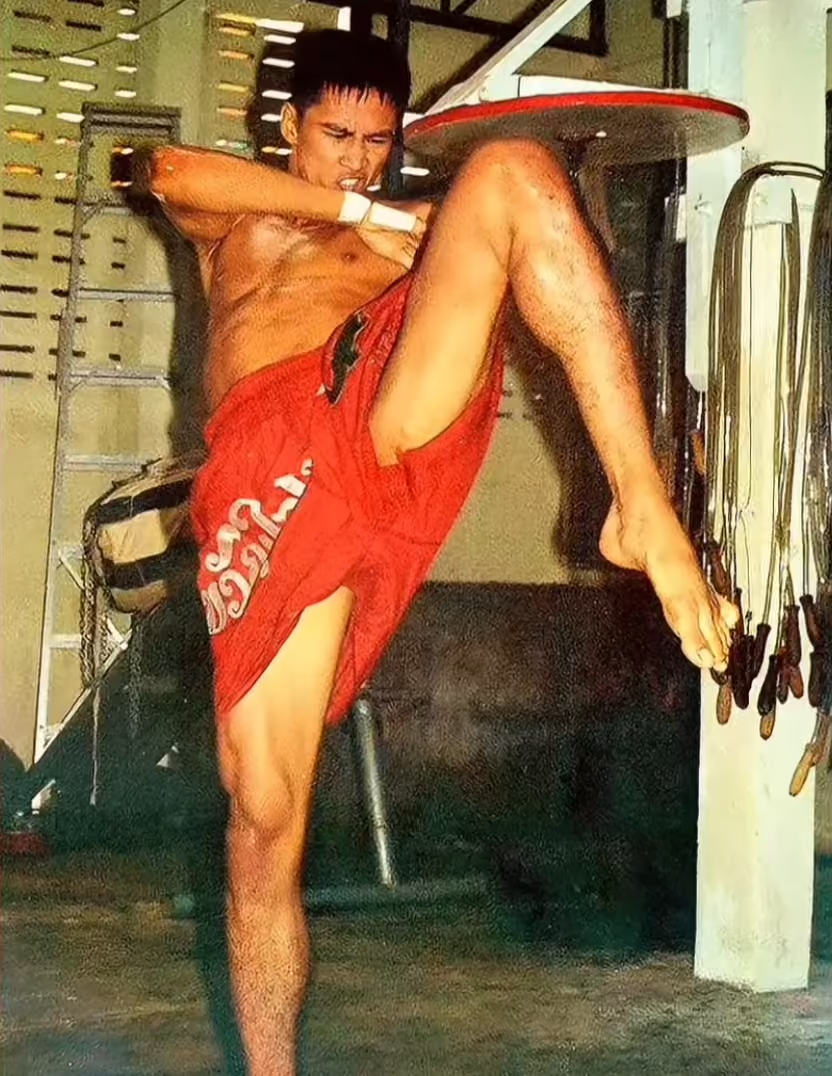
Dieselnoi Chor Thanasukarn
Dieselnoi Chor Thanasukarn is universally regarded as the greatest Muay Khao in Muay Thai history, dominating the sport during its Golden Age. Standing at an exceptional 6 feet 2 inches, his height and style earned him the nickname "Khun Khao Talufaa" — The Sky-Piercing Knee Kicker.
Dieselnoi was the Lumpinee Stadium Lightweight Champion for four consecutive years, from 1981 to 1985, a reign that ended only when he was forced to retire due to a complete lack of challengers in his weight division. His dominance was not merely physical. He was more an architect of destruction than a brawler — calm, precise, and methodical in applying his knee game from the clinch.
His most defining performance came in December 1982, when he faced Samart Payakaroon — a master technician widely regarded as one of Muay Thai's all-time greats — in a bout billed as the Fight of the Century. Dieselnoi dominated the five-round contest with his superior clinch work and knee strikes, ultimately securing a unanimous decision victory that solidified his status as a generational talent. Samart's technical gifts were genuine. Dieselnoi's knee-fighting style simply had no answer.
Petchboonchu FA Group
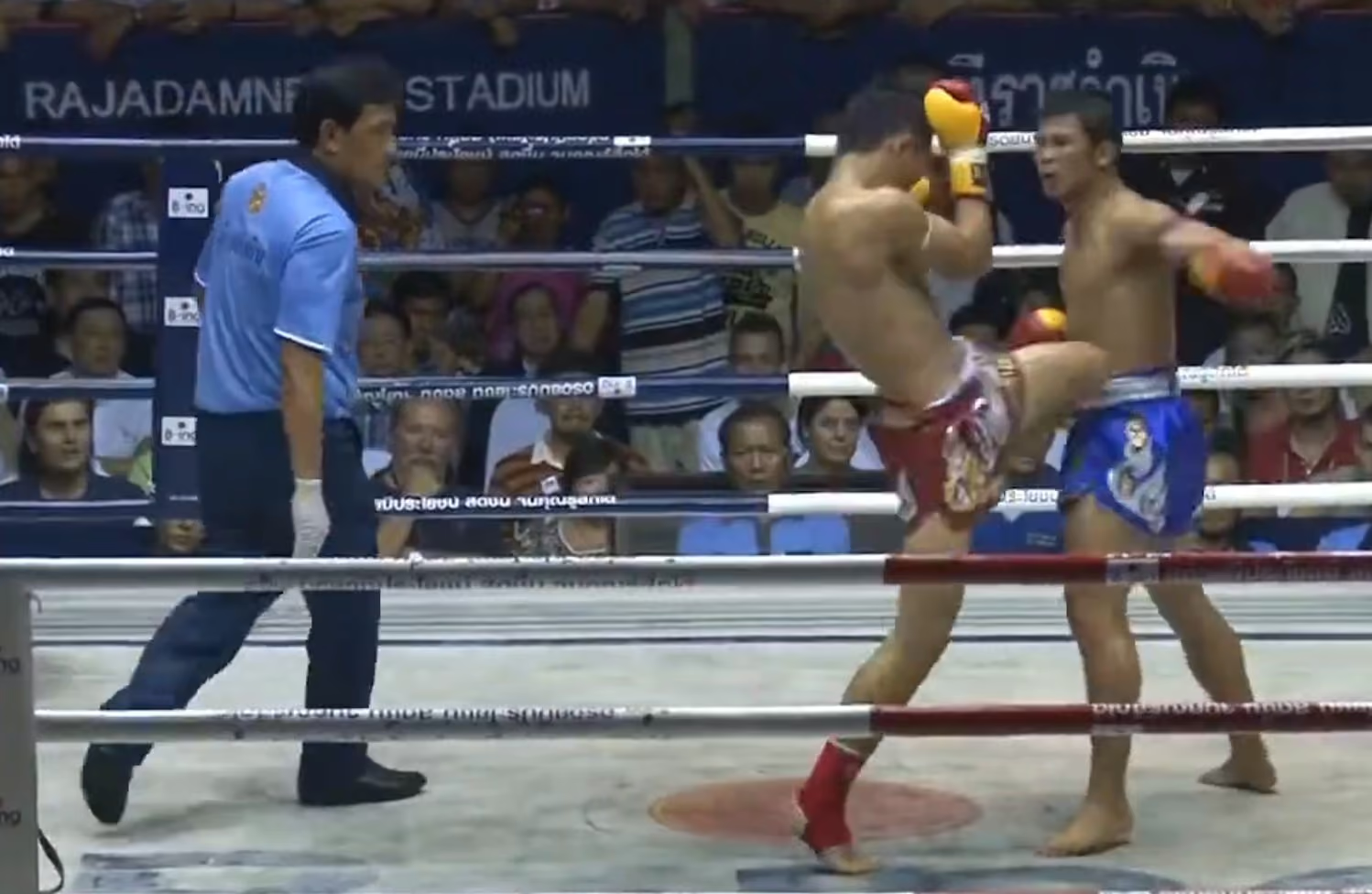
No Muay Khao comes close to Dieselnoi in terms of historic excellence, but Petchboonchu FA Group boasts a list of championships that leaves almost everyone else's résumé in the shade. His five Lumpinee Stadium titles in four divisions, seven Thai titles in six divisions, Rajadamnern Stadium title, and WMC World Title make for a trophy cabinet that may never be matched.
Petchboonchu was known as the Knee Machine — a description that captures both his output and his relentlessness. He was a master in the clinch, beating everyone from Singdam Kiatmoo9 to Nong-O Kaiyanghadao to Saenchai. FA Group Muay Thai Gym in Bangkok remains a popular destination for practitioners who want to learn the signature clinch-and-knee style that Petchboonchu made famous.
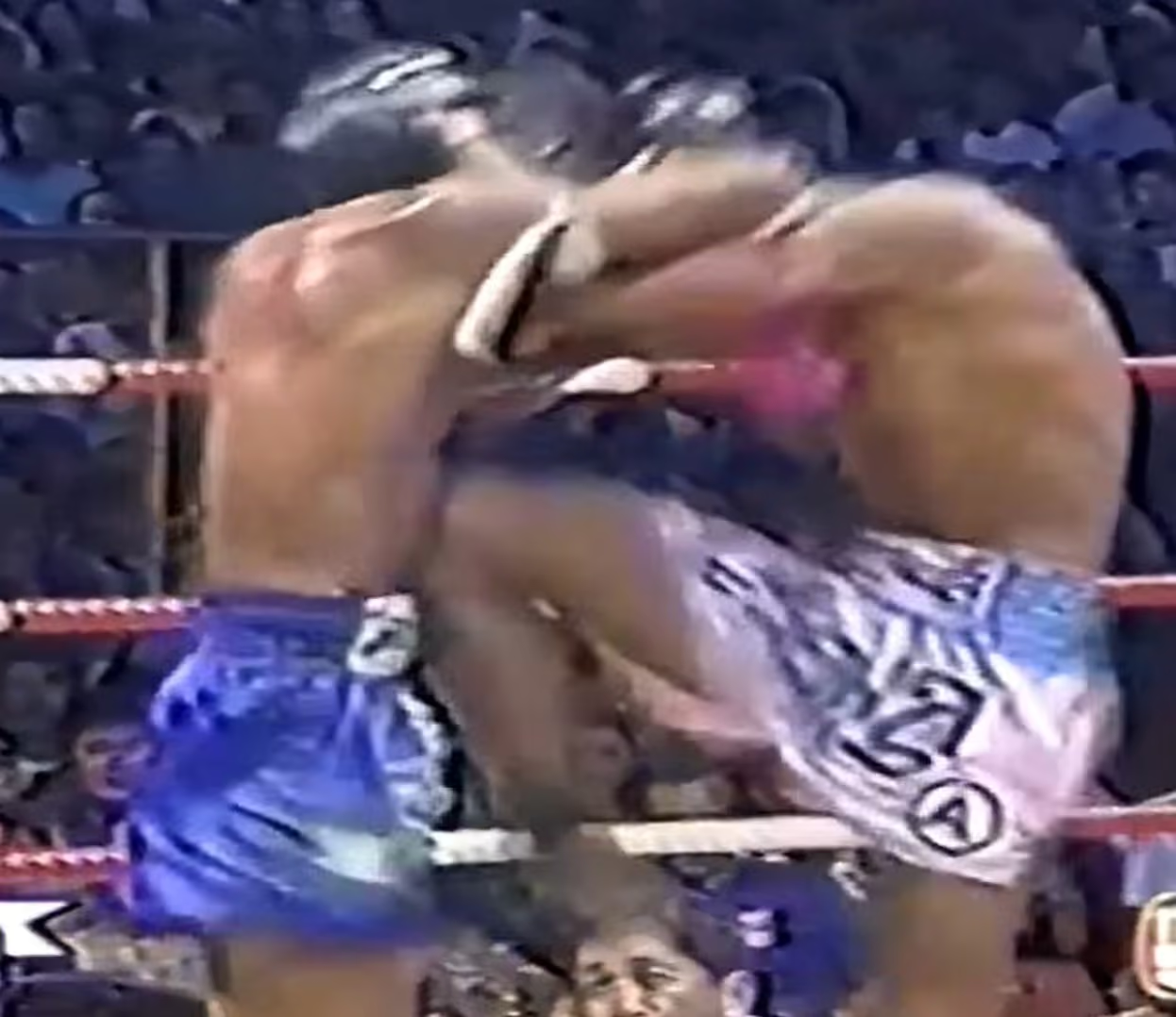
Lamnammoon Sor Sumalee
Lamnammoon took advantage of his lanky frame and long legs, overpowering many of his opponents with a relentless clinch-and-knee style. He beat many legendary contemporaries, gaining four Lumpinee titles over his career. His use of his physical frame to generate leverage in the clinch was a masterclass in applying natural attributes within a technical system. Today, Lamnammoon runs his own gym in his hometown of Ubon Ratchathani — a notable destination for practitioners seeking to learn the Muay Khao style directly from a legend of the discipline.
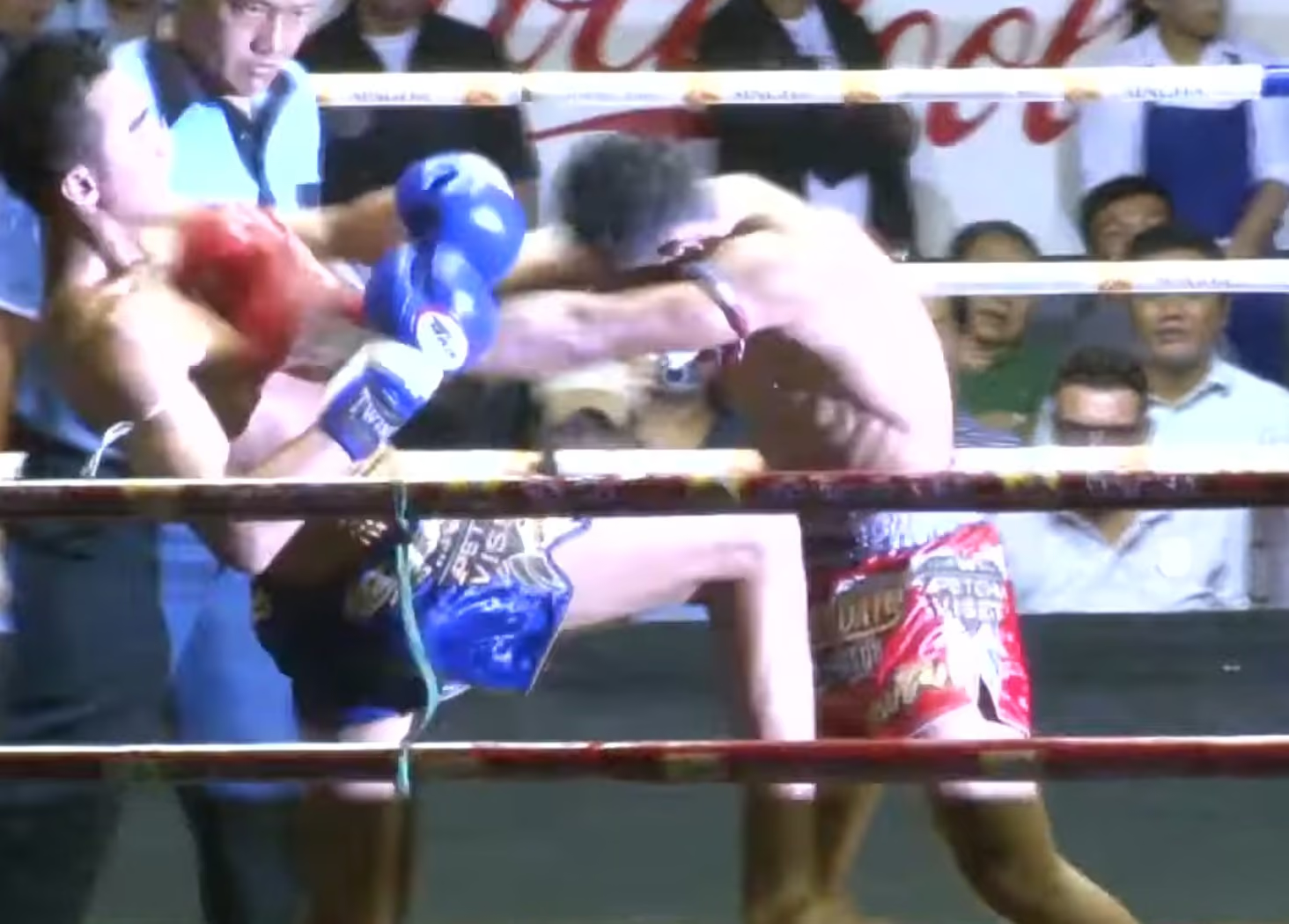
Petchmorakot Petchyindee
The modern torchbearer of the style, Petchmorakot represents what Muay Khao looks like when combined with complete technical development. He holds wins over a who's who list of Muay Thai legends including Seksan Or Kwanmuang, Petchboonchu FA Group, Petpanomrung Kiatmoo9, and the living legend Saenchai. His reign in ONE Championship has demonstrated that the Muay Khao style remains fully viable at the highest levels of modern competition.
The Techniques Behind the Style — What a Muay Khao Fighter Actually Does
Understanding the Muay Khao style requires understanding what happens in the clinch and how a knee fighter gets there.
The Clinch as the Engine
At the heart of Muay Khao lies the art of clinching, a technique where fighters use grips like the plum to control their opponent's head and posture. This control is pivotal, as it sets the stage for a series of strategic moves. The plum position — both hands controlling behind the opponent's head, pulling them into a downward angle — is the classic Muay Khao entry point for straight knee attacks. But the clinch encompasses far more than this single position: underhooks, overhooks, body holds, and neck control all factor into the Muay Khao's ability to create and exploit openings.
The Knee Arsenal
The three main types of knees in Muay Thai are: Khao Dot (jumping knee), where the fighter pushes off the ground and drives the knee toward the opponent's body or head; Khao Loi (flying knee), where the fighter launches forward through the air; and Khao Trong (straight knee), where the fighter drives the knee straight forward, typically targeting the midsection, ribs, or solar plexus.
Beyond these, the diagonal knee (Khao Chiang) attacks from an angle to target the lower ribs, and the lateral knee (Khao Tat) sweeps horizontally across the body. Each variation serves a specific purpose: disrupting balance, targeting different areas of the body, and keeping the opponent guessing about trajectory.
Entry Tools and Support Weapons
Punches and teeps (push kicks) in the Muay Khao's toolkit are not primary scoring weapons — they are tools for closing distance and creating entry opportunities. Muay Khao fighters march forward into close quarters, locking on into the clinch to unload devastating knees with the single-minded goal of smothering their opponent. Elbows serve a secondary role inside the clinch, creating space and disrupting the opponent's grip when necessary. Sweeps and off-balance movements complete the picture, putting opponents into vulnerable positions for follow-up knees.
Muay Khao vs Other Styles — Strengths, Weaknesses, and Matchups
Every style has a context in which it excels and conditions that challenge it. The Muay Khao is no different.
Where it thrives: The Muay Khao matches up favorably with a number of different Muay Thai styles. The forward pressure and focus on endurance means a skilled knee fighter can be a significant challenge for any Muay Femur (technical fighter). Against Muay Mat power punchers and Muay Plam clinch fighters who operate at shorter ranges, the Muay Khao's physical conditioning and knee output give it a clear structural advantage.
Where it faces difficulty: The Muay Khao's primary vulnerability is against fighters who deny it the clinch. As Muay Khao fighters are only effective at incredibly close range, they must work past long and mid-range Muay Thai weapons such as kicks and teeps. This means they face a more challenging matchup against Muay Femur or Muay Tae styles that employ long-range strikes in conjunction with evasive footwork.
A clear example of this is the ONE Championship bout between Petchmorakot and Giorgio Petrosyan. Petchmorakot pressured forward trying to find a home for his knees, but the western-style kickboxer kept his distance, working the jab, landing hard body kicks, and pushing Petchmorakot back with the teep — earning Petrosyan a fairly straightforward decision win. Even elite-level Muay Khaos can be neutralized when the distance game is airtight.
This does not diminish the style — it clarifies its demands. A Muay Khao fighter must develop intelligent entry work, pressure management, and the ability to cut off the ring effectively to reach their ideal range consistently.
How Do You Train the Muay Khao Style?
The Muay Khao style is built over time through consistent, purposeful training. There are no shortcuts to the conditioning it demands.
Clinch drilling is the foundation. Spend time controlling a training partner in the clinch. Practice changing grips, turning opponents, and maintaining balance. This is where the style lives — and it must be drilled at length before the knee combinations themselves can land with any effectiveness.
Knee bag and pad work develops the output required. Drive knees repeatedly into a heavy bag to build endurance and accuracy. Focus on mixing angles and targeting different heights. Volume is a core element of the Muay Khao's identity, and that volume must be trained to the point where it can be sustained through five competitive rounds.
Resistance drilling bridges the gap between technique and application. Have a partner resist while you attempt to land knees in the clinch. This simulates real fight conditions. A compliant training partner will not teach you the adjustments required against someone who is actively defending and countering. Resistance work accelerates that understanding.
Cardiovascular conditioning underpins everything. Clinching is an incredibly taxing way to fight, and often the stronger fighter is the one who controls these exchanges. Building power and endurance through the upper body is essential — neck strength and core stability in particular, since absorbing knees to the midsection while maintaining posture requires deliberate conditioning.
Shadowboxing focused on entries, footwork for closing distance, and smooth transitions between long-range probing and the clinch round out a complete Muay Khao training approach.
Is Muay Khao the Right Style for You?
The honest answer is that the Muay Khao style suits certain physical and temperamental profiles more naturally — but it is accessible to a wide range of practitioners.
Fighters with tall and lean physiques often excel in this discipline, as they can generate more leverage and range — just look at legends like Dieselnoi Chor Thanasukarn. That said, height is not everything. Mastering techniques across all areas is key to being well-rounded, and a shorter fighter with excellent clinch instincts and superior conditioning can apply the Muay Khao game effectively at any level.
In terms of mindset, the Muay Khao rewards patience and pressure tolerance above all else. This is not a style built on explosive moments of brilliance. It is built on the capacity to sustain a difficult, physically demanding game round after round until the accumulation of knees and clinch work breaks the opponent's will and body.
Beginners can absolutely begin developing Muay Khao fundamentals. Start with the basic mechanics of clinch entry and straight knee technique before adding combination work. Build cardio in parallel. Over time, the style develops naturally for those willing to put in the consistent, unglamorous work that the clinch demands.
Conclusion
The Muay Khao style is, at its core, a study in measured determination. There is nothing accidental about a fighter who chooses the inside range, builds exceptional conditioning around it, and applies pressure with the patience to do so for the duration of a contest.
From the golden era brilliance of Dieselnoi to the modern championship pedigree of Petchmorakot, this style has proven its worth at every level of the sport. It remains one of the most respected approaches in Muay Thai — not because it is the most visually spectacular, but because it demands something that cannot be faked: genuine preparation, physical durability, and the willingness to earn every point through close-quarters craft.
Mastery is not achieved in moments of applause. It is built in the grinding repetition of clinch drilling, the accumulated knee strikes on the bag, and the quiet discipline of a practitioner who understands that the path rewards those who respect it.