

Uchi Komi, Nage Komi, Randori: The Judo Training Progression That Builds Skill and Protects the Body
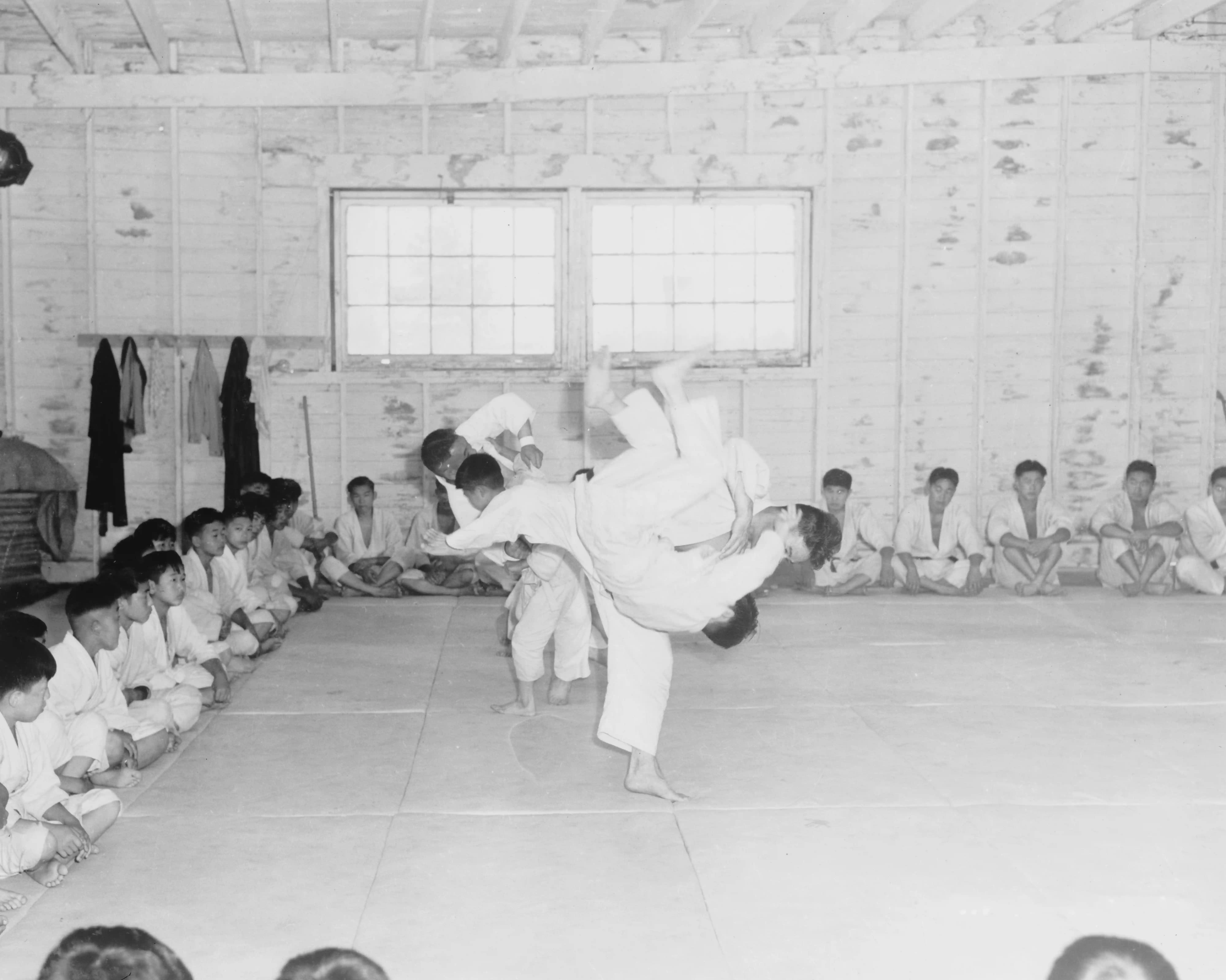
Judo carries a quiet contradiction. Its founder named it "the gentle way." Its injury profile tells a more complicated story.
Research across elite and recreational levels consistently identifies the knee, shoulder, and elbow as judo's most vulnerable joints. Sprains lead the injury charts. Shoulder dislocations and acromioclavicular tears appear in competitive data at every level. And study after study points to the throwing phase, tachi-waza, as the moment where most serious injuries occur.
This is not an argument against judo's intensity. Grappling is demanding. Contact is real. But a significant portion of these injuries share a common thread: practitioners committing to full-resistance throwing before their body, or their partner's body, has actually learned what that commitment requires.
Judo has a training system that addresses exactly this. It exists in the form of three progressive methods, uchi komi, nage komi, and randori, Each of these is designed to build a specific layer of skill before the next layer is added. Used properly, this progression is not just pedagogy. It is a damage-prevention system.
The problem is that judo culture, in many dojos, does not always honor the order.
What Is Uchi Komi — And Why Stopping Before the Throw Is the Point
Uchi komi translates from Japanese as "repeated entry practice." The term was originally borrowed from Kendo, where it describes repetitive striking drills against a partner. Judo adopted it to describe something structurally similar: the repeated practice of a throw's entry and positioning phases, stopping deliberately before the throw is completed.
That deliberate stop is what makes it valuable.
In uchi komi, the practitioner, called tori, works through the opening sequence of a technique hundreds or thousands of times: establishing the grip, initiating kuzushi (breaking the partner's balance), stepping into position, loading the body for the throw. Then stopping. Resetting. Repeating.
The partner, called uke, absorbs the entry without being thrown. Both practitioners are safe to work at volume. Neither body is under the stress of full commitment.
What uchi komi trains is the mechanical groove. Footwork, hip entry, grip positioning and timing of the balance break. These are the elements that determine whether a throw is technically sound or structurally compromised. None of them can be learned under the chaos of resistance. They need clean, repeatable conditions to be internalized properly.
Neil Adams, Judo World Champion and eight-time European medallist, has pointed to uchi komi speed as a frequently misunderstood variable. High-speed uchi komi without technical focus does not build fast throws. It builds fast versions of whatever pattern the body already has (including bad ones). Quality of execution is the priority. Repetitions are only useful if they are reinforcing the right mechanics.
This is why coaches who understand uchi komi emphasize correct grip position, consistent kuzushi application, and proper posture before adding any speed or resistance to the drill. The 10,000 repetition principle in martial arts is not a claim about magic numbers. It is a recognition that the volume required to truly ingrain a movement pattern is significant and that those repetitions need to be honest ones.
Static and moving variations serve different purposes within this foundation. Static uchi komi focuses purely on form: the practitioner drills entries without footwork movement, isolating the upper body mechanics and hip load. Moving uchi komi adds footwork patterns, beginning to simulate the positional flow of actual throwing. Both are necessary. The static version builds precision. The moving version builds timing.
What neither version requires is for uke to be thrown. And that is the protection the drill provides.
Nage Komi — Where Commitment Enters the Equation
Nage komi is the full throw. The entry is performed, and this time, it is completed; tori executes the throw, uke lands.
The distinction from uchi komi is fundamental. In uchi komi, the technique is stopped before commitment. In nage komi, commitment is the practice. Tori must follow through. The throw must actually happen.
This is where many practitioners first encounter what it physically feels like to execute a technique against a body that goes with the movement. There is a significant difference between drilling the entry and actually throwing someone. The body's sense of timing, the load transfer through the hips, the follow-through of the arm and shoulder, and all of these feel different under a real throw.
Nage komi develops this without introducing resistance. Uke is compliant. Both practitioners know what technique is coming. Uke prepares for the fall and executes proper ukemi, the breakfall technique that allows the body to land safely. The controlled conditions mean uke can focus entirely on landing well, and tori can focus entirely on completing the throw with correct mechanics.
This is also where shoulder injury risk first becomes real for tori and where the progression matters most.
When a throw is performed correctly, the force flows cleanly through the movement. Tori loads, rotates, and follows through. The throw completes. The energy transfers into the technique and is absorbed by uke's landing.
When the mechanics are not yet internalized, what often happens in nage komi is partial commitment. Tori enters, reaches the loading point, and then hesitates or stalls. The body has loaded for a throw that does not complete. That force has to go somewhere. In a compliant drill setting, this is manageable. Against resistance, which comes in randori, it is not. A technique that stalls mid-execution under a resisting partner places enormous strain on the shoulder. The rotator cuff, the labrum, and the acromioclavicular joint absorb what the throw was supposed to release.
Research into young competitive judoka has found that shoulder injuries occur at nearly twice the rate during defense movements as during attacks. This is the other side of the injury picture. Uke, resisting a throw they were not prepared to receive, braces. The arm goes wide, the shoulder bears the impact of a landing they could not control, or they use the arm as a stabilizer in abduction to avoid going to the mat. That is how shoulder sprains and dislocations happen on the receiving side.
Nage komi, practiced properly, trains both parties. Tori develops the commitment and follow-through without resistance interrupting the throw. Uke develops ukemi under predictable, prepared conditions. When uke knows a throw is coming, the breakfall can be clean. Clean breakfalls are the primary protection against landing injuries.
The progression logic is direct: do not ask the body to commit fully to throwing under resistance until it has first learned to commit fully under cooperation.
Randori — Free Practice as a Testing Ground, Not a Starting Point
Randori is free practice. Both practitioners apply techniques against each other under mutual resistance, with full intention. It is the closest approximation to competitive judo available in training.
It is also where judo's ego problem lives.
Randori feels like real judo. It has energy, unpredictability, and the satisfaction of a clean throw landing against someone who was trying to stop it. Beginners want to be there immediately. Some dojos, intentionally or not, push new practitioners toward live resistance before their foundational work is ready. The result is what the injury data reflects: sprains, shoulder damage, and landing injuries concentrated in the throwing phase, across all levels of performance.
Randori does not build technique. It reveals what technique is already there.
This is not a criticism of randori. It is the point of randori. Free practice puts technique under the kind of pressure that drilling cannot simulate: the unpredictability of a resisting partner, the fatigue that comes from sustained movement, the timing adjustments required when someone is actively countering your entry. These are exactly the conditions a practitioner needs to ultimately test their skill.
But they are conditions that expose, rather than correct. If the mechanical foundation is not yet solid, randori will expose poor mechanics and reinforce them under pressure. If kuzushi has not been trained properly, the practitioner will attempt throws without it and the body will compensate, usually badly. If commitment has not been developed through nage komi, the practitioner will stall mid-entry under resistance cause the shoulder-loading scenario that leads to injury.
What randori should look like at each stage of development tells its own story about the progression.
Early in development, randori sessions benefit from slower, more deliberate pace. Position awareness, grip fighting, and movement timing matter more than thrown techniques. Accepting throws gracefully, with clean ukemi, matters as much as executing them. This is a difficult cultural message in many dojos. The instinct to resist is strong. The instinct to avoid being thrown is strong. But the body that has not yet trained ukemi properly is most at risk precisely in the moment of resisting a throw it cannot stop.
At intermediate levels, the practitioner begins to explore the full throw-attempt cycle, entries, combinations, and positional setups, under moderate resistance. The mechanical foundation built through uchi komi and the commitment developed through nage komi begin to show. Techniques that were drilled clean start appearing under pressure, not perfectly, but recognizably.
At advanced levels, full resistance and full pressure are appropriate. The body has learned what commitment feels like, the shoulder has been conditioned to follow through, and ukemi has become automatic enough that landing under unexpected throws is manageable. The tools built in the earlier stages hold up under the demands of live practice.
Where the Injuries Actually Come From
Large-scale research from European and French competitive judo populations consistently identifies knee, shoulder, and elbow as the primary injury sites. Sprains account for more than 40% of all injuries in tournament data. Acromioclavicular joint sprains, the ligaments connecting the collarbone to the shoulder blade, appear repeatedly in studies examining both competition and training environments.
The pattern, when examined closely, shows two distinct injury mechanisms that the training progression addresses directly.
The first affects uke. Practitioners who have not developed reliable ukemi are at risk every time they are thrown, particularly when the throw is unexpected or the landing is awkward. Wrists absorb impact when the breakfall is not executed. Necks take strain when the head does not tuck. Shoulders dislocate when the arm is extended on landing rather than brought in. These are training environment injuries, and they concentrate in practitioners who have been thrown before they have been taught to fall.
The second affects tori. When a throw is initiated but the mechanics are not clean, or when the technique is attempted against resistance before the movement pattern is internalized, the body loads for a throw that does not complete. The shoulder, particularly in forward-entry throws like seoi nage, bears the load of an incomplete rotation. This is one of the more common mechanisms for rotator cuff and labrum injuries in judo practitioners at all levels; not elite-only, not just competition, but training as well.
Research into young competitive judokas found that shoulder injuries occurring during defense movements showed nearly double the incidence of those during attacks. This confirms that both ends of the throw carry risk, and that risk is elevated when mechanics are premature.
The progression of uchi komi to nage komi to randori is a direct answer to both mechanisms. Uchi komi ingrains the entry without the shoulder ever being loaded past its current capacity. Nage komi introduces full commitment with a prepared uke. Randori tests the whole system under resistance, once it is ready.
How Much Uchi Komi Does It Actually Take?
There is a figure sometimes cited in judo circles: 10,000 repetitions to truly ingrain a technique. It is not a precise prescription. It is a recognition that skill acquisition at the level required for randori and competition demands sustained volume, measured in thousands of entries rather than dozens.
The more useful question is not the number but the quality standard. A repetition in which the grip is wrong, the kuzushi is missing, or the footwork is sloppy does not contribute meaningfully toward a sound throw. It contributes toward a practiced version of the wrong pattern. This is why experienced coaches will stop uchi komi to correct mechanics before allowing volume to continue. The goal is not to accumulate repetitions. The goal is to accumulate correct ones.
Knowing when to move from uchi komi into nage komi is a coach's judgment call, but the marker is clear: when the entry is automatic. Not when it feels comfortable. Comfort can come from a groove that is wrong as easily as from one that is right. Automatic means the mechanics hold without conscious attention — grip, kuzushi, footwork, and hip entry are all happening together without the practitioner thinking through each step.
That is the point at which adding the throw to the drill begins to build something, rather than just revealing how incomplete the foundation still is.
For randori, the marker is similar. The throw needs to be completable before resistance is introduced. A technique that has never been thrown to completion in a cooperative setting has no foundation to test under resistance. What randori tests must first exist.
The Progression Is Not a Slow Path. It Is the Efficient One.
Judo training culture sometimes treats heavy randori as the measure of serious practice. The practitioner who rolls hard, absorbs throws, and comes back tomorrow is respected for it. There is something real in that. Grappling demands physical presence and the ability to function under pressure.
But the body that trains without a sound foundation accumulates more than throws. It accumulates compensations. Movement patterns that work around the limitation. Entries that stall because the mechanics were never finished. Shoulder habits that protect against the strain of incomplete throws by finding a way to avoid committing fully.
Uchi komi, nage komi, and randori exist in that specific order for a reason. Each layer prepares something the next layer requires. The entry groove built in uchi komi is what nage komi's commitment needs to follow through cleanly. The commitment developed in nage komi is what prevents the shoulder from stalling under randori's resistance.
Respecting the order is not caution for its own sake. It is how the art was designed to be transferred. Jigoro Kano built judo on the principle of maximum efficiency, seiryoku zenyo. That principle applies to skill development as much as it does to throwing. The most efficient path to lasting ability is not the fastest path to live resistance. It is the path that builds each layer before the next one is required.
The mat rewards patience that looks like discipline. It is less forgiving of speed that looks like readiness.
Selected Research on Judo Injuries
- Frey et al. (2019) — Epidemiology of Judo-Related Injuries in 21 Seasons of Competitions in France https://pmc.ncbi.nlm.nih.gov/articles/PMC6545656/
- Mooren & von Gerhardt — Epidemiology of Injuries during Judo Tournaments (systematic review) https://pmc.ncbi.nlm.nih.gov/articles/PMC11022761/
- Judo Injuries Frequency in Europe's Top-Level Competitions 2005–2020 https://pmc.ncbi.nlm.nih.gov/articles/PMC7922358/
- Injury Profile and Risk Factors in a Young High Competitive Population of Judo Athletes https://lupinepublishers.com/orthopedics-sportsmedicine-journal/fulltext/injury-profile-and-risk-factors-in-a-young-high-competitive-population-of-judo-athletes.ID.000101.php
- Pocecco et al. — Injuries in Judo: A Systematic Literature Review https://pubmed.ncbi.nlm.nih.gov/24255909/