

Wrestling Styles Explained: Rules, Techniques, and Which Style Forbids Holds Below the Waist
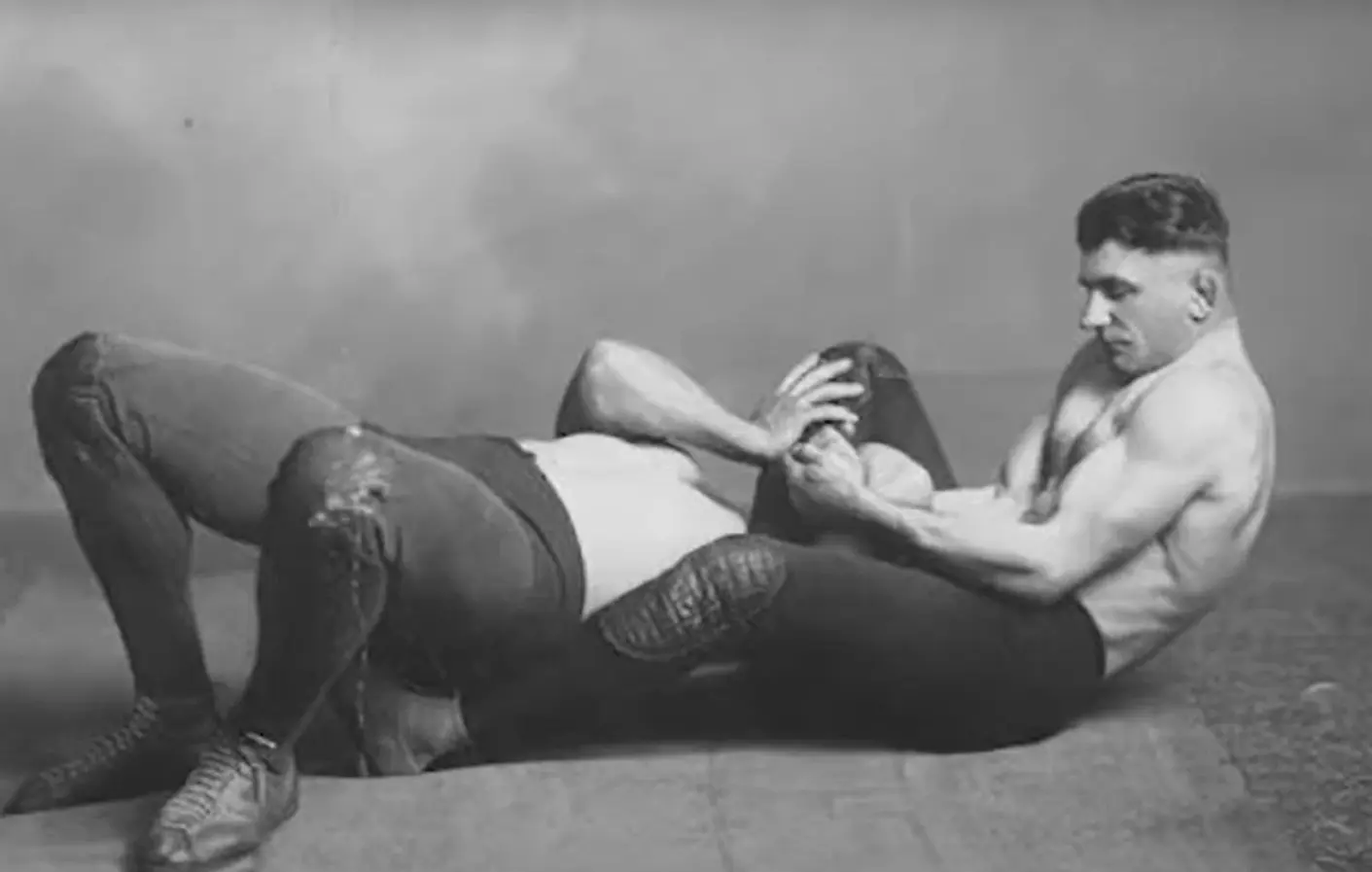
Wrestling is one of the oldest forms of human competition, and one of the most misunderstood. Ask someone to describe wrestling and they'll likely picture one thing: two people grappling on a mat. But that image barely scratches the surface. The rules separating wrestling styles are not minor technicalities. They shape the entire technical identity of each discipline, the way practitioners train, and the kind of athlete the sport develops.
The most striking of these rule differences, and one of the most commonly searched questions in combat sports, is this: which style of wrestling forbids holds below the waist? The answer is Greco-Roman. But the fuller answer is more interesting, because understanding why that rule exists, and how other styles diverge from it, reveals something important about wrestling as a whole.
This guide covers every major wrestling style (Greco-Roman, freestyle, folkstyle, catch-as-catch-can, sumo, pro wrestling, and several traditional folk forms), explaining the rules, the techniques, and where each draws its lines. Whether you're cross-training, coaching, or simply curious, this is the practitioner's map you've been looking for.
The Wrestling Landscape: More Styles Than Most People Realize
Before going style by style, it helps to understand how wrestling is organized as a family of disciplines. At the top level, there are three broad categories: competitive/Olympic wrestling, folk and traditional wrestling, and entertainment wrestling. Each contains multiple styles, each with its own governing body, ruleset, and technical vocabulary.
The Olympic styles, Greco-Roman and freestyle, are governed internationally by United World Wrestling (UWW) and share much of their structure. Folkstyle is the American scholastic and collegiate version, governed domestically by the NFHS and NCAA. Catch wrestling is the historical ancestor of much of modern grappling. Sumo is Japan's national sport with roots in Shinto tradition. And professional wrestling, while scripted in its outcomes, operates within a rule framework that shapes every match's storytelling.
Then there are the folk styles that rarely make Olympic coverage but represent thousands of years of regional grappling tradition. From Dumog, the Filipino wrestling art rooted in Visayan martial tradition, to Buno, the Filipino indigenous wrestling system, to Ssireum, Korea's traditional belt-wrestling art, to Vajra Musti, the ancient Indian wrestling form. These traditions remind us that wrestling was never one thing. It was always a reflection of the culture that produced it.
What unites them all is the fundamental goal: use your body, your leverage, and your technique to take your opponent down, out, or to submission. What separates them are the rules governing how.
Greco-Roman Wrestling: The Style That Forbids All Holds Below the Waist
If you've come here searching for which style of wrestling forbids below the waist holds, here is your direct answer: Greco-Roman wrestling strictly forbids all holds, grips, and actions below the waist. This applies to offense and defense alike. A wrestler cannot shoot for a leg, cannot use their own legs to block or trip, and cannot hook, grab, or contact the opponent's lower body in any way. Violations result in penalties, and repeated infractions can cost a wrestler the match.
This single rule transforms the entire nature of the sport. Without the option to attack the legs, wrestlers must rely entirely on upper-body clinching, arm control, chest locks, and explosive lifting throws. The most common scoring techniques in Greco-Roman are suplexes, body locks, arm throws, and gut wrench turns, all generated from the waist up. This is why Greco-Roman looks, in many ways, more like judo than it does like freestyle wrestling. The throwing emphasis is by design, not coincidence.
The Origin of the Below-Waist Prohibition
The below-waist rule wasn't ancient wisdom handed down from Greece or Rome. It was codified in 1848 by a Napoleonic soldier named Jean Exbrayat. Exbrayat wrestled at European fairs and called his style lutte à mains plates ("flat hand wrestling") to distinguish it from brawling styles that allowed striking. In setting out his rules, he explicitly prohibited holds below the waist and any techniques designed purely to inflict pain rather than secure a position.
The name "Greco-Roman" came later, coined by Italian wrestler Basilio Bartoletti to lend the style a connection to classical antiquity, to the wrestling depicted on ancient Greek pottery and described in Roman texts. Whether ancient wrestling actually resembled this modern form is debated by historians. What's clear is that the below-waist rule was a 19th-century invention, not a rediscovery of something ancient. Exbrayat wanted a style defined by skill and control, not raw power through leg attacks.
What the Restriction Creates in Practice
The consequence of the below-waist prohibition is a wrestling style built on explosive upper-body power, positioning, and par terre (ground) work. When a wrestler is penalized for passivity, meaning failing to engage and attack, the referee orders them to the ground in a par terre position. The attacking wrestler wraps around their torso and attempts to turn them, exposing their back to the mat for points.
Greco-Roman rewards athletes with strong grip strength, powerful hips, and the ability to generate force through a full-body lift. Alexander Karelin of Russia, arguably the greatest Greco-Roman wrestler in history, was famous for his reverse body lift, hoisting full-grown opponents off the ground and arching them backward through the air. It's one of the most visually striking techniques in all of wrestling, and it exists precisely because the below-waist restriction forces competitors to find power in the body lock.
Freestyle Wrestling: Full Body, Full Engagement
Freestyle wrestling is the most widely practiced competitive wrestling style on the planet, and in direct contrast to Greco-Roman, it permits attacks on any part of the body. Wrestlers can shoot for single legs, double legs, ankle picks, and high crotch takedowns. They can use their own legs to trip, sweep, and hook the opponent's lower body. Leg attacks are not just allowed. They are central to the tactical vocabulary of the sport.
Freestyle is an Olympic discipline for both men and women, governed by UWW, and shares many structural rules with Greco-Roman: two three-minute periods, the same pin and technical superiority conditions, and the same par terre framework. But the tactical game is dramatically different. Because leg attacks are available, the distance management between competitors is more dynamic. A wrestler who drops their hips slightly becomes vulnerable to a shot; a wrestler who stands too upright becomes a target for a body lock.
Scoring in freestyle rewards execution and risk-taking. Takedowns can be worth two, four, or five points depending on how the move is completed. Higher-amplitude throws that briefly expose the opponent's back earn more. A 10-point lead triggers a technical superiority stoppage (compared to 8 points in Greco-Roman). Matches tend to be faster-paced, with more scoring opportunities per period than the grip-intensive tactical wrestling that defines Greco-Roman competition.
Folkstyle Wrestling: America's Mat Culture
Folkstyle wrestling, also called scholastic wrestling at the high school level and collegiate wrestling at the university level, is the dominant form of wrestling in American athletic culture. It allows leg attacks and operates with a below-waist ruleset similar to freestyle, but its scoring system reflects a distinctly different competitive philosophy: the emphasis is on control, not just execution.
In folkstyle, a wrestler earns riding time by maintaining top position on a grounded opponent. There is a point awarded at the end of the match if a wrestler accumulated at least one more minute of riding time than their opponent. This creates a strategic dimension absent from the international styles. A wrestler doesn't just need to take someone down, they need to keep them down. The bottom wrestler actively earns an escape point by returning to a neutral standing position, something that doesn't exist in freestyle or Greco-Roman.
The safety constraints in folkstyle are stricter than in the international styles. Slams, which involve picking up an opponent and driving them forcefully into the mat, are prohibited. Referees stop and restart potentially dangerous moves. This reflects the scholastic context in which folkstyle evolved: it was designed to be practiced in schools, with athlete welfare alongside competitive development as a core priority.
Folkstyle is the foundation for most American wrestlers who later transition to freestyle for international competition. The technical crossover is significant. Leg attacks, mat work, and scramble positioning transfer well, but the shift from control-based to exposure-based scoring requires an adjustment in competitive mindset.
Catch-as-Catch-Can: The Original Open Ruleset
Catch wrestling, also known as catch-as-catch-can, is arguably the most historically significant wrestling style most modern practitioners know the least about. It originated in Lancashire, England in the mid-19th century among working-class communities, and its name meant exactly what it implied: catch a hold anywhere you can. The history of catch wrestling is a history of deliberate openness. Where Greco-Roman prohibited holds below the waist, catch wrestling specifically distinguished itself by permitting them.
Catch wrestling allowed leg attacks, joint locks, submission holds targeting any limb, spine locks, and a wide range of techniques that would be illegal in both Olympic styles. A wrestler could win by pin or by forced submission. The "hook," as submission techniques were called, was a central weapon. The goal was not just to take someone down but to make them quit.
The style spread through traveling carnival circuits, where catch wrestlers would challenge locals for prize money. This environment, facing unknown opponents with unknown skills and money on the line, pushed practitioners to develop the most technically complete submission system they could. When the submission came, there could be no argument. A tap was final.
The lineage from catch wrestling into modern combat sports is direct and documented. Freestyle wrestling evolved from it. Sambo drew from it. Early professional wrestling was deeply rooted in it. And when Mitsuyo Maeda brought his grappling knowledge to Brazil and taught the Gracie family, the submission culture of catch wrestling was one of the streams that flowed into what became Brazilian Jiu-Jitsu. The catch wrestling tree has far-reaching branches.
Sumo: Ancient Rules in a Living Tradition
Sumo is Japan's national sport, and its rules are both simpler and more nuanced than they appear. The objective is clear: force your opponent out of the circular dohyo ring or cause any part of their body other than the soles of their feet to touch the ground. There are no rounds, no points, no time limits in the traditional sense. The match ends the moment either condition is met, and this often happens in under ten seconds.
Where Sumo Stands on Below-Waist Holds
Sumo's relationship with below-waist contact is nuanced. The primary grip in sumo is the mawashi, the thick belt wrapped around the wrestler's midsection. Grabbing the mawashi is not just permitted, it's the central technical action of belt-grip sumo (yotsu-zumo). Gripping the outer belt (uwate) or inner belt (shitate) and using that grip to throw, lift, or force out an opponent is entirely legal and forms the foundation of many match-winning techniques.
However, sumo does prohibit specific below-waist actions through its kinjite (forbidden technique) system. Grabbing the groin area or the front section of the mawashi is an automatic disqualification. Kicking the knee joint is prohibited. Targeting the genitals in any way is illegal. Leg trips and sweeps, however, are entirely legal. This is how some smaller rikishi manage to defeat much larger opponents by timing a well-placed foot placement against an overextended lunge.
Professional sumo recognizes 82 official kimarite (winning techniques), ranging from powerful force-outs (yorikiri) to belt throws (uwate-nage) to trips, lifts, and slap-downs. The variety is considerable, and many of them involve contact at or near the waist. What distinguishes sumo's approach is that the prohibition isn't about where you grab. It is about what you grab and how, filtered through a deep cultural framework that values dignity and respect.
Pro Wrestling and WWE: Entertainment Rules in the Ring
Professional wrestling occupies a unique space in this landscape. The outcomes are scripted, the storylines are theatrical, and the moves are designed to look more impactful than they actually are. But that doesn't mean there are no rules. Pro wrestling operates within a recognizable rule framework, one that actually carries direct lineage from catch wrestling's early carnival days.
In a standard WWE or professional wrestling match, leg attacks, waist-level grappling, and lower-body control are all permitted within the choreography. What is technically prohibited, and results in a disqualification within kayfabe, is the "low blow": a strike to the groin. The storyline drama built around referees missing low blows is itself evidence that such moves are officially illegal. They're deployed as villain tactics precisely because they violate the rules.
The broader rule structure in pro wrestling includes the five-count rope break rule (a wrestler must release a submission when the opponent reaches the ropes), a 10-count for wrestlers outside the ring, and restrictions on foreign objects. The rules exist not as competitive constraints but as narrative architecture. The Cholitas Luchadoras of Bolivia, indigenous women who have built a celebrated wrestling tradition in La Paz, demonstrate just how rich this tradition of wrestling-as-cultural expression can become when the art form is embraced fully.
Why the Below-Waist Rule Shapes Everything
Understanding where each style draws its lines isn't just trivia. It has direct consequences for how athletes train, what their bodies develop, and what tactical awareness they build.
In Greco-Roman, the prohibition on leg attacks forces an athlete to develop extraordinary upper-body strength, grip endurance, and the ability to generate power through a body lock. Training looks very different, more similar to judo's uchi-komi repetition drills than to the level-change and sprawl-and-brawl of freestyle. A Greco-Roman specialist's lower body is used for base and balance, but never as a weapon or a target.
In freestyle and folkstyle, the inclusion of leg attacks opens up a completely different technical tree. Level changes, shooting mechanics, leg defense, and scramble positioning become fundamental. The ability to hit a clean single leg or defend a double-leg takedown under pressure is a core skill at every level of competition.
For cross-training practitioners, this distinction matters practically. A Greco-Roman background builds exceptional upper-body clinch control and explosive throwing mechanics, skills that translate powerfully into MMA and submission grappling. A freestyle background builds complete takedown offense and defense across the full body. Understanding both systems gives a grappler a more complete picture of what wrestling can be.
Wrestling is rarely just wrestling. As explored in this reflection on what grappling teaches beyond the mat, the technical rules of each style shape not just technique but temperament: the patience of a Greco-Roman practitioner waiting for the par terre opportunity, the explosive assertiveness of a freestyle wrestler hunting leg attacks, the controlled pressure of a folkstyle competitor maintaining top position. The rules don't just govern what's allowed. They build a certain kind of athlete.
Frequently Asked Questions About Wrestling Rules
Which style of wrestling forbids below-waist holds?
Greco-Roman wrestling is the only major wrestling style that completely forbids all holds, grabs, and contact below the waist. This applies to both offense and defense. A Greco-Roman wrestler cannot shoot for a leg, cannot trip with their own leg, and cannot use any part of their lower body to block or hook an opponent's legs. Violations are penalized immediately, and repeated infractions can result in the loss of the bout.
This rule was codified in 1848 by Jean Exbrayat, a French soldier who developed a wrestling style that emphasized upper-body skill over brute leg-based power. The rule became the defining feature of Greco-Roman wrestling and remains unchanged in its international competition form today.
Can you grab legs in freestyle wrestling?
Yes. Freestyle wrestling explicitly allows leg attacks of all kinds. Single-leg takedowns, double-leg takedowns, ankle picks, high crotch attacks, leg trips, and sweeps are all legal and are among the most commonly used techniques at elite levels. This is one of the primary distinctions between freestyle and Greco-Roman wrestling, the same scoring system and match structure, but a dramatically different technical vocabulary because the entire body is in play.
Is sumo considered a below-waist wrestling style?
Sumo is neither fully below-waist nor above-waist. It is a nuanced system. The primary grip in sumo is the mawashi belt at the waist, which is entirely legal to grab and manipulate. Leg trips and sweeps are also legal. What is prohibited are groin-targeted actions and specific areas of the mawashi (particularly the front section). So sumo allows significant lower-body engagement, but with specific prohibited zones governed by its kinjite (forbidden technique) rules.
Wrestling's Many Paths, One Discipline
Wrestling isn't one thing. It never was. From the dohyo in Tokyo to the amateur mat in a school gymnasium, from the catch wrestling pits of Lancashire to the Olympic platforms of Paris, every style asks the same fundamental question: how do you move another human being against their will, and answers it differently based on what it values.
Greco-Roman says: find your power from the waist up. Freestyle says: use the whole body. Catch wrestling said: use everything, and make them quit. Sumo says: push them out of the circle, with technique and respect.
Each of these answers has produced extraordinary athletes, deep technical traditions, and a body of knowledge worth studying. The rules aren't arbitrary. They are the philosophy of the style made physical. Understanding them doesn't just make you a better competitor. It makes you a more complete practitioner.
The path in wrestling, as in all martial arts, rewards those who take the time to understand what they're actually doing, and why.