

Best MMA Gloves in 2026: What's Changed, What Matters, and How to Choose
The glove you train in is not a neutral object.
It shapes how your hands land. It determines how long your wrists hold up. It decides whether a sparring session becomes a learning experience or a liability. Every time you pull on a pair of MMA gloves, you are making a statement about how seriously you take what happens next.
The 2026 market offers more options than ever, and more nuance than most buying guides are willing to explain. Materials have evolved. Padding architecture has improved meaningfully. And the gap between training, sparring, and competition gloves is now well-documented enough that there is no real excuse for using the wrong tool for the task.
This guide cuts through the product noise to help practitioners at every level make a decision grounded in how they actually train, not just what looks good on a shelf.
Why Glove Choice Is a Training Philosophy Decision
Most practitioners start with one pair of gloves and use them for everything. Bag work, sparring, pad rounds, drilling. It is understandable. Gear is expensive, and the differences between glove types are not always obvious from the outside.
But glove choice quietly shapes training quality in ways that accumulate over time. A glove optimised for competition will not protect your training partner during sparring. A glove built for bag work will limit your ability to grip during clinch entries or ground transitions. Using the wrong glove does not just affect comfort — it affects the kind of training session you can have.
Understanding three core categories is the foundation of every smart gear decision:
Training and hybrid gloves are designed for bag work, pad rounds, and drilling. They prioritise knuckle protection for repeated impact against hard surfaces and are generally not padded heavily enough for partner sparring.
Sparring gloves carry more padding, particularly over the knuckles and thumb, to reduce the risk of cuts, bruising, and injury to both you and your training partner. They are the most important glove in any serious practitioner's kit.
Competition gloves — typically 4 oz — are built for fight-day performance, not daily training. They allow grappling transitions and provide minimal padding by design. Sparring in these is a fast way to accumulate unnecessary damage.
What's Actually New in MMA Gloves for 2026
The fundamentals of glove construction have not changed dramatically, but several meaningful improvements have reached the mainstream market.
Padding architecture has advanced. Multi-density foam systems, thermo-formed knuckle zones, and gel-infused layers now appear across mid-range gloves, not just premium models. These systems absorb and redistribute impact more efficiently than single-layer foam, which matters across the course of a long training week. The difference is measurable in hand fatigue and recovery time.
The microfiber vs. genuine leather debate has largely settled. For years, genuine leather was the default choice for durability and feel. That gap has closed. High-quality microfiber constructions now match traditional leather for longevity in most training environments, while offering better moisture resistance and easier maintenance. For practitioners training in humid climates or high-frequency schedules, microfiber has become the more practical choice.
Sensor-integrated gloves are entering the conversation. Some premium models now include embedded sensors that track punch speed and force output, syncing data to training apps. This technology is not yet mainstream, and it adds cost, but it reflects a broader direction: gear as a data collection tool, not just a protection layer. Expect this to become more accessible over the next few years.
Note: As of early 2026, the Combatpit team couldn’t find such gloves available for purchase on the mass market.
Deeper Dive: Wearable Technology in Boxing: What the Science Says About Smart Gloves and Technique Feedback
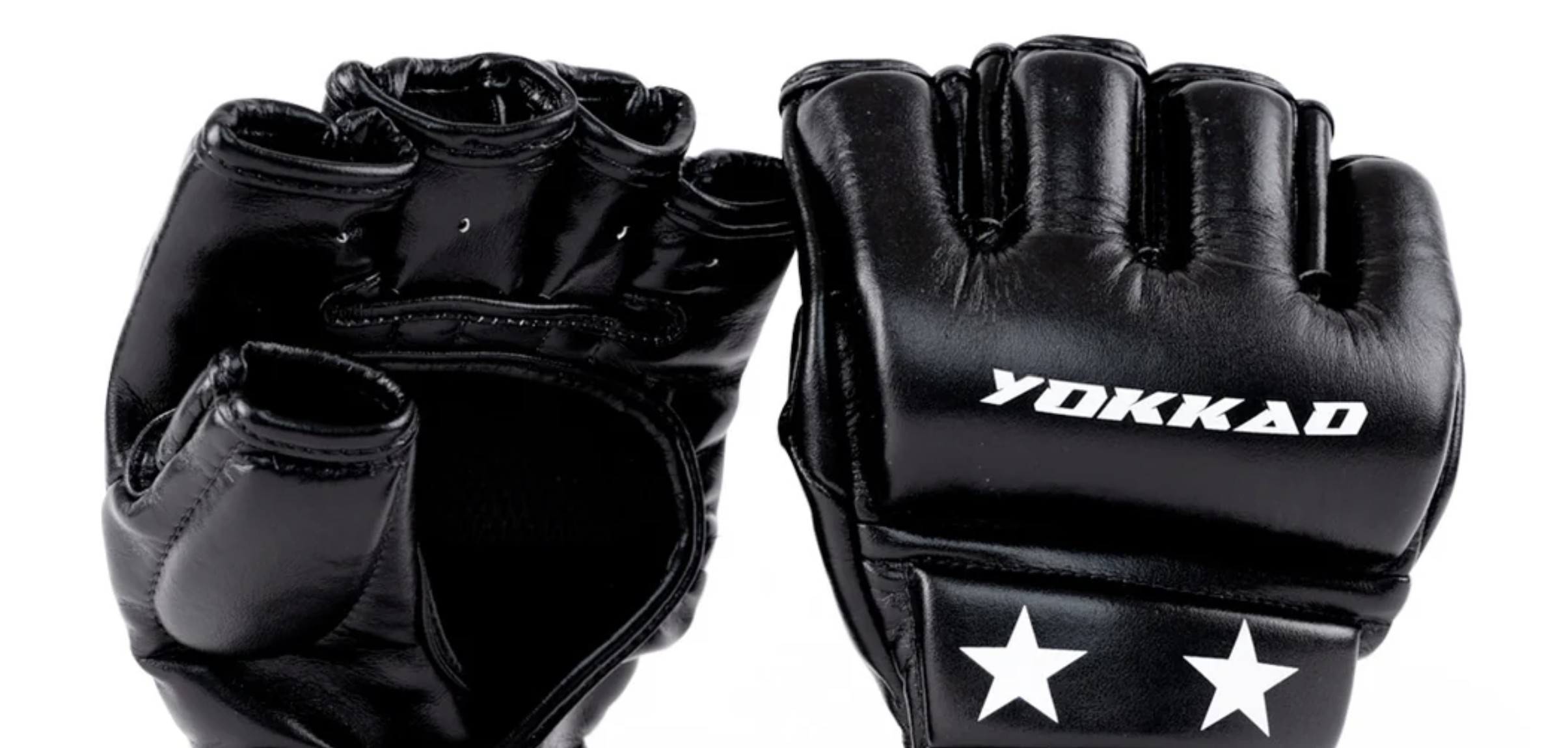
Sustainability is no longer a fringe consideration. Brands including YOKKAO and Sanabul have moved toward recycled fabrics, waterless dyeing techniques, and biodegradable material options. This shift is driven partly by consumer demand and partly by manufacturing innovation. For practitioners who consider the environmental dimension of their purchasing decisions, credible options now exist at competitive price points.
The overall market has expanded significantly — the MMA equipment sector was valued at nearly $1.3 billion in 2024 and is projected to grow to $1.76 billion by 2031, with gloves, pads, and protective gear accounting for a substantial share of that growth. What this means practically is that more brands are competing for your attention, which makes clear criteria for evaluation more important than ever.
The Five Features That Separate Good Gloves from Great Ones
When evaluating any MMA glove, five factors consistently determine long-term training value.
Wrist support architecture is the most overlooked dimension of glove quality. A single Velcro closure may be adequate for light training, but a double-wrap system — where a secondary strap reinforces the wrist independently — provides meaningfully better stability during heavy bag rounds and hook combinations. If wrist integrity has ever been an issue, this is the first specification to check.

Knuckle padding type and density varies significantly by intended use. Sparring gloves require thicker, multi-layer padding that protects both the wearer and the training partner. Bag and training gloves can afford a more compact profile, which allows for better dexterity during drilling. A glove that advertises itself as suitable for both sparring and bag work is often a reasonable compromise, but it will not optimise for either.

Open palm vs. closed thumb design directly affects how the glove performs during grappling transitions. An open palm construction allows you to grip, shoot underhooks, and establish clinch entries without the glove resisting you. A closed thumb — more common in heavier sparring models — reduces eye-poke risk but can feel restrictive during ground work and submission drilling. There is a third dimension to this decision that is worth understanding: thumb injury prevention. The thumb is one of the more vulnerable joints in MMA training, particularly during clinch exchanges and grappling scrambles where accidental bending or jamming is common. A closed thumb design anchors the digit against the glove body, significantly reducing the range of motion that leads to sprains and ligament stress. Practitioners with a history of thumb injuries, or those who train at high frequency, often find the closed construction worth the trade-off in grip dexterity. For pure grappling sessions where submission control and sensitivity matter most, an open thumb remains the more functional choice — but for stand-up heavy sparring, the protective benefit of a closed design is difficult to overlook.
Material and price tier follow a reasonably consistent logic. At the $40–$80 range, synthetic leather gloves from brands like RDX offer reliable basic protection suitable for beginners or light-frequency training. The $80–$150 range is where most serious practitioners land, with brands like Fairtex, Revgear, and YOKKAO offering durable constructions with well-engineered padding systems. Above $150, Hayabusa represents the benchmark for premium construction — their T3 model in particular sets a high standard for pre-curved ergonomics and wrist support.
Fit and sizing in MMA gloves does not follow boxing glove logic. MMA gloves are typically sized by hand circumference (S/M/L/XL) rather than weight in ounces, except for competition models. A snug, secure fit is essential — a glove that shifts on impact will compromise both protection and striking mechanics. When in doubt, size down rather than up, particularly for sparring models designed to fit close to the hand.
Understanding how equipment choices interact with your overall training architecture is a theme explored in the CombatPit post on focus mitts vs. Thai pads — the same principle of matching tool to purpose applies across all training equipment.
How to Choose Based on How You Actually Train
The most useful frame for glove selection is not brand preference — it is training background and session structure.
If you come from a striking background
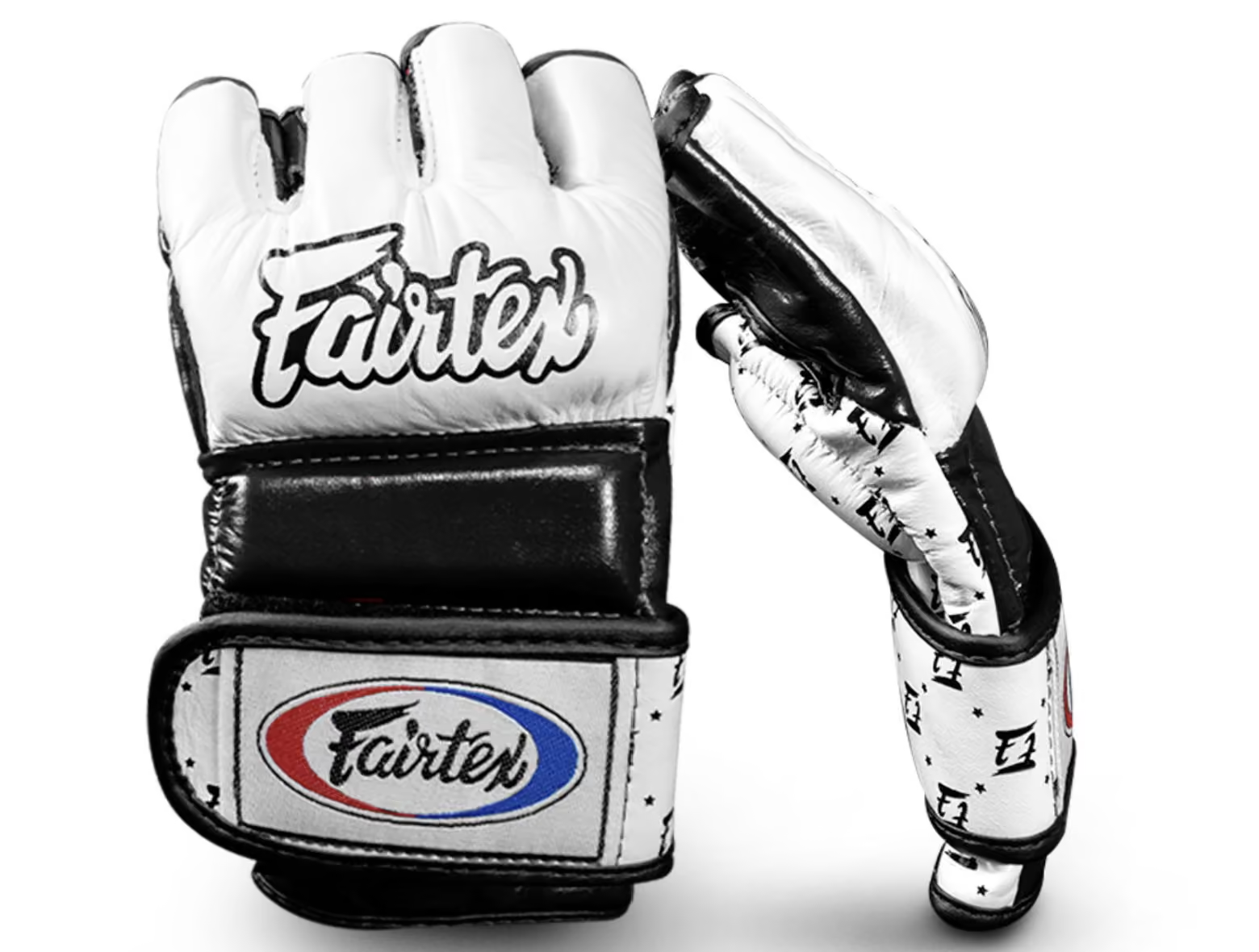
Practitioners with a boxing or Muay Thai foundation entering MMA will prioritise gloves that preserve the hand mechanics they have already developed. A heavier sparring model with good knuckle coverage and a familiar wrist closure — the Fairtex FGV17 and FGV18 are consistently cited for this — will allow you to spar confidently while you build grappling vocabulary. The priority is protecting hands that are already well-conditioned for impact.
If you come from a grappling background
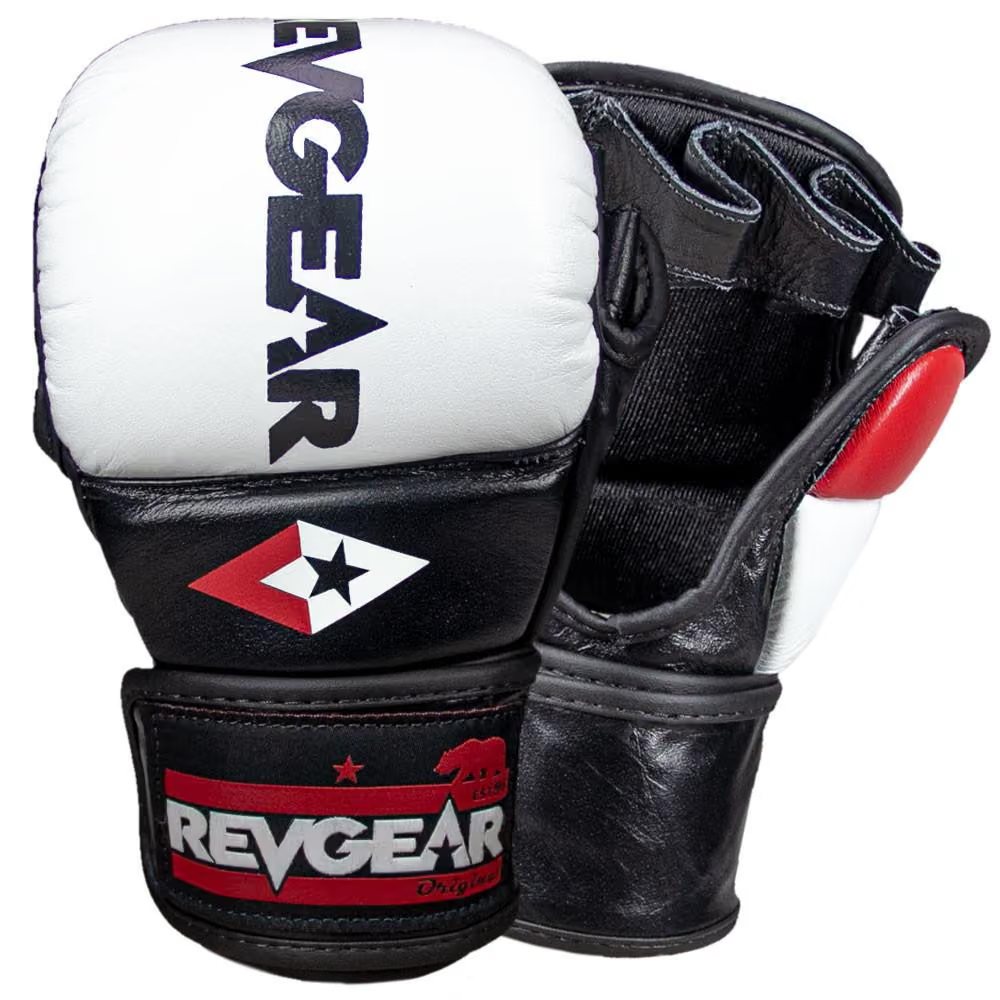
Wrestlers and BJJ practitioners entering MMA striking often benefit from a hybrid glove with an open palm and minimal bulk over the fingers. The goal is to preserve the grip sensitivity and clinch feel that grappling technique depends on, while adding enough knuckle protection to begin meaningful striking rounds. Revgear's MS1 is frequently recommended in this context for its compact padding profile and open palm construction.
If you train MMA for fitness rather than competition
Practitioners who train MMA as a fitness discipline — without competitive goals — can prioritise comfort, durability, and value. A mid-range hybrid glove in the $60–$90 range that handles bag work, pad rounds, and light technical sparring is sufficient. Venum's Challenger and Gladiator lines serve this profile well. There is no need to invest in competition-specific models or premium sparring gloves unless training intensity and frequency justify it.
Common Questions About MMA Gloves
Can I use boxing gloves for MMA training?
For bag work and pad rounds, yes — boxing gloves are adequate and in some cases preferable, as the heavier padding absorbs impact well and protects the hands during high-volume striking sessions. For MMA-specific training involving grappling transitions, clinch work, or ground exchanges, boxing gloves will restrict your movement significantly. The closed finger construction prevents the gripping and underhook mechanics that MMA technique depends on. Keep boxing gloves for striking-only sessions and use purpose-built MMA gloves when training the full game.
Related article: Boxing Glove Sizing Guide: Finding the Perfect Fit
What size MMA gloves should I use for sparring?
For sparring, the standard recommendation is 7 oz hybrid gloves rather than the 4 oz competition standard. The additional padding reduces the risk of cuts and impact injuries to both practitioners and is the norm in most professional training environments. Some practitioners prefer heavier models — closer to boxing glove weight — when sparring heavily. The key variable is not exact ounce count but knuckle coverage and wrist support. Prioritise these over a specific number.
How long should a quality pair of MMA gloves last?
With consistent care — drying between sessions, avoiding extended storage in closed bags, occasional leather conditioning for genuine leather models — a mid-range glove from a reputable brand should hold up for 12 to 18 months of regular training, and considerably longer with lower frequency use. Padding compression is the primary indicator of wear: when the knuckle padding no longer returns to its original thickness after a session, the glove has reached the end of its useful life for sparring purposes. It may still serve for bag work, but it should not be used for partner contact.
Conclusion
Gear does not replace skill. This has always been true.
But the wrong gear creates friction — between your intention and your execution, between your training and your body's capacity to absorb it. The right gloves protect the work you are putting in. They support the sessions that compound over months and years into something real.
The 2026 market rewards practitioners who ask the right questions before buying: What am I using these for? How often am I training? What does my body need from this equipment? Start there, and the choice becomes considerably clearer.
Continue reading: Is there difference between gloves for Muay Thai and gloves for boxing?