

Brand Risk Boxing: What Adin Ross's Promotion Actually Is
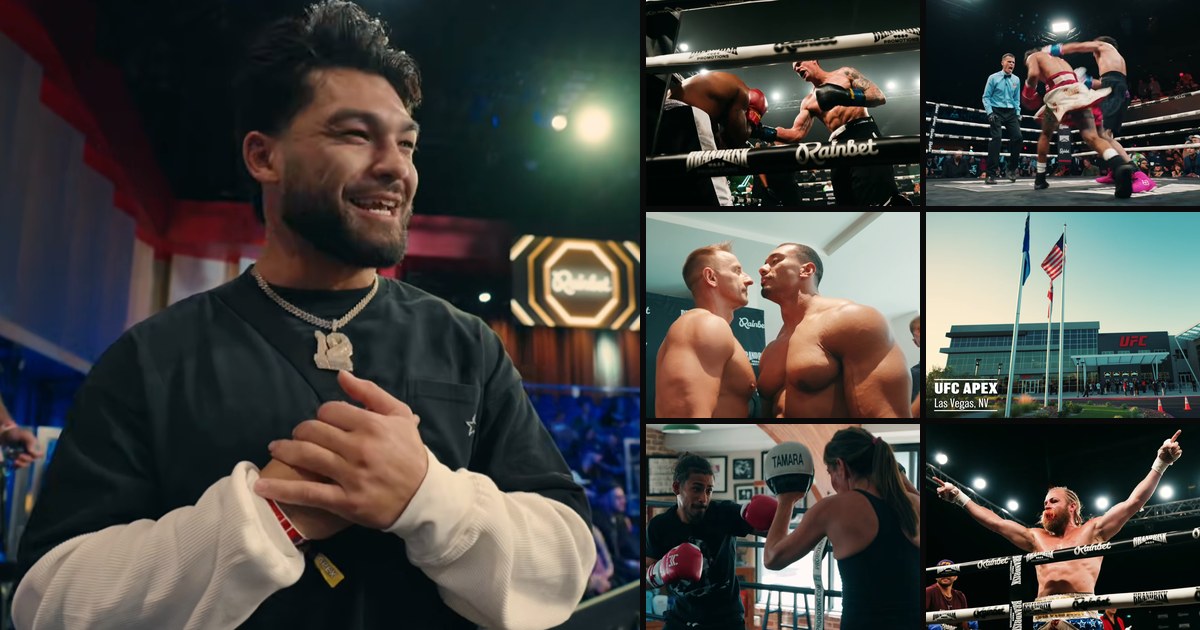
A converted warehouse in Miami. Close to half a million people watching at the same moment across five platforms. In the ring, a licensed professional on one side and, often enough, someone who first laced a pair of gloves eight weeks earlier on the other.
That is Brand Risk boxing, and if you train, you have probably seen a clip of it without being entirely sure what you were looking at.
Not many people know what this organization actually is, how it is regulated, and what a practitioner should make of watching people with no competitive base step through the ropes in front of a stadium-sized audience.
This article covers that ground. Where Brand Risk came from, how its events are built and funded, what commission sanctioning does and does not guarantee, what the research says about the risk involved, and why any of it should matter to someone who spends their evenings on a gym floor.
What Is Brand Risk Boxing?
Brand Risk boxing is the event series run by Brand Risk Promotions, a combat sports promotion founded by Adin Ross, a broadcaster on the streaming platform Kick.
The promotion stages numbered cards that place internet personalities, former professional athletes, and licensed fighters on the same night. Its home venue is a warehouse in Miami, Florida, referred to as the Brand Risk Warehouse. Sixteen numbered events have been staged or scheduled as of October 2026.
Two things separate it from conventional boxing.
The first is matchmaking. Bouts are assembled from existing rivalries, public disagreements, and audience appetite rather than from records or rankings. A fighter's history is a storyline, not a qualification.
The second is distribution. Brand Risk cards are free. The cards are streamed at no cost across Kick, Twitch, YouTube, X and TikTok, with no pay-per-view attached. Traditional boxing sells the fight. Brand Risk sells the audience that gathers to watch it.
Is it real boxing?
When a card is sanctioned by a state athletic commission, the bouts are real contests with real records and real consequences. Referees are licensed, physicians are at ringside, and results are recorded. That much is not in question.
What is fair to question is the preparation on either side of the ring, and that is a separate matter from whether the sport is genuine. We will come to it.
Where the Name Came From
The name is not a metaphor about courage. It is a quote.
In June 2023, Kick chief executive Ed Craven was asked in an interview whether Ross represented a risk to the platform's brand. Craven answered that he would be lying if he said no. Ross took the phrase, kept it, and built a promotion around it.
This is worth knowing because it tells you the organization's posture toward its own reputation. Brand Risk does not position itself as a custodian of the sport. It positions itself as the place where things happen that would not be permitted elsewhere. That self-understanding shapes the matchmaking, the presentation, and the criticism the promotion attracts.
From Warehouse Bouts to the UFC Apex
The promotion's growth has been quick, and it has moved in a clear direction: from informal to formal.
The unsanctioned era
Brand Risk began with creator matchups staged in a warehouse Ross operated, outside any commission's oversight. These were closer to organized exhibitions among acquaintances than to regulated competition.
The move to sanctioned cards
That changed in March 2024, when the promotion staged what has been described as its first officially sanctioned event, a five-bout card between participating creators. Sanctioning brought the medical and officiating requirements that come with it, and it marked the point at which Brand Risk stopped being a series of filmed fights and started being a promotion.
The Las Vegas step up
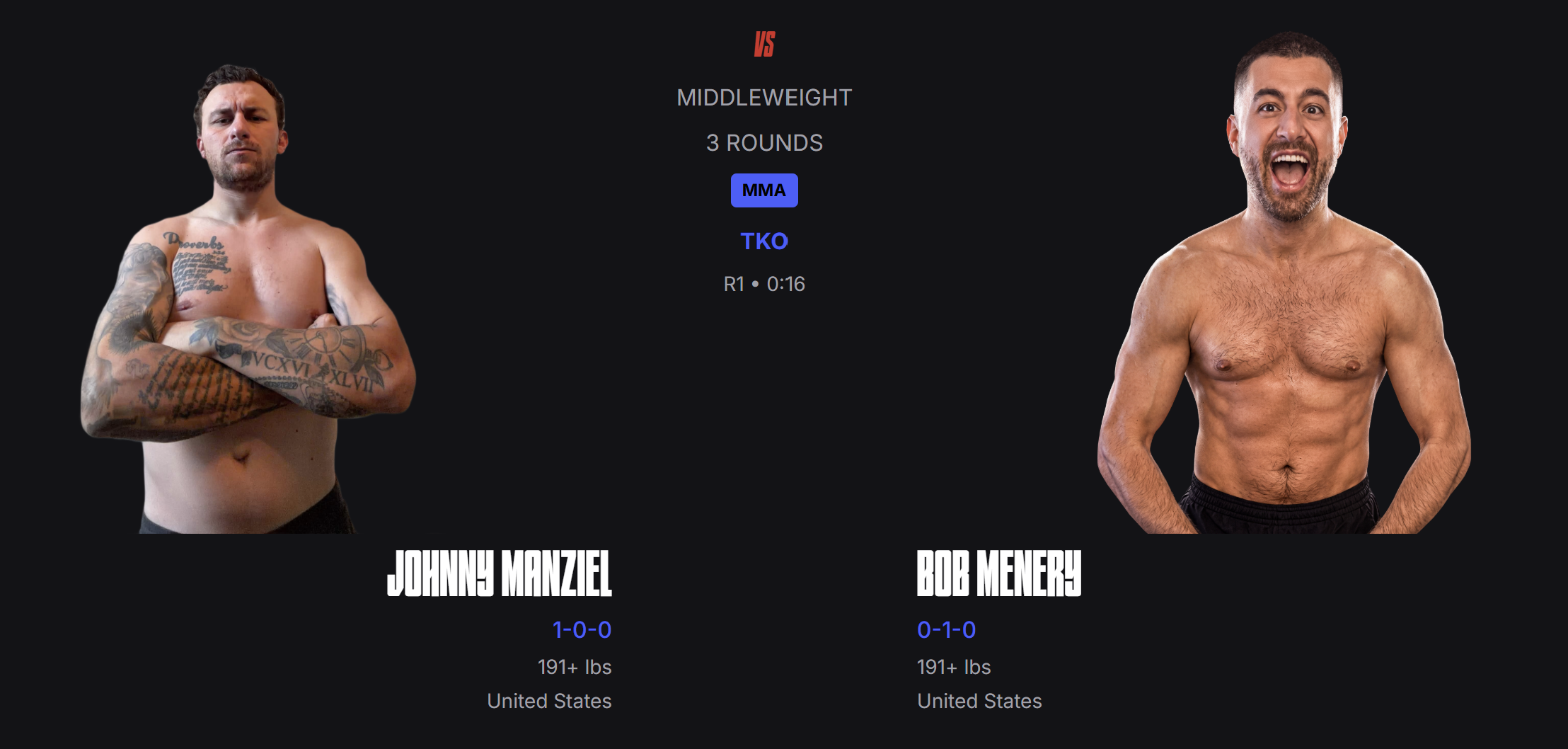
The clearest signal of the trajectory came in May 2026. Brand Risk 14 was staged at the UFC Apex in Las Vegas, the Ultimate Fighting Championship's own production facility, headlined by former National Football League quarterback Johnny Manziel against Bob Menery. The arrangement was a venue booking slotted into a UFC off-week rather than a co-promotion, but the symbolism was hard to miss. A promotion that began in a warehouse was now running cards in the most recognizable small venue in combat sports.
How Does Brand Risk Boxing Actually Work?
The model rests on reach rather than gate receipts, and the numbers explain why.
Viewership analysis of Brand Risk 14 recorded 491,351 peak concurrent viewers and 2.18 million hours watched across roughly 500 channels carrying the broadcast. Ross's own channel accounted for 250,000 of that peak. The rest came from co-streamers, each bringing their own audience to the same event.
That structure is the innovation, and it is genuinely new. A conventional promotion concentrates its audience behind a paywall and monetizes access. Brand Risk distributes its audience across every channel willing to carry it and monetizes attention. The fight is the content. The content is free. The value sits somewhere else entirely, in sponsorship, platform deals, and the standing the broadcast builds.
Card construction follows the same logic. Rule sets are mixed where it suits the story: Brand Risk 14 ran boxing bouts and mixed martial arts bouts on the same night. Brand Risk 16 was assembled with a deliberate mix of professional and amateur competitors, including former National Basketball Association players alongside first-time entrants.

For a practitioner, this is the point at which the picture becomes uncomfortable, and it deserves a section of its own.
Is Brand Risk Boxing Sanctioned and Safe?
These are two questions, and conflating them is the most common error in discussion of crossover boxing.
What sanctioning actually covers
When a state athletic commission sanctions a card, a specific set of requirements follows. In Florida, the health and safety standards for professional boxing set out pre-bout physical examinations, ringside medical presence, glove and hand-wrap inspection, and the authority of officials to stop a contest. The broader framework sits under federal legislation administered through the Association of Boxing Commissions.
These are meaningful protections. A sanctioned bout is categorically safer than an unregulated one, and Brand Risk's move toward sanctioned cards is the single most important thing the promotion has done.
What sanctioning does not do is guarantee that the two people in the ring are matched in preparation. A commission licenses participants and oversees conditions. It does not require that a first-time entrant face another first-time entrant.
The preparation gap
This is where the real risk sits, and it is not unique to Brand Risk. Across crossover boxing, the recurring pattern is a short camp against an opponent with a different depth of base. Eight or twelve weeks can build conditioning and a workable jab. It cannot build the defensive reflex, distance management, and accumulated tolerance that a trained boxer develops over years.
A popular belief holds that a fighter who is visibly fit is a fighter who is prepared. Any coach who has watched a strong athlete lose composure in round two knows the difference.
What the research shows
The evidence base on head trauma in boxing is substantial, and it does not require exaggeration to be sobering.
A 2021 study in the Orthopaedic Journal of Sports Medicine by Jansen and colleagues instrumented boxers and mixed martial arts athletes and recorded 896 verified head impacts across 53 training sessions and six competitions. Boxing impacts showed a median peak linear acceleration of 19.3g, with competition impacts measurably higher than sparring impacts. Exposure, in other words, is routine rather than exceptional, and competition raises it.
A 2011 study by Graham and colleagues in the International Journal of Immunopathology and Pharmacology went further, measuring blood markers before and after amateur bouts. Boxers who took direct, unblocked contacts to the head showed significant rises in S-100B protein and neuron-specific enolase, both markers associated with brain tissue injury. Boxers in the same competition who absorbed predominantly body punches showed no such rise. These were amateur bouts. Nobody needed to be knocked out for the effect to register.
The most comprehensive picture comes from a 2023 systematic review and meta-analysis by Donnelly and colleagues in the Clinical Journal of Sport Medicine, which examined 84 studies and found that boxers carry a significantly higher rate of concussion than participants in other combat sports. The same review examined headguards and found their protective case less settled than commonly assumed, a finding that aligns with what the evidence on boxing headgear has shown more broadly.
None of this is an argument against boxing. It is an argument for understanding what the sport asks of a body, and for matching people accordingly. The practitioners reading this already accept that exchange knowingly. The question worth sitting with is whether a first-time entrant with a twelve-week camp and a large following is making the same informed decision.
The integrity question
One further issue belongs here. After his bout at Brand Risk 14, Ray J made a post-fight remark suggesting that he and his opponent "had a plan," a comment widely interpreted as implying a prearranged outcome. Ross subsequently stated that the promotion was investigating the matter. No finding has been made public.
It is reported here as a claim and a response, not a verdict. But it points at the structural tension in the model: when matchmaking is driven by narrative, questions about competitive integrity follow the promotion around whether or not they are warranted in any particular case.
Where Brand Risk Sits in the Creator Boxing Landscape
Brand Risk is not the only promotion in this space, and it is not the largest. Misfits Boxing, founded by KSI, and Most Valuable Promotions, co-founded by Jake Paul, both operate at scale with established broadcast arrangements.
What distinguishes Brand Risk is the distribution model. Misfits and Most Valuable Promotions largely sell access, through pay-per-view or a streaming partner. Brand Risk gives it away and builds value on the audience that assembles. Whether that proves more durable is an open question, and it is the most interesting thing about the promotion from a business standpoint.
The three organizations share a common effect, whatever their differences. Together they have brought an audience to boxing that traditional promotion has struggled to reach for two decades: young, online, and arriving through personalities rather than through the sport.
What Should a Practitioner Take From Brand Risk Boxing?
There is a reflex in traditional martial arts circles to dismiss all of this, and it is worth resisting.
Something real is happening. Hundreds of thousands of people who have never set foot in a gym are watching boxing bouts on a Saturday night and forming a first impression of what the sport is. Some fraction of them will look for a gym on Monday. That is an opening for coaches and clubs, and it is the first one of this size in a long while.
The honest work is in what happens next. Someone who arrives having watched a creator bout has seen the spectacle without the preparation that sits behind it. They have not seen the four years of rounds, the corrections, the mornings on the bag. Meeting that person with contempt closes the door. Meeting them with a clear account of what the craft asks is how the door stays open.
There is also a quieter point. Watch a Brand Risk card with a coach's eye and you will see the cost of an absent foundation written plainly: hands dropping in round two, feet crossing, chins lifting under pressure. It is an unusually clear demonstration of why the fundamentals exist. Worth showing a beginner who wonders why they are still drilling the jab.
The Path Behind the Spectacle
Brand Risk boxing is a genuine promotion operating in a genuine sport, built on an unusual model and carrying real questions about preparation and matchmaking that its growing scale has not answered.
Three things are worth carrying away. Commission sanctioning protects conditions, not competitive parity. The research on head impact exposure is clear enough that short-camp entrants deserve more care than the format currently gives them. And the audience arriving through these events is the largest new audience boxing has had in years, which makes how it is met a matter of some consequence.
Spectacle brings people to the door. What happens after they walk through it is decided somewhere quieter: in repetition, correction, and patience. The path rewards those who respect it, and it always has.